

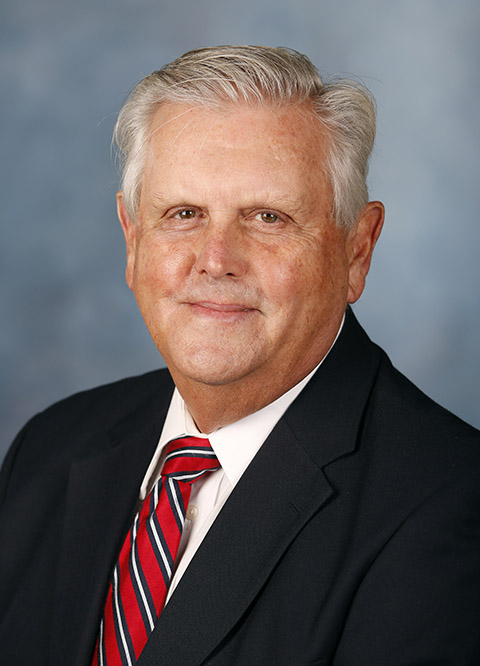

Recently, I had the honor of being part of an education delegation to China, sponsored by the Council of Chief State School Officers, Asia Society and Pearson Foundation. I had an opportunity to learn from and share with educators from Beijing to Shanghai. In this blog I want to highlight two clear choices that China has made with regard to education and relate these choices to a recent article that appeared in Education Week.
China made a choice about teacher time. In China, teachers have about 12-15 hours of instruction time with students each week, compared to U.S. teachers with 24-30 hours. The Chinese teachers utilize between 15-18 hours each week for preparation, improving instruction, collaborative learning with other teachers and support services like grading papers, as compared to U.S. teachers with 0-6 hours. The choice made by China is class size. The average class size in China could be between 40-50 students per class as compared to the average U.S. class size of 16-25.
Another choice the Chinese have made is teacher specialization. In elementary/middle grades, teachers have specialization in Chinese, English, math, science and other subjects. In the U.S., our teachers -- especially in elementary school -- are asked to be ALL things to students and teach ALL subjects. Quite often, our elementary and even middle school teachers lack the math and science content knowledge that these specialized teachers in China have.
Recently, I read an article by Frederick Hess, Greg Gunn and Olivia Meeks – Maybe the Square Peg Will Do – that appeared in Education Week’s opinion section. This article talks about teacher effectiveness and says that currently we have two schools of thought:
* Teachers are doing the best they can do given social ills like poverty and the breakdown of family, and we should support teachers with more resources and not “blame” them for poor performance.
* We need to remove ineffective teachers, and the best way to measure effectiveness is with student test scores. After removing them, we need to replace them with “superstar” teachers who have proven to be effective in raising test scores in spite of social challenges.
The article makes the point that maybe we should quit trying to fit the round peg (teacher) into the square hole (expecting superstar teachers) and just change the “hole.” The article proposes that we should start changing teaching to fit a model like the medical model. Across the U.S., there are 7 million medical professionals, and fewer than 10 percent have an M.D. Most medical professionals have an area of specialization. The authors propose that we rethink geographical limitations of teaching and utilize more digital learning, with local teachers acting as support to specialized teachers. Also, we need to rethink the tasks that we ask teachers to complete. Rather than didactic instruction, teachers should be facilitators, similar to what is happening with the School of One project in New York City. Finally, we should look at levels of specialization in our schools. A master teacher could coordinate and manage a number of technical assistants working with larger groups of students. (For more information, see the May 11 issue of Education Week.)
I am not certain where the discussion will lead us concerning class size and teacher specialization; however, these are important discussions to have, considering our comparative performance with China and our continuing budget challenges in Kentucky and U.S. schools.
Friday, May 20, 2011


Friday, May 13, 2011
Impact of Poverty on Student Learning
Recently, I reviewed a story about poverty and the impact on education outcomes in Texas. Michael Marder, who is a professor of physics at the University of Texas at Austin, also is co-director of the UTeach program that encourages university grads to become math and science teachers.
In the article, Marder discusses his research around student learning outcomes and the correlations with poverty and ethnicity. Interested readers can connect to an excellent video at http://www.youtube.com/watch?feature=player_embedded&v=SPV_sIGncvQ.
Marder’s research shows the strong correlation of poverty to low student achievement and also shows how schools are failing to educate many children of color. Marder clearly states that we have not been able to take a solution to the poverty challenge to scale. He also points out that, while there are a few charter schools that are “beating the odds,” most charter schools in Texas are not achieving strong results.
Marder used the “Boeing” story to illustrate his key point. After World War II, the British tried to regain transportation supremacy through air travel with the de Havilland aircraft. After numerous crashes, the British were unable to develop a theory that would improve the aircraft; however, a young engineer with Boeing came up with a new way of thinking that allowed Boeing and the U.S. to take supremacy in air travel. The British theory had been “flaw free” and had failed. The Boeing theory was a “flaw tolerant” design of aircraft, and it succeeded.
Marder makes the point that “poverty is causing our public school system to crash and burn and fail many children.” He says that if we do not figure out how to address poverty, then we will lose our technical supremacy – as many reports have also documented (Gathering Storm, Incarceration and Social Inequity, a Center for American Progress report and more). Marder says that our current theory of only addressing teacher quality and accountability through standardized tests has not been proven to address failures on a sustained basis. He says we need a new “Boeing” theory.
During my recent visit to China, it was apparent the country is struggling with the same issues – poverty in rural and urban settings, poor performance of schools and failure of schools/society to meet the needs of a diverse group of children. The Chinese have developed five- and 10-year plans that have strategies of strong schools helping weaker schools and strong leaders and teachers helping weaker leaders and teachers. Also, there is a strong push to meet needs of individual learners and use higher level skills of problem solving, creativity and innovation.
Looking at our current national and state reform strategies, I do believe that we also are addressing a systemic approach to improving student learning outcomes. We are not focusing solely on standardized test results and accountability. We have a strong push for a more balanced approach to accountability, strong teachers and leaders, strong instructional support systems, and early childhood.
Marder has posed the concern about our public policy theories of action. The key for policy leaders is to not use poverty as the excuse, but to look for the “Boeing” theory of action that will meet the needs of our children and the future of our Commonwealth.
There are two issues that arise when we discuss poverty and impact on student learning. Either we do not believe children of poverty can learn to high levels, or we do not know how to help children of poverty achieve at high levels. It is difficult to say that we do not know how; however, that response can be addressed. If we do not believe that children of poverty can learn at high levels as well as any child, then we have a more difficult issue.
In the article, Marder discusses his research around student learning outcomes and the correlations with poverty and ethnicity. Interested readers can connect to an excellent video at http://www.youtube.com/watch?feature=player_embedded&v=SPV_sIGncvQ.
Marder’s research shows the strong correlation of poverty to low student achievement and also shows how schools are failing to educate many children of color. Marder clearly states that we have not been able to take a solution to the poverty challenge to scale. He also points out that, while there are a few charter schools that are “beating the odds,” most charter schools in Texas are not achieving strong results.
Marder used the “Boeing” story to illustrate his key point. After World War II, the British tried to regain transportation supremacy through air travel with the de Havilland aircraft. After numerous crashes, the British were unable to develop a theory that would improve the aircraft; however, a young engineer with Boeing came up with a new way of thinking that allowed Boeing and the U.S. to take supremacy in air travel. The British theory had been “flaw free” and had failed. The Boeing theory was a “flaw tolerant” design of aircraft, and it succeeded.
Marder makes the point that “poverty is causing our public school system to crash and burn and fail many children.” He says that if we do not figure out how to address poverty, then we will lose our technical supremacy – as many reports have also documented (Gathering Storm, Incarceration and Social Inequity, a Center for American Progress report and more). Marder says that our current theory of only addressing teacher quality and accountability through standardized tests has not been proven to address failures on a sustained basis. He says we need a new “Boeing” theory.
During my recent visit to China, it was apparent the country is struggling with the same issues – poverty in rural and urban settings, poor performance of schools and failure of schools/society to meet the needs of a diverse group of children. The Chinese have developed five- and 10-year plans that have strategies of strong schools helping weaker schools and strong leaders and teachers helping weaker leaders and teachers. Also, there is a strong push to meet needs of individual learners and use higher level skills of problem solving, creativity and innovation.
Looking at our current national and state reform strategies, I do believe that we also are addressing a systemic approach to improving student learning outcomes. We are not focusing solely on standardized test results and accountability. We have a strong push for a more balanced approach to accountability, strong teachers and leaders, strong instructional support systems, and early childhood.
Marder has posed the concern about our public policy theories of action. The key for policy leaders is to not use poverty as the excuse, but to look for the “Boeing” theory of action that will meet the needs of our children and the future of our Commonwealth.
There are two issues that arise when we discuss poverty and impact on student learning. Either we do not believe children of poverty can learn to high levels, or we do not know how to help children of poverty achieve at high levels. It is difficult to say that we do not know how; however, that response can be addressed. If we do not believe that children of poverty can learn at high levels as well as any child, then we have a more difficult issue.
Friday, May 6, 2011
TELL Survey Garners High Response, Roadmap for Future
This week, KDE released the results from the first teacher working conditions survey, or TELL (Teaching, Empowering, Leading and Learning) Kentucky survey. Readers may be interested in viewing the data at www.tellkentucky.org.
At that link, readers will find the state results, district results and school-level results. We are very excited about this release of data, since more than 80 percent of Kentucky’s teachers and principals responded to the survey. Kentucky had the highest first-year participation rate of any state that has utilized the survey.
So… now that we have the results, what happens next? We are working with our partners to provide support and training on how schools, districts and state leaders can use the results to change policy and practice at each level. The Kentucky Board of Education will model how to use the results at a work session on June 7. The board will review the results and receive recommendations from our Working Conditions Coalition. The board will prioritize the recommendations for the budget and legislative agenda for the 2012 session of the General Assembly.
We are very excited that our partners are supporting training and coaching for teachers, principals, district staff and school boards on how to utilize the results of the survey. We hope that school boards will build capacity to include in superintendent evaluation process how the results are used to prioritize policy and budget decisions at the district level. We also hope superintendents will use the results in principal evaluation process to prioritize process changes at the school level. Also, we hope school-based councils will utilize the results in collaboration with the principal to prioritize changes in school-level policy and budget decisions.
We strongly recommend that the results of the survey NOT be utilized for any personnel evaluations or decisions. We strongly recommend that how leaders utilize the results to create improvement plans should be part of personnel evaluation procedures.
While we have had phenomenal success in the implementation of the survey, the actual value now comes with the actions taken to improve working conditions in our classrooms, schools and districts. Improved working conditions will mean improved learning conditions for our students. Improved working conditions will mean lower teacher turnover rates and reduced costs for human resource processes. Improved working conditions will mean improved learning results for our students. Thanks again to all of our partners in this important work.
At that link, readers will find the state results, district results and school-level results. We are very excited about this release of data, since more than 80 percent of Kentucky’s teachers and principals responded to the survey. Kentucky had the highest first-year participation rate of any state that has utilized the survey.
So… now that we have the results, what happens next? We are working with our partners to provide support and training on how schools, districts and state leaders can use the results to change policy and practice at each level. The Kentucky Board of Education will model how to use the results at a work session on June 7. The board will review the results and receive recommendations from our Working Conditions Coalition. The board will prioritize the recommendations for the budget and legislative agenda for the 2012 session of the General Assembly.
We are very excited that our partners are supporting training and coaching for teachers, principals, district staff and school boards on how to utilize the results of the survey. We hope that school boards will build capacity to include in superintendent evaluation process how the results are used to prioritize policy and budget decisions at the district level. We also hope superintendents will use the results in principal evaluation process to prioritize process changes at the school level. Also, we hope school-based councils will utilize the results in collaboration with the principal to prioritize changes in school-level policy and budget decisions.
We strongly recommend that the results of the survey NOT be utilized for any personnel evaluations or decisions. We strongly recommend that how leaders utilize the results to create improvement plans should be part of personnel evaluation procedures.
While we have had phenomenal success in the implementation of the survey, the actual value now comes with the actions taken to improve working conditions in our classrooms, schools and districts. Improved working conditions will mean improved learning conditions for our students. Improved working conditions will mean lower teacher turnover rates and reduced costs for human resource processes. Improved working conditions will mean improved learning results for our students. Thanks again to all of our partners in this important work.
Friday, April 29, 2011
Moving Forward With New Tools
Kentucky did not receive Race to the Top funding. While it was a disappointment last fall, we did not let it slow our work down.
Kentucky had strong reform legislation in 2009’s Senate Bill 1, and we have moved to implement our Race to the Top plan, which doubled as our Senate Bill 1 deployment plan. We have adopted Common Core Academic Standards and have used leadership networks to involve teachers, principals and district leadership in developing capacity to implement the Common Core Standards. We have approved a contract for testing in grades 3-8 and will soon approve a contract for high school end-of-course that will be among the first in the nation to assess the Common Core Standards.
We are the first state in the nation to adopt a “next-generation” accountability model that will hopefully replace the federal No Child Left Behind proficiency emphasis with an emphasis on college/career ready. It is my strong belief that Kentucky will lead the nation in the percentage gain of those who graduate college/career ready between our 2010 and 2015 graduates. My thanks to all the hardworking teachers, principals, staff, partners and KDE employees who are making this happen in spite of major budget challenges.
Today, I am proud of the KDE team and all of our leadership network participants for the work they have done in preparing for the launch of our Continuous Instructional Improvement Technology System (CIITS). Today, our teacher and leader networks will begin reviewing the Common Core Standards and deconstructed English/language arts and mathematics standards within our online SchoolNet tool. (For more information about this tool, see the press release.) Over the summer months, we will be adding all of the deconstructed standards and links to resources that are aligned to the Common Core Standards. EVERY teacher in Kentucky will have access to this tool prior to the start of the 2011-12 school year.
I thought readers would be interested in how we described the CIITS tool (powered by SchoolNet) in our Race to the Top application.
The Continuous Instructional Improvement Technology System (CIITS)
It is the Commonwealth’s vision that every Kentucky teacher will have a full set of tools available at his/her fingertips to improve every student’s learning. As a teacher prepares for a lesson, through the CIITS, he/she can access each student’s data to identify which concepts need further exploration and attention in the classroom, access exemplary lesson/unit plans and even view podcasts from master teachers or higher education faculty on key concepts across the standards. This online environment will allow educators to engage in dialogue about educational practice through social networking tools. Teachers’ use and application of the CIITS in their daily classroom practice will become an important aspect of their ongoing professional learning.
Once the first set of high-quality, aligned instructional tools have been finalized by the end of August 2010, they will be made available through the CIITS. This instructional improvement system will include the following components:
* Curriculum Resources will provide resources for curriculum mapping and vertical and horizontal alignment of instruction; also allow for cross-walking of the previous Kentucky standards to the new core standards and allows for development of learning progressions and learning targets.
* Assessment Resources will provide rich information on student learning by allowing users to build, deliver, score, and report on assessments for formative and summative purposes across all relevant levels of assessment use: classroom assessment, interim benchmark assessment, and annual accountability testing; will support assessment for learning by putting the results of these frequent assessments into teachers and students hands – increasing the descriptive feedback (and decreasing the evaluative feedback) and helping students and their teachers truly understand what they are learning; also will include standards-based grade book, student portfolios, and multiple measures reporting.
* Instruction Resources will provide instructional strategies, interventions and student learning resources, incorporating existing resources that Kentucky teachers already have and use (e.g., EncycloMedia, Kentucky Learning Depot, Kentucky Virtual Library).
* Professional Learning Resources will provide rich tools for teacher and principal informal observation and formal evaluation, teacher portfolios, and the evaluation of professional learning opportunities themselves; also will provide resources such as online learning courses for job-embedded professional development including custom publishing tools to support collaborative development and sharing of local content among professional learning teams and networks.
* School Improvement Resources will allow schools and districts to create, monitor and evaluate the effectiveness of their improvement efforts. The system will allow for continuous improvement planning within schools and across districts. It will also allow school and district audits to be conducted in a more efficient manner and for schools and districts to track results against a variety of data sets.
Kentucky had strong reform legislation in 2009’s Senate Bill 1, and we have moved to implement our Race to the Top plan, which doubled as our Senate Bill 1 deployment plan. We have adopted Common Core Academic Standards and have used leadership networks to involve teachers, principals and district leadership in developing capacity to implement the Common Core Standards. We have approved a contract for testing in grades 3-8 and will soon approve a contract for high school end-of-course that will be among the first in the nation to assess the Common Core Standards.
We are the first state in the nation to adopt a “next-generation” accountability model that will hopefully replace the federal No Child Left Behind proficiency emphasis with an emphasis on college/career ready. It is my strong belief that Kentucky will lead the nation in the percentage gain of those who graduate college/career ready between our 2010 and 2015 graduates. My thanks to all the hardworking teachers, principals, staff, partners and KDE employees who are making this happen in spite of major budget challenges.
Today, I am proud of the KDE team and all of our leadership network participants for the work they have done in preparing for the launch of our Continuous Instructional Improvement Technology System (CIITS). Today, our teacher and leader networks will begin reviewing the Common Core Standards and deconstructed English/language arts and mathematics standards within our online SchoolNet tool. (For more information about this tool, see the press release.) Over the summer months, we will be adding all of the deconstructed standards and links to resources that are aligned to the Common Core Standards. EVERY teacher in Kentucky will have access to this tool prior to the start of the 2011-12 school year.
I thought readers would be interested in how we described the CIITS tool (powered by SchoolNet) in our Race to the Top application.
The Continuous Instructional Improvement Technology System (CIITS)
It is the Commonwealth’s vision that every Kentucky teacher will have a full set of tools available at his/her fingertips to improve every student’s learning. As a teacher prepares for a lesson, through the CIITS, he/she can access each student’s data to identify which concepts need further exploration and attention in the classroom, access exemplary lesson/unit plans and even view podcasts from master teachers or higher education faculty on key concepts across the standards. This online environment will allow educators to engage in dialogue about educational practice through social networking tools. Teachers’ use and application of the CIITS in their daily classroom practice will become an important aspect of their ongoing professional learning.
Once the first set of high-quality, aligned instructional tools have been finalized by the end of August 2010, they will be made available through the CIITS. This instructional improvement system will include the following components:
* Curriculum Resources will provide resources for curriculum mapping and vertical and horizontal alignment of instruction; also allow for cross-walking of the previous Kentucky standards to the new core standards and allows for development of learning progressions and learning targets.
* Assessment Resources will provide rich information on student learning by allowing users to build, deliver, score, and report on assessments for formative and summative purposes across all relevant levels of assessment use: classroom assessment, interim benchmark assessment, and annual accountability testing; will support assessment for learning by putting the results of these frequent assessments into teachers and students hands – increasing the descriptive feedback (and decreasing the evaluative feedback) and helping students and their teachers truly understand what they are learning; also will include standards-based grade book, student portfolios, and multiple measures reporting.
* Instruction Resources will provide instructional strategies, interventions and student learning resources, incorporating existing resources that Kentucky teachers already have and use (e.g., EncycloMedia, Kentucky Learning Depot, Kentucky Virtual Library).
* Professional Learning Resources will provide rich tools for teacher and principal informal observation and formal evaluation, teacher portfolios, and the evaluation of professional learning opportunities themselves; also will provide resources such as online learning courses for job-embedded professional development including custom publishing tools to support collaborative development and sharing of local content among professional learning teams and networks.
* School Improvement Resources will allow schools and districts to create, monitor and evaluate the effectiveness of their improvement efforts. The system will allow for continuous improvement planning within schools and across districts. It will also allow school and district audits to be conducted in a more efficient manner and for schools and districts to track results against a variety of data sets.
Friday, April 22, 2011
Next Steps for Transforming Education in Kentucky Task Force
On February 21, the final report of the Transforming Education in Kentucky Task Force, Breaking New Ground, was released to the public. This task force was appointed by Governor Steven L. Beshear in October 2009 and worked over a period of 15 months studying Kentucky’s education system in order to provide recommendations to the Governor for transforming the state’s education system to meet the needs of 21st-century students.
The report contains 35 recommendations “... that would serve as a blueprint for how schools throughout the Commonwealth can make prompt and significant gains in school readiness, student proficiency, the closing of persistent achievement gaps, graduation rates and college and career readiness and how elected leaders can develop a supportive state policy environment.”
As commissioner, I will be pushing hard for three major areas of the recommendations from the task force.
The first effort centers on career and technical education (CTE). While we have some excellent programs in Kentucky through both the Education and Workforce Development Cabinet Area Technical Centers and the Carl D. Perkins programs at many of our high schools, the Governor’s task force recommended that we look at ways to elevate and integrate CTE. We will be convening a work group very soon that will include key legislators and other stakeholders. We will be asking this group to make legislative and budget recommendations for the 2012 session that will elevate and integrate career and technical education. CTE is a major tool for our efforts to increase the number of graduates who are college/career ready.
The second area of focus is alternative education. Over 75,000 students in Kentucky are in some form of alternative education; however, our data system to track the progress of these students is in great need of improvement. We will be convening a group of experts to develop legislative language and budget language for the 2012 session that will hopefully address three areas of improvement. The first area is a definition of alternative education. We must develop a definition that includes a continuum of alternative education. Alternative education could include but not be limited to behavior programs, digital learning, blended learning, early graduation, dual credit, mastery based, performance-based and other non-traditional approaches that we have not yet developed. Second, we must do a better job of tracking the data for alternative programs. We must track attendance, assignment, student results, interventions and funding. Finally, we need to address assignment to alternative programs not only for students but also staff.
Readers will recognize the two areas (career and technical education and alternative education) as major components not only of the Governor’s task force but also the graduation bill that was proposed in the recent session. These two areas have the potential to have a huge impact on graduation rates and college/career ready rates.
Finally, we will see a continued focus on early childhood education. I strongly support and will work with the Kentucky Board of Education to support, in the upcoming legislative session, the recommendations from the Governor’s task force toward funding for full-day kindergarten and increasing the number of children served in preschool programs. At the Kentucky Department of Education, we also have begun work on a Program Review for primary grades that would include kindergarten readiness standards and assessments, diagnostic assessments in primary grades and tracking students from kindergarten entry to end-of-3rd grade proficiency in math and reading. We hope to add this Program Review in the 2012-13 school year as part of the accountability model.
The Governor’s Transforming Education in Kentucky Task Force recommendations are alive, and many groups are working to implement the recommendations. We will have an annual report to the Kentucky Board of Education and the citizens of Kentucky on our progress.
The report contains 35 recommendations “... that would serve as a blueprint for how schools throughout the Commonwealth can make prompt and significant gains in school readiness, student proficiency, the closing of persistent achievement gaps, graduation rates and college and career readiness and how elected leaders can develop a supportive state policy environment.”
As commissioner, I will be pushing hard for three major areas of the recommendations from the task force.
The first effort centers on career and technical education (CTE). While we have some excellent programs in Kentucky through both the Education and Workforce Development Cabinet Area Technical Centers and the Carl D. Perkins programs at many of our high schools, the Governor’s task force recommended that we look at ways to elevate and integrate CTE. We will be convening a work group very soon that will include key legislators and other stakeholders. We will be asking this group to make legislative and budget recommendations for the 2012 session that will elevate and integrate career and technical education. CTE is a major tool for our efforts to increase the number of graduates who are college/career ready.
The second area of focus is alternative education. Over 75,000 students in Kentucky are in some form of alternative education; however, our data system to track the progress of these students is in great need of improvement. We will be convening a group of experts to develop legislative language and budget language for the 2012 session that will hopefully address three areas of improvement. The first area is a definition of alternative education. We must develop a definition that includes a continuum of alternative education. Alternative education could include but not be limited to behavior programs, digital learning, blended learning, early graduation, dual credit, mastery based, performance-based and other non-traditional approaches that we have not yet developed. Second, we must do a better job of tracking the data for alternative programs. We must track attendance, assignment, student results, interventions and funding. Finally, we need to address assignment to alternative programs not only for students but also staff.
Readers will recognize the two areas (career and technical education and alternative education) as major components not only of the Governor’s task force but also the graduation bill that was proposed in the recent session. These two areas have the potential to have a huge impact on graduation rates and college/career ready rates.
Finally, we will see a continued focus on early childhood education. I strongly support and will work with the Kentucky Board of Education to support, in the upcoming legislative session, the recommendations from the Governor’s task force toward funding for full-day kindergarten and increasing the number of children served in preschool programs. At the Kentucky Department of Education, we also have begun work on a Program Review for primary grades that would include kindergarten readiness standards and assessments, diagnostic assessments in primary grades and tracking students from kindergarten entry to end-of-3rd grade proficiency in math and reading. We hope to add this Program Review in the 2012-13 school year as part of the accountability model.
The Governor’s Transforming Education in Kentucky Task Force recommendations are alive, and many groups are working to implement the recommendations. We will have an annual report to the Kentucky Board of Education and the citizens of Kentucky on our progress.
Friday, April 15, 2011
Transparency: Best-Practice, But Messy
This week, the Kentucky Board of Education approved, in a second reading, the first step toward a Next-Generation Accountability Model for Kentucky. The board approved the next-generation student learning components for the accountability model. For more information about the model, visit the Unbridled Learning page on the KDE website.
This major step did not come easily. Since the passage of 2009’s Senate Bill 1, KDE has been working very closely with stakeholders to develop the components of the accountability model. I am certain many stakeholders have felt frustrated or confused at least once during the process. While we are always concerned that there is confusion or frustration, it is our hope that stakeholders understand the need for transparency and two-way communication in the development of the accountability model.
The Kentucky Board of Education, through the Commissioner’s Office, utilizes advisory groups to gain feedback on major policy issues. For more information about these advisory groups, check out the recent edition of Kentucky Teacher.
Over the past 12-14 months, we have worked with each of these groups to gain feedback on the proposed accountability model. We have traveled to each educational cooperative on numerous occasions to present and gain feedback from superintendents, principals and teachers.
This process is messy. We would present components of the model one week and get feedback that led to changes the next week. Superintendents would then meet in state-level meetings, and there would be confusion about the latest version of the accountability model. In an attempt to ensure that all superintendents heard the same message at the same time, we moved to a monthly webinar to provide the latest updates and hear concerns from the field.
While the entire process has been very messy with lots of potential for communication gaps, we feel that stakeholder feedback and transparency will in the long run provide the best opportunity for successful implementation of the accountability model. With the KBE action this week, it appears that we are certainly on our way to successful implementation.
Thanks to all of our stakeholders for their patience as we build a system of accountability that will drive behaviors that help more children graduate from high school with the skills needed to be ready for college and careers.
This major step did not come easily. Since the passage of 2009’s Senate Bill 1, KDE has been working very closely with stakeholders to develop the components of the accountability model. I am certain many stakeholders have felt frustrated or confused at least once during the process. While we are always concerned that there is confusion or frustration, it is our hope that stakeholders understand the need for transparency and two-way communication in the development of the accountability model.
The Kentucky Board of Education, through the Commissioner’s Office, utilizes advisory groups to gain feedback on major policy issues. For more information about these advisory groups, check out the recent edition of Kentucky Teacher.
Over the past 12-14 months, we have worked with each of these groups to gain feedback on the proposed accountability model. We have traveled to each educational cooperative on numerous occasions to present and gain feedback from superintendents, principals and teachers.
This process is messy. We would present components of the model one week and get feedback that led to changes the next week. Superintendents would then meet in state-level meetings, and there would be confusion about the latest version of the accountability model. In an attempt to ensure that all superintendents heard the same message at the same time, we moved to a monthly webinar to provide the latest updates and hear concerns from the field.
While the entire process has been very messy with lots of potential for communication gaps, we feel that stakeholder feedback and transparency will in the long run provide the best opportunity for successful implementation of the accountability model. With the KBE action this week, it appears that we are certainly on our way to successful implementation.
Thanks to all of our stakeholders for their patience as we build a system of accountability that will drive behaviors that help more children graduate from high school with the skills needed to be ready for college and careers.
Friday, April 1, 2011
Priorities for Children Should Drive Education Laws
Last weekend, I had the opportunity to attend the annual legislative session of the Council of Chief State School Officers (CCSSO). While in Washington, D.C., I also took the time to meet with legislative staff. The topic of the meeting and my visits to the “Hill” was reauthorization of the federal Elementary and Secondary Education Act (ESEA), which also is known as No Child Left Behind (NCLB).
I have written many times that the intent of NCLB was powerful; however, we now need to push forward with a focus on college and career readiness that 2009’s Senate Bill 1 required. What is great about our position in Kentucky is that we now are leading the reform effort through our work on the Common Core Academic Standards and the work on the next-generation accountability model. It was evident in conversations with key senators, House members, legislative staff and other chief state school officers that there is a great deal of agreement on the components that will replace No Child Left Behind.
President Barack Obama has set a goal that the law would be reauthorized prior to the start of the 2011-12 school year. U.S. Secretary of Education Arne Duncan has talked a great deal about the need for reauthorization and the focus on college and career readiness. Sec. Duncan also has projected that 82 percent of schools across the nation will not make adequate yearly progress (AYP) this year and thus be labeled as “failing” schools by local media. In Kentucky, our projection is that 87 percent of school districts and 60 percent of individual schools will not meet AYP this year and will be labeled as failing districts and schools by media.
Let me be clear that no one is wanting to lower standards. The push in Kentucky is to raise standards and raise expectations that ALL children will graduate from high school with the skills needed to be college- and/or career-ready.
Now is the time for action. Principals, superintendents, teachers and parents need to be communicating with their Congressional delegation that No Child Left Behind needs to be reauthorized. The following three points will be most effective:
* While NCLB had the right vision, the details of implementation have not been consistent or rigorous enough across the states.
* A reauthorization of NCLB should set high expectations for college and career readiness but leave flexibility to the states on how to meet the goals and expend funds.
* If Congress does not reauthorize NCLB, then states should be allowed to submit new accountability models for rigorous peer review and approval. The Kentucky Board of Education (KBE) will review a proposed accountability model at its April 13 meeting – see that model on KDE’s Unbridled Learning page.
The coming months are crucial. At its April and June meetings, the KBE will consider, for approval, the next-generation accountability model. We will need either reauthorization of NCLB or a waiver of requirements to implement this model, which meets the requirements of 2009’s Senate Bill 1.
But most of all, our children are waiting on us to improve their chances for success beyond high school. Thanks in advance for your advocacy.
I have written many times that the intent of NCLB was powerful; however, we now need to push forward with a focus on college and career readiness that 2009’s Senate Bill 1 required. What is great about our position in Kentucky is that we now are leading the reform effort through our work on the Common Core Academic Standards and the work on the next-generation accountability model. It was evident in conversations with key senators, House members, legislative staff and other chief state school officers that there is a great deal of agreement on the components that will replace No Child Left Behind.
President Barack Obama has set a goal that the law would be reauthorized prior to the start of the 2011-12 school year. U.S. Secretary of Education Arne Duncan has talked a great deal about the need for reauthorization and the focus on college and career readiness. Sec. Duncan also has projected that 82 percent of schools across the nation will not make adequate yearly progress (AYP) this year and thus be labeled as “failing” schools by local media. In Kentucky, our projection is that 87 percent of school districts and 60 percent of individual schools will not meet AYP this year and will be labeled as failing districts and schools by media.
Let me be clear that no one is wanting to lower standards. The push in Kentucky is to raise standards and raise expectations that ALL children will graduate from high school with the skills needed to be college- and/or career-ready.
Now is the time for action. Principals, superintendents, teachers and parents need to be communicating with their Congressional delegation that No Child Left Behind needs to be reauthorized. The following three points will be most effective:
* While NCLB had the right vision, the details of implementation have not been consistent or rigorous enough across the states.
* A reauthorization of NCLB should set high expectations for college and career readiness but leave flexibility to the states on how to meet the goals and expend funds.
* If Congress does not reauthorize NCLB, then states should be allowed to submit new accountability models for rigorous peer review and approval. The Kentucky Board of Education (KBE) will review a proposed accountability model at its April 13 meeting – see that model on KDE’s Unbridled Learning page.
The coming months are crucial. At its April and June meetings, the KBE will consider, for approval, the next-generation accountability model. We will need either reauthorization of NCLB or a waiver of requirements to implement this model, which meets the requirements of 2009’s Senate Bill 1.
But most of all, our children are waiting on us to improve their chances for success beyond high school. Thanks in advance for your advocacy.
Subscribe to:
Posts (Atom)