

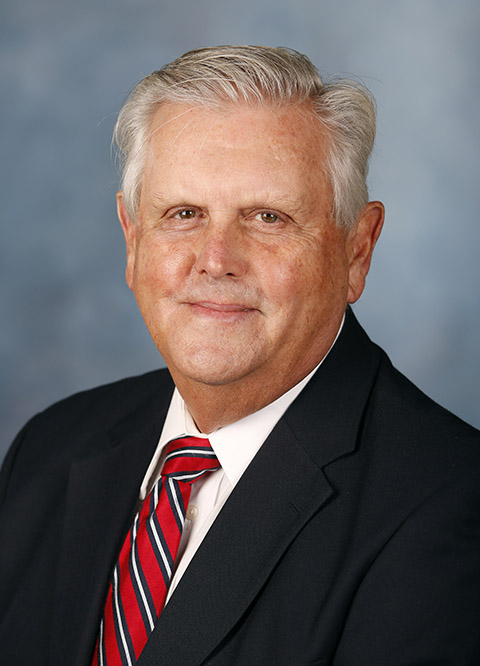

My blog this week is written by Kentucky Department of Education Chief of Staff Tommy Floyd and Executive Director of the Kentucky Board of Education, Mary Ann Miller. Though it was a team effort, Mary Ann was primarily responsible for our waiver application. They share what the waiver means for Kentucky.
Terry Holliday, Ph.D.
Education Commissioner
This week, we received some good news – the United States Department of Education (USED) approved Kentucky’s Elementary and Secondary Education Act (ESEA) flexibility waiver extension request. The waiver, which was to expire at the end of the current school year, now will run through the end of the 2018-19 school year. Kentucky was one of only a handful of states allowed to apply for a four-year waiver extension because of our demonstrated successes.
Seemingly countless hours were spent preparing the nearly 200 page request and in communication with USED staff on the fine points and clarifications needed in order to receive approval – all with good reason. We didn’t want schools and districts to have to take a step back to the prescriptive nature of federal accountability.
In 2001, Congress reauthorized the Elementary and Secondary Education Act of 1965 (ESEA), as the No Child Left Behind (NCLB) Act. The measure took effect on January 8, 2002 and has been the law of the land ever since, even as the time for congressional reauthorization in 2007 passed. In last week’s blog, Commissioner Terry Holliday explained the need for reauthorization of the Elementary and Secondary Education Act.
Until reauthorization occurs, however, the waiver is essential to prevent school districts from facing negative consequences under NCLB.
• Annual performance determinations, known as Adequate Yearly
Progress (AYP), would use only proficiency as the indicator.
• All students would have to demonstrate proficiency in reading/
language arts and mathematics (a laudable, but unrealistic goal).
• A school would be identified as failing if it missed AYP for even one
student group. Schools that are identified as failing would be required to
implement a series of interventions that increase in severity over several
years, with no differentiation between the lowest performing schools
and those needing help in only a few areas.
• Districts would have to reserve up to 30 percent of their Title I, Part A
allocation to provide mandatory professional development,
supplemental educational services (SES), and public school choice;
districts also would face funding limits and mandated SES.
• The hiring of paraprofessionals with Title I, Part A funds would be
restricted for LEAs that miss AYP and fail to make progress toward
reaching annual objectives for highly-qualified teachers.
• For districts in improvement, the percentage of Title II, Part A funds
available to be transferred into Title I, Part A would be restricted to
no more than 50 percent; also districts would have to notify the
state 30 days prior to making a transfer of funds to a different category
of need.
• Spending requirements for Rural and Low-Income School funding
would be tied to accountability.
Moreover, Kentucky would have to operate under a dual system of accountability, responding to federal AYP requirements while also moving forward with Kentucky’s Unbridled Learning system based on the Kentucky General Assembly’s Senate Bill 1 (2009). This would cause undue confusion for parents, students and educators. For example, schools could be labeled as failing under federal benchmarks, but successful under state benchmarks.
Because of the waiver, districts have been freed from these requirements, allowing them to serve more schools with better quality academic services in order to meet the needs of students. The state has implemented regulations and statutes that have allowed us to build a single, aligned system of accountability, using multiple measures and focused on college- and career-readiness for all students. Additionally, all Priority and Focus schools and districts have an improvement plan aligned with Kentucky Board of Education (KBE) strategic goals.
The waiver provides the opportunity to:
• implement the latest revisions to the accountability system approved by
the Kentucky Board of Education that aim to make the system more fair,
valid and reliable
• use one accountability system (Unbridled Learning), focused on
continuous improvement, for state and federal purposes
• implement a new statewide plan that will close achievement gaps by
providing additional supports to schools and districts, and reducing the
number of students scoring Novice on the state tests
• continue our focus on increasing the college- and career-readiness
rate and the graduation rate
• move forward with the aligned, statewide evaluation system for
teachers, principals and superintendents that stresses professional
growth, effectiveness and continuous improvement
• strengthens the supports for Priority Schools that do not exit this
status in three years
Kentucky is currently seen as a national leader in educational improvement. This great work across our Commonwealth is taking place thanks to daily leadership in buildings and districts adhering to a demanding system that is achieving results for students. We know that students, teachers, principals, superintendents, support staff and local board members will benefit from the continuance and enhancement of our current Kentucky Unbridled Learning for ALL accountability model that is provided by our waiver extension.
Until ESEA is reauthorized, the four-year waiver is our “best bet” to continue the progress made in Kentucky districts for the benefit of students.
Showing posts with label ESEA. Show all posts
Showing posts with label ESEA. Show all posts
Friday, April 3, 2015


Friday, March 27, 2015
The changing odds on ESEA reauthorization
Over the past few months, I have written numerous blogs about the need for reauthorization of the Elementary and Secondary Education Act (ESEA), also known as No Child Left Behind (NCLB).
This past week, I joined 48 other state chiefs and deputies in Washington, D.C. to continue to push for reauthorization. We were honored to meet with President Obama, Education Secretary Arne Duncan, Sen. Lamar Alexander (R-TN), Sen. Patty Murray (D-WA), Rep. John Kline (R-MN) and Rep. Bobby Scott (D-VA). Sen. Alexander is chair of the Senate Health, Education, Labor and Pensions (HELP) committee; Sen. Murray is the ranking member. Rep. Kline is chair of the House Workforce and Education committee.
ESEA reauthorization is critical. Let me offer a couple of reasons why.
• No Child Left Behind (2001) is broken and is no longer a valid method of accountability for our nation’s public schools.
• While waivers granted by the United States Department of Education have served as a stop-gap fix, the nation’s schools deserve stability and long term direction from Congress.
• The waiver process has led to the possibility of federal intrusion in states. For example, the original No Child Left Behind did not require states to address teacher evaluation; however, the waiver process has made that a requirement of states.
• While the Obama administration has been fairly flexible in the implementation of waivers, it is possible that the next administration could eliminate waivers or put more conditions into the waiver process that many states would not be able to implement.
Perhaps the key reason for reauthorization is the need for changes to the law of the land. If Kentucky were not able to get a waiver to NCLB, our school districts would have to notify parents that every school in their district was a low performing school (defined as not meeting Adequate Yearly Progress under NCLB). Losing a waiver and having to go back to NCLB requirements would mean that Kentucky school districts would lose flexibility on how they use more than $58 million in Title I monies and on other NCLB programs. In addition, school districts would be required to return to set asides for transportation, supplemental education services, school choice and professional development.
My take from the last week is that Sen. Alexander and Sen. Murray are working hard to find a way to get bipartisan support. Rep Kline is having difficulty getting enough Republican votes to pass a bill. The way the process should work is that House passes a bill, the Senate passes a bill, and then a conference committee is formed to work out the differences. Usually, the President and Sec. Duncan would be involved in working with the conference committee to get a bill that the President could sign.
I told an audience this week that in Kentucky we know a lot about basketball, bourbon and betting on horses. If I were to handicap the chances of ESEA reauthorization, it is probably an 80:1 shot that it will be reauthorized. I would encourage readers to let members of the Kentucky delegation (especially House members) know how important it is for Congress to reauthorize the nation's main law governing education.
This past week, I joined 48 other state chiefs and deputies in Washington, D.C. to continue to push for reauthorization. We were honored to meet with President Obama, Education Secretary Arne Duncan, Sen. Lamar Alexander (R-TN), Sen. Patty Murray (D-WA), Rep. John Kline (R-MN) and Rep. Bobby Scott (D-VA). Sen. Alexander is chair of the Senate Health, Education, Labor and Pensions (HELP) committee; Sen. Murray is the ranking member. Rep. Kline is chair of the House Workforce and Education committee.
ESEA reauthorization is critical. Let me offer a couple of reasons why.
• No Child Left Behind (2001) is broken and is no longer a valid method of accountability for our nation’s public schools.
• While waivers granted by the United States Department of Education have served as a stop-gap fix, the nation’s schools deserve stability and long term direction from Congress.
• The waiver process has led to the possibility of federal intrusion in states. For example, the original No Child Left Behind did not require states to address teacher evaluation; however, the waiver process has made that a requirement of states.
• While the Obama administration has been fairly flexible in the implementation of waivers, it is possible that the next administration could eliminate waivers or put more conditions into the waiver process that many states would not be able to implement.
Perhaps the key reason for reauthorization is the need for changes to the law of the land. If Kentucky were not able to get a waiver to NCLB, our school districts would have to notify parents that every school in their district was a low performing school (defined as not meeting Adequate Yearly Progress under NCLB). Losing a waiver and having to go back to NCLB requirements would mean that Kentucky school districts would lose flexibility on how they use more than $58 million in Title I monies and on other NCLB programs. In addition, school districts would be required to return to set asides for transportation, supplemental education services, school choice and professional development.
My take from the last week is that Sen. Alexander and Sen. Murray are working hard to find a way to get bipartisan support. Rep Kline is having difficulty getting enough Republican votes to pass a bill. The way the process should work is that House passes a bill, the Senate passes a bill, and then a conference committee is formed to work out the differences. Usually, the President and Sec. Duncan would be involved in working with the conference committee to get a bill that the President could sign.
I told an audience this week that in Kentucky we know a lot about basketball, bourbon and betting on horses. If I were to handicap the chances of ESEA reauthorization, it is probably an 80:1 shot that it will be reauthorized. I would encourage readers to let members of the Kentucky delegation (especially House members) know how important it is for Congress to reauthorize the nation's main law governing education.
Friday, January 30, 2015
Fixing a broken law
This blog is the third in a series about the reauthorization of the No Child Left Behind Act. My two previous blogs, Let the games begin and Grappling with testing questions provide additional background information.
This week, it was my honor to represent Kentucky and my fellow chief state school officers at a U.S. Senate Health, Education, Labor and Pension (HELP) committee meeting. I was one of five individuals to testify. The committee heard from a researcher, local superintendent, high school principal, a teacher and me. Each individual had five minutes to give prepared remarks. Readers may watch a video of the entire hearing – my testimony starts about 41 minutes in – or you may want to access a written text of my testimony.
I was very impressed with the level of preparation of each senator. The committee staff does a great job in organizing the hearings and providing senators with background information. I was also very pleased to see the senators focus a number of questions to the teacher and principal. We all need to do more listening to our teachers and principals.
The Senate hearing was the second in a series of hearings to gain feedback on what the components of a reauthorized NCLB should be. The first hearing focused on annual testing and this week’s hearing focused on supporting teachers and leaders. Next week, the committee will have a roundtable with practitioners to discuss innovation.
As for my predictions on reauthorization based on movement in the House and Senate, I would say that the odds are 50/50 that we will see a reauthorized bill out of Congress before the end of the year. These odds are significantly higher than at any point since 2007. What are the potential stumbling blocks?
Annual testing and accountability seem to be the key issues that must be resolved. It appears there is growing support for continuing the annual testing required by NCLB (reading and math annually in grades 3-8 and once in each in high school; science once in elementary, middle and high school). This is a total of 17 federally required tests. Annual reporting and disaggregation of test results by NCLB subgroups also seems to have strong support.
The line in the sand will probably be drawn with the accountability component. States and districts have added significantly to the number of tests given and percentage of time dedicated to testing due to federal and state ranking/rating of schools and districts based on test scores and to meet the Race to the Top and NCLB waiver requirements that tie teacher evaluation to test score performance. Teachers focus much more on teaching to the test and assessing students more often due to their evaluations being tied to the tests.
My prediction on the accountability model is that reauthorization will provide general guidelines on accountability, however, the final accountability models will be developed by states. The United States Department of Education (USED) will be prohibited from approving or disapproving a state-developed model for accountability unless the USED can provide significant research to support why the state model is not a valid model for accountability. This resolution on accountability will support the states that are working to create a more balanced model of accountability that focuses on the skills and outcomes that we need our students to achieve in order to be successful in postsecondary education and training, careers and as a contributing member of society.
My prediction on teacher evaluation models, required by Race to the Top and No Child Left Behind, is that these decisions will be left to states with flexibility to use federal funds to implement meaningful effectiveness systems that support teacher and leader professional growth which, in turn, impact growth in student learning. While the original intent of the NCLB waiver requirement for states to develop teacher and leader evaluation systems was a good idea, the implementation has led to micromanagement of states by USED. Also, there is scant evidence that states who have implemented the required plans have been able to provide any results that the new evaluation plans actually differentiate performance of teachers and/or impact student learning.
As I think back to the last reauthorization of the Elementary and Secondary Education Act (ESEA), I can recall the debates between Democrats and Republicans as NCLB was moving through Congress in 2001. Republicans were pushing for more state accountability. Democrats were agreeing with the accountability as long as results were disaggregated by subgroup so that the original intent of ESEA was met. It was interesting to me that in the hearing this week, the Republican senators were supporting the reauthorization language that would push accountability back to states with flexibility to merge funding streams. However, Sen. Warren (D – MA) was clear that federal dollars should not flow to states without accountability for how the funds were expended.
So how do the next few months look for reauthorization? The timeline for the Senate would be bill mark-up in February and hopefully floor debate in the spring with possible passage in the summer. The House timeline may be similar. A late summer or fall conference committee where the USED and President Obama would be heavily involved may be possible, with the potential for a bill signing by the end of the year.
Lots of moving pieces have to come together. Lots of potential pitfalls loom. However, I give it 50/50 odds because it is clear that both sides agree that the law is broken and must be fixed. It is also clear that educators and parents across the nation are disillusioned with the current testing and accountability requirements of NCLB and they are very vocal about the need for change. Stay tuned!!!
This week, it was my honor to represent Kentucky and my fellow chief state school officers at a U.S. Senate Health, Education, Labor and Pension (HELP) committee meeting. I was one of five individuals to testify. The committee heard from a researcher, local superintendent, high school principal, a teacher and me. Each individual had five minutes to give prepared remarks. Readers may watch a video of the entire hearing – my testimony starts about 41 minutes in – or you may want to access a written text of my testimony.
I was very impressed with the level of preparation of each senator. The committee staff does a great job in organizing the hearings and providing senators with background information. I was also very pleased to see the senators focus a number of questions to the teacher and principal. We all need to do more listening to our teachers and principals.
The Senate hearing was the second in a series of hearings to gain feedback on what the components of a reauthorized NCLB should be. The first hearing focused on annual testing and this week’s hearing focused on supporting teachers and leaders. Next week, the committee will have a roundtable with practitioners to discuss innovation.
As for my predictions on reauthorization based on movement in the House and Senate, I would say that the odds are 50/50 that we will see a reauthorized bill out of Congress before the end of the year. These odds are significantly higher than at any point since 2007. What are the potential stumbling blocks?
Annual testing and accountability seem to be the key issues that must be resolved. It appears there is growing support for continuing the annual testing required by NCLB (reading and math annually in grades 3-8 and once in each in high school; science once in elementary, middle and high school). This is a total of 17 federally required tests. Annual reporting and disaggregation of test results by NCLB subgroups also seems to have strong support.
The line in the sand will probably be drawn with the accountability component. States and districts have added significantly to the number of tests given and percentage of time dedicated to testing due to federal and state ranking/rating of schools and districts based on test scores and to meet the Race to the Top and NCLB waiver requirements that tie teacher evaluation to test score performance. Teachers focus much more on teaching to the test and assessing students more often due to their evaluations being tied to the tests.
My prediction on the accountability model is that reauthorization will provide general guidelines on accountability, however, the final accountability models will be developed by states. The United States Department of Education (USED) will be prohibited from approving or disapproving a state-developed model for accountability unless the USED can provide significant research to support why the state model is not a valid model for accountability. This resolution on accountability will support the states that are working to create a more balanced model of accountability that focuses on the skills and outcomes that we need our students to achieve in order to be successful in postsecondary education and training, careers and as a contributing member of society.
My prediction on teacher evaluation models, required by Race to the Top and No Child Left Behind, is that these decisions will be left to states with flexibility to use federal funds to implement meaningful effectiveness systems that support teacher and leader professional growth which, in turn, impact growth in student learning. While the original intent of the NCLB waiver requirement for states to develop teacher and leader evaluation systems was a good idea, the implementation has led to micromanagement of states by USED. Also, there is scant evidence that states who have implemented the required plans have been able to provide any results that the new evaluation plans actually differentiate performance of teachers and/or impact student learning.
As I think back to the last reauthorization of the Elementary and Secondary Education Act (ESEA), I can recall the debates between Democrats and Republicans as NCLB was moving through Congress in 2001. Republicans were pushing for more state accountability. Democrats were agreeing with the accountability as long as results were disaggregated by subgroup so that the original intent of ESEA was met. It was interesting to me that in the hearing this week, the Republican senators were supporting the reauthorization language that would push accountability back to states with flexibility to merge funding streams. However, Sen. Warren (D – MA) was clear that federal dollars should not flow to states without accountability for how the funds were expended.
So how do the next few months look for reauthorization? The timeline for the Senate would be bill mark-up in February and hopefully floor debate in the spring with possible passage in the summer. The House timeline may be similar. A late summer or fall conference committee where the USED and President Obama would be heavily involved may be possible, with the potential for a bill signing by the end of the year.
Lots of moving pieces have to come together. Lots of potential pitfalls loom. However, I give it 50/50 odds because it is clear that both sides agree that the law is broken and must be fixed. It is also clear that educators and parents across the nation are disillusioned with the current testing and accountability requirements of NCLB and they are very vocal about the need for change. Stay tuned!!!
Friday, January 23, 2015
Grappling with testing questions
This is the second blog in a series on the reauthorization of the Elementary Secondary Education Act (ESEA), last reauthorized in 2001 as the No Child Left Behind Act (NCLB). Last week's blog provides the overview.
Many will look at education reform from 1983-2015 as having four distinct waves. During the period from 1983-1989, several key governors and state legislatures led the way in education reform based on reports like A Nation at Risk. From 1989-2000, these governors were bolstered in their efforts by national legislation supporting the implementation of more rigorous standards for learning and development of optional state assessments and accountability. 2001-2011 was the era of NCLB. The fourth wave began in 2011 with the NCLB waivers made possible through executive action by President Obama and implemented by Secretary of Education, Arne Duncan.
We come now to 2015 and it appears Congress is finally serious about reauthorization of a law that was due for reauthorization in 2007. Last week, Sen. Lamar Alexander (who served as U.S. Secretary of Education under President George H.W. Bush) presented a discussion draft for a bill called the Every Child College and Career Ready Act of 2015. One of the key elements in the proposed legislation and discussion draft has to do with annual testing requirements.
NCLB required every student to be tested annually in grades 3-8 in reading and math and once in high school. Also, schools were required to test every student in science at least once in elementary, middle and high school.
Many supporters of annual testing say that it is a civil rights issue and a moral imperative. This concept was supported by the requirement in NCLB that every student make annual yearly progress and the public receive annual information on the progress of certain groups of students who were identified in NCLB. Supporters of annual testing also say that schools, parents and students need to know if students are learning and if they are not, then teachers, schools, districts, and states should be required to do something to address the learning gaps.
On the other side of the equation, there are many who say that annual testing has narrowed the curriculum in schools, led to reductions in the arts, social studies, science and other curriculum offerings that lead to a balanced curriculum. They focus blame on schools and teachers when the real issue is poverty. Also, many opponents of annual testing fear that the testing regiment has had a negative impact on critical thinking and other 21st-century skills.
Recent NCLB waiver requirements have received significant concern from both sides. Many critics say they support annual testing but do not support the use of test results for evaluation of teachers, principals or schools. Opponents of annual testing also promote more creative and innovative ways of assessing student progress and reporting the annual results of student progress.
Several education writers have said that NCLB worked so we should keep the component of annual testing. Others have said that NCLB did not work. Some critics say that states actually made more progress in 1992-2000 than after NCLB was implemented in 2001.
While many states did make significant reforms to education finance and education processes during the waves of reform, I want to highlight three specific states – Kentucky, North Carolina and Texas. Of course, Kentucky reform efforts were driven by the General Assembly through the passage of the Kentucky Education Reform Act in 1990. North Carolina certainly had strong leadership from Gov. James Hunt to develop and implement the ABC’s of Public Education. Texas, however, was the state that became the eventual model for No Child Left Behind assessment and accountability provisions. Governor George W. Bush certainly championed the efforts in Texas.
I looked at national progress and the progress in KY, NC and Texas on the ONLY independent measure of student learning that we have as nation and is respected as the Nation’s Report Card – National Assessment of Educational Progress (NAEP). NAEP is given every 2 years in 4th grade and 8th grade for reading and mathematics. I looked at scale score gains. One important caveat is that NAEP had adjustments due to implementing more accommodations for special needs students and increasing the percentage of special needs students taking the NAEP during this period.
In reading at 4th grade during the pre-NCLB era of 1992-2000, the nation lost 4 points in reading; KY gained 6; NC gained 10; and Texas gained 4. In 4th grade reading for the post-NCLB era of 2000-2013, the nation gained 9 points; KY gained 5; and NC/TX stayed the same.
In 8th grade reading for the pre-NCLB era, the nation gained 4; KY gained 3; and there were no gains in NC or TX. In the post-NCLB era, the nation gained 4; KY gained 5; NC had no gain; and TX gained 2.
In 4th grade math for the pre-NCLB era, the nation gained 8 points, KY gained 6; NC gained 19; and TX gained 15. In the post-NCLB era, the nation gained 18; KY gained 22; NC gained 15; and TX gained 11.
In 8th grade math for the pre-NCLB era, the nation gained 12; KY gained 15; NC gained 30; and TX gained 17. In the post-NCLB era, the nation gained 12; KY gained 11; NC gained 10; and TX gained 15.
I will leave readers to do their own analysis; however, it does appear that the nation has gained in reading and math during both eras. As is usually the case, schools are able to impact math achievement more than reading achievement.
I used the three states for comparison for a very specific purpose. NC and TX were both states that were implementing strong annual testing and accountability programs well in advance of NCLB. Kentucky had to be dragged into NCLB. The Kentucky Education Reform Act of 1990 pushed for more authentic assessment of student progress and Kentucky was leading the nation in development of performance-based assessment through a robust portfolio system. Of course, the annual testing was the route the nation followed due to validity, reliability, and low cost of a multiple choice annual assessment.
My key point – there are many methods that states could use to provide annual determinations of student progress and report the results for individual students, groups of students, parents, schools and districts. Annual low cost multiple choice tests are not the only answer. In the 1990s Kentucky made significant progress in providing more performance-based assessments that informed instruction, however, the efforts were lost because the performance assessments lacked the validity and reliability of multiple choice tests. Also, performance assessments are more expensive due to teacher training and assessment scoring.
My concern is that advocates of annual testing are trying to paint anyone who proposes an alternative model such as grade span testing with more formative assessments that drive instructional improvement as being an opponent of civil rights and equity for all students. This seems to be a false dichotomy since more formative assessment could better inform instruction and allow for earlier interventions for students who have learning gaps.
As states, our problems stem from our own lack of leadership in the pre- and post-NCLB era. Our track record in closing achievement gaps and pushing for higher standards has been mixed from state to state. Many believe that without federal requirements that states will go back to an era of “bigotry of low expectations.” They may be right. The debate will continue.
My hope is that all parties will engage in serious dialogue utilizing the rich research that we have built since the 1980s on education reform rather than engage in hyperbole and casting opponents in a negative light.
Many will look at education reform from 1983-2015 as having four distinct waves. During the period from 1983-1989, several key governors and state legislatures led the way in education reform based on reports like A Nation at Risk. From 1989-2000, these governors were bolstered in their efforts by national legislation supporting the implementation of more rigorous standards for learning and development of optional state assessments and accountability. 2001-2011 was the era of NCLB. The fourth wave began in 2011 with the NCLB waivers made possible through executive action by President Obama and implemented by Secretary of Education, Arne Duncan.
We come now to 2015 and it appears Congress is finally serious about reauthorization of a law that was due for reauthorization in 2007. Last week, Sen. Lamar Alexander (who served as U.S. Secretary of Education under President George H.W. Bush) presented a discussion draft for a bill called the Every Child College and Career Ready Act of 2015. One of the key elements in the proposed legislation and discussion draft has to do with annual testing requirements.
NCLB required every student to be tested annually in grades 3-8 in reading and math and once in high school. Also, schools were required to test every student in science at least once in elementary, middle and high school.
Many supporters of annual testing say that it is a civil rights issue and a moral imperative. This concept was supported by the requirement in NCLB that every student make annual yearly progress and the public receive annual information on the progress of certain groups of students who were identified in NCLB. Supporters of annual testing also say that schools, parents and students need to know if students are learning and if they are not, then teachers, schools, districts, and states should be required to do something to address the learning gaps.
On the other side of the equation, there are many who say that annual testing has narrowed the curriculum in schools, led to reductions in the arts, social studies, science and other curriculum offerings that lead to a balanced curriculum. They focus blame on schools and teachers when the real issue is poverty. Also, many opponents of annual testing fear that the testing regiment has had a negative impact on critical thinking and other 21st-century skills.
Recent NCLB waiver requirements have received significant concern from both sides. Many critics say they support annual testing but do not support the use of test results for evaluation of teachers, principals or schools. Opponents of annual testing also promote more creative and innovative ways of assessing student progress and reporting the annual results of student progress.
Several education writers have said that NCLB worked so we should keep the component of annual testing. Others have said that NCLB did not work. Some critics say that states actually made more progress in 1992-2000 than after NCLB was implemented in 2001.
While many states did make significant reforms to education finance and education processes during the waves of reform, I want to highlight three specific states – Kentucky, North Carolina and Texas. Of course, Kentucky reform efforts were driven by the General Assembly through the passage of the Kentucky Education Reform Act in 1990. North Carolina certainly had strong leadership from Gov. James Hunt to develop and implement the ABC’s of Public Education. Texas, however, was the state that became the eventual model for No Child Left Behind assessment and accountability provisions. Governor George W. Bush certainly championed the efforts in Texas.
I looked at national progress and the progress in KY, NC and Texas on the ONLY independent measure of student learning that we have as nation and is respected as the Nation’s Report Card – National Assessment of Educational Progress (NAEP). NAEP is given every 2 years in 4th grade and 8th grade for reading and mathematics. I looked at scale score gains. One important caveat is that NAEP had adjustments due to implementing more accommodations for special needs students and increasing the percentage of special needs students taking the NAEP during this period.
In reading at 4th grade during the pre-NCLB era of 1992-2000, the nation lost 4 points in reading; KY gained 6; NC gained 10; and Texas gained 4. In 4th grade reading for the post-NCLB era of 2000-2013, the nation gained 9 points; KY gained 5; and NC/TX stayed the same.
In 8th grade reading for the pre-NCLB era, the nation gained 4; KY gained 3; and there were no gains in NC or TX. In the post-NCLB era, the nation gained 4; KY gained 5; NC had no gain; and TX gained 2.
In 4th grade math for the pre-NCLB era, the nation gained 8 points, KY gained 6; NC gained 19; and TX gained 15. In the post-NCLB era, the nation gained 18; KY gained 22; NC gained 15; and TX gained 11.
In 8th grade math for the pre-NCLB era, the nation gained 12; KY gained 15; NC gained 30; and TX gained 17. In the post-NCLB era, the nation gained 12; KY gained 11; NC gained 10; and TX gained 15.
I will leave readers to do their own analysis; however, it does appear that the nation has gained in reading and math during both eras. As is usually the case, schools are able to impact math achievement more than reading achievement.
I used the three states for comparison for a very specific purpose. NC and TX were both states that were implementing strong annual testing and accountability programs well in advance of NCLB. Kentucky had to be dragged into NCLB. The Kentucky Education Reform Act of 1990 pushed for more authentic assessment of student progress and Kentucky was leading the nation in development of performance-based assessment through a robust portfolio system. Of course, the annual testing was the route the nation followed due to validity, reliability, and low cost of a multiple choice annual assessment.
My key point – there are many methods that states could use to provide annual determinations of student progress and report the results for individual students, groups of students, parents, schools and districts. Annual low cost multiple choice tests are not the only answer. In the 1990s Kentucky made significant progress in providing more performance-based assessments that informed instruction, however, the efforts were lost because the performance assessments lacked the validity and reliability of multiple choice tests. Also, performance assessments are more expensive due to teacher training and assessment scoring.
My concern is that advocates of annual testing are trying to paint anyone who proposes an alternative model such as grade span testing with more formative assessments that drive instructional improvement as being an opponent of civil rights and equity for all students. This seems to be a false dichotomy since more formative assessment could better inform instruction and allow for earlier interventions for students who have learning gaps.
As states, our problems stem from our own lack of leadership in the pre- and post-NCLB era. Our track record in closing achievement gaps and pushing for higher standards has been mixed from state to state. Many believe that without federal requirements that states will go back to an era of “bigotry of low expectations.” They may be right. The debate will continue.
My hope is that all parties will engage in serious dialogue utilizing the rich research that we have built since the 1980s on education reform rather than engage in hyperbole and casting opponents in a negative light.
Friday, January 16, 2015
Let the games begin
For the first time in years, it appears there may be serious talk of trying to reauthorize the Elementary and Secondary Education Act. It’s most recent iteration, the No Child Left Behind Act (NCLB) of 2001 was due for reauthorization in 2007, but like its predecessor, political acrimony has held up progress.
However, recent activity in Congress signals the best chance for reauthorization in the last 8 years. Of course, if we are to see reauthorization, both the Senate and House must agree, which will take some Democrats in the Senate crossing the aisle, and the president would have to agree to sign the bill. So it is not a slam dunk.
Over the next few weeks, I will use this blog to keep readers up to date on the progress toward reauthorization and discuss some of the key issues that must be resolved.
The first question is, why do we need reauthorization?
No Child Left Behind aspired to ensure all children would become proficient in reading and math. To reach this noble yet lofty goal, all states would adopt high standards, assess those standards, and hold schools accountable for helping all children reach proficiency. It was a great goal and a great strategy that was championed by both Democrats and Republicans. Yet, history has shown that excessive federal involvement in education has always been problematic.
The problems began almost immediately upon passage of NCLB in 2001. It became more about the numbers of kids who crossed the proficiency finish line than about teaching kids the skills they needed for success.
Some states actually lowered standards and set the cut point for proficiency very low. Schools started teaching to the test and in many cases there were cuts to student opportunities for the arts, physical education, science, social studies, world language and other activities that ensure a balanced education. Many schools began teaching only to the “bubble kids” – those students closest to meeting the state proficiency score. Students who had already reached the state proficiency level or who were well below it were often ignored.
The result? In some states, 90 percent of students performed at the proficient level on state tests. Yet on the National Assessment of Educational Progress (NAEP), a uniform test given across the country as a means of comparison between the states, only 20 percent of that same state’s students performed at the proficient level. A study of state cut scores compared with NAEP cut scores revealed a huge discrepancy in what was considered proficient among the states. U.S. Chamber of Commerce reports showed the truth in labeling of each state based on the NAEP comparisons. In Tennessee, the Governor and other policy makers basically said the state was lying to parents and students. The very law that was supposed to make sure no child was left behind was, in fact, leaving masses of children behind.
By 2004, it became clear that there were big problems with the implementation of No Child Left Behind. While the vision and strategy were excellent, the implementation was very poor and had an unpredictable, pernicious impact on students.
In attempting to respond to the inaction of Congress to right the wrongs of NCLB through reauthorization, Secretary Duncan and President Obama worked through executive action to allow states to seek flexibility and waivers from some of the requirements of No Child Left Behind. Again, on the surface, this sounded like a great idea. Chief state school officers appreciated this relief and the opportunity to improve schools – more than 40 states requested a waiver. I have written previous blogs (The good news and bad news on NCLB waivers; USED action contrary to state, federal law; Politics as usual or not?) that have provided the developing concerns and problems with the waiver process and my true hope and desire for reauthorization.
Now, Senator Lamar Alexander (R-TN), chair of the Senate Health Education Labor and Pensions Committee, has laid out a plan for reauthorization of No Child Left Behind. Rep. John Kline (R-MN), chair of the House Education Committee, has done the same. Every education organization and think tank in Washington, D.C. and many civil rights organizations have brought forth guiding principles for reauthorization. The next 3 – 6 months could be very interesting.
So, let the games begin and let’s hope everyone can set aside the political acrimony in favor of our children.
Next week, I will address the top issue that must be considered with ESEA/NCLB reauthorization – standardized testing.
However, recent activity in Congress signals the best chance for reauthorization in the last 8 years. Of course, if we are to see reauthorization, both the Senate and House must agree, which will take some Democrats in the Senate crossing the aisle, and the president would have to agree to sign the bill. So it is not a slam dunk.
Over the next few weeks, I will use this blog to keep readers up to date on the progress toward reauthorization and discuss some of the key issues that must be resolved.
The first question is, why do we need reauthorization?
No Child Left Behind aspired to ensure all children would become proficient in reading and math. To reach this noble yet lofty goal, all states would adopt high standards, assess those standards, and hold schools accountable for helping all children reach proficiency. It was a great goal and a great strategy that was championed by both Democrats and Republicans. Yet, history has shown that excessive federal involvement in education has always been problematic.
The problems began almost immediately upon passage of NCLB in 2001. It became more about the numbers of kids who crossed the proficiency finish line than about teaching kids the skills they needed for success.
Some states actually lowered standards and set the cut point for proficiency very low. Schools started teaching to the test and in many cases there were cuts to student opportunities for the arts, physical education, science, social studies, world language and other activities that ensure a balanced education. Many schools began teaching only to the “bubble kids” – those students closest to meeting the state proficiency score. Students who had already reached the state proficiency level or who were well below it were often ignored.
The result? In some states, 90 percent of students performed at the proficient level on state tests. Yet on the National Assessment of Educational Progress (NAEP), a uniform test given across the country as a means of comparison between the states, only 20 percent of that same state’s students performed at the proficient level. A study of state cut scores compared with NAEP cut scores revealed a huge discrepancy in what was considered proficient among the states. U.S. Chamber of Commerce reports showed the truth in labeling of each state based on the NAEP comparisons. In Tennessee, the Governor and other policy makers basically said the state was lying to parents and students. The very law that was supposed to make sure no child was left behind was, in fact, leaving masses of children behind.
By 2004, it became clear that there were big problems with the implementation of No Child Left Behind. While the vision and strategy were excellent, the implementation was very poor and had an unpredictable, pernicious impact on students.
In attempting to respond to the inaction of Congress to right the wrongs of NCLB through reauthorization, Secretary Duncan and President Obama worked through executive action to allow states to seek flexibility and waivers from some of the requirements of No Child Left Behind. Again, on the surface, this sounded like a great idea. Chief state school officers appreciated this relief and the opportunity to improve schools – more than 40 states requested a waiver. I have written previous blogs (The good news and bad news on NCLB waivers; USED action contrary to state, federal law; Politics as usual or not?) that have provided the developing concerns and problems with the waiver process and my true hope and desire for reauthorization.
Now, Senator Lamar Alexander (R-TN), chair of the Senate Health Education Labor and Pensions Committee, has laid out a plan for reauthorization of No Child Left Behind. Rep. John Kline (R-MN), chair of the House Education Committee, has done the same. Every education organization and think tank in Washington, D.C. and many civil rights organizations have brought forth guiding principles for reauthorization. The next 3 – 6 months could be very interesting.
So, let the games begin and let’s hope everyone can set aside the political acrimony in favor of our children.
Next week, I will address the top issue that must be considered with ESEA/NCLB reauthorization – standardized testing.
Friday, December 19, 2014
Education issues and the 2015 General Assembly
Season’s greetings! I hope that readers of this blog will take time over the next couple of weeks to relax and spend time with family and friends. The holiday season is an excellent time to recharge your batteries. I plan to do just that, so this will be my last blog for 2014, but will return to the keyboard for a January 9, 2015 entry.
As we look forward to the New Year, the Kentucky Department of Education (KDE) is preparing for a busy legislative session. Here are some of the hot topics we predict will be on the education agenda for the upcoming General Assembly.
1) Charter Schools – we will again see legislation to create charter "
schools in Kentucky. Our state is one of only eight states without
charters. I am hearing about the possibility of a small pilot of
five to six charter schools in districts that have very low-performing
schools with significant achievement gaps.
2) Teacher Pension Plan – the Kentucky Teacher Retirement System
has asked the General Assembly to consider a plan that would require
a $3.3 billion bond to shore up the underfunded retirement system.
This system is critical for recruitment and retention of high-quality
teachers.
3) School Funding – while 2015 is not a budget session, there are
a number of funding issues that could surface. The Council for
Better Education report recently released at the Kentucky
Association of School Superintendents’ winter meeting will garner
a lot of attention. The $2 billion-plus price tag is sure to get attention. |
Also, KDE will be releasing a report on funding of the career and
technical education programs in Kentucky. Finally, we may see
discussion of impact of revenue shortfall and SEEK shortfall.
4) Dual Credit – a recent set of recommendations from the dual
credit task force will generate discussion about how to ensure
quality, access, funding, and transferability of courses.
5) Merging County Systems – several county school systems
have been identified for state assistance and state management.
Some county systems are very close to not having a 2 percent
fund balance. The General Assembly previously enacted legislation
that allowed a financially insolvent independent district to merge
with a county system; however, currently there are no statutes that
allow for the merger of an insolvent county system to merge with
another system.
6) Closing Achievement Gaps – this issue will be part of the
charter school issue but will also be an overarching theme of the
Education Committees. The achievement gap in Kentucky begins
before students enter kindergarten, continues throughout P-12,
postsecondary, and is very obvious when we look at labor and salary
studies for adults.
At the national level, KDE will be working to support reauthorization of the Elementary and Secondary Education Act (ESEA) – most recently dubbed the No Child Left Behind Act – and the Carl Perkins Act which is the primary vehicle for federal funding of career and technical education. We are very excited about the potential of both bills moving forward very quickly under the leadership of Sen. Alexander of Tennessee and Majority Leader McConnell.
As we look forward to the New Year, the Kentucky Department of Education (KDE) is preparing for a busy legislative session. Here are some of the hot topics we predict will be on the education agenda for the upcoming General Assembly.
1) Charter Schools – we will again see legislation to create charter "
schools in Kentucky. Our state is one of only eight states without
charters. I am hearing about the possibility of a small pilot of
five to six charter schools in districts that have very low-performing
schools with significant achievement gaps.
2) Teacher Pension Plan – the Kentucky Teacher Retirement System
has asked the General Assembly to consider a plan that would require
a $3.3 billion bond to shore up the underfunded retirement system.
This system is critical for recruitment and retention of high-quality
teachers.
3) School Funding – while 2015 is not a budget session, there are
a number of funding issues that could surface. The Council for
Better Education report recently released at the Kentucky
Association of School Superintendents’ winter meeting will garner
a lot of attention. The $2 billion-plus price tag is sure to get attention. |
Also, KDE will be releasing a report on funding of the career and
technical education programs in Kentucky. Finally, we may see
discussion of impact of revenue shortfall and SEEK shortfall.
4) Dual Credit – a recent set of recommendations from the dual
credit task force will generate discussion about how to ensure
quality, access, funding, and transferability of courses.
5) Merging County Systems – several county school systems
have been identified for state assistance and state management.
Some county systems are very close to not having a 2 percent
fund balance. The General Assembly previously enacted legislation
that allowed a financially insolvent independent district to merge
with a county system; however, currently there are no statutes that
allow for the merger of an insolvent county system to merge with
another system.
6) Closing Achievement Gaps – this issue will be part of the
charter school issue but will also be an overarching theme of the
Education Committees. The achievement gap in Kentucky begins
before students enter kindergarten, continues throughout P-12,
postsecondary, and is very obvious when we look at labor and salary
studies for adults.
At the national level, KDE will be working to support reauthorization of the Elementary and Secondary Education Act (ESEA) – most recently dubbed the No Child Left Behind Act – and the Carl Perkins Act which is the primary vehicle for federal funding of career and technical education. We are very excited about the potential of both bills moving forward very quickly under the leadership of Sen. Alexander of Tennessee and Majority Leader McConnell.
Friday, December 5, 2014
Kentucky Rising
“Kentucky's first settlers brought with them a dedication to democracy and a sense of limitless hope about the future. They were determined to participate in world progress in science, education, and manufacturing. The early years of statehood were an era of great optimism and progress and the eyes of the nation often focused on Kentucky. … Globally oriented Kentuckians were determined to transform the frontier into a network of communities exporting to the world market. …”
These words come from a book titled Kentucky Rising and while they describe Kentucky more than two centuries ago, they serve as inspiration today for a new initiative in our state on which work has already begun. We call it Kentucky Rising.
In order for the economy of the Commonwealth to continue to grow and create jobs for our citizens, the education community must respond and create a stronger workforce that meets the requirements of foreign industries who are investing directly in Kentucky and industries that are creating trade with other countries. Kentucky Rising will establish criteria for a diploma/certificate/endorsement that certifies a high school graduate meets the requirements to take the next steps, whether that is pursuit of a career or postsecondary education, to ensure our workforce is an asset for global economic development.
A joint meeting of the chairs and vice-chairs of the Council on Postsecondary Education (CPE), Education Professional Standards Board (EPSB) and Kentucky Board of Education (KBE) and their agency heads is being planned for some time in January to gain support for the Kentucky Rising initiative. A statewide meeting to gain support from multiple partners will follow. In addition, a comprehensive needs-assessment will be completed to identify current initiatives and programs that should be integrated with Kentucky Rising.
All of these activities will be used to gather input for creating a unified plan in which CPE, EPSB, KBE and the Kentucky Department of Education, and other partners will have key roles and responsibilities. Funding and staff support for Kentucky Rising will be managed through The Fund for Transforming Education in Kentucky.
This is an exciting venture that holds great promise for our children and our state. I will share more about Kentucky Rising as we move forward.
On another topic, I wanted to briefly follow up to my blog, Politics as usual or not?, from several weeks ago about federal waivers and the reauthorization of the Elementary and Secondary Education Act (ESEA).
Since then, the U.S. Department of Education (USED) has notified Kentucky that our state is one of seven eligible to apply for a four-year renewal of its ESEA Flexibility Waiver (most states can apply for only a three-year renewal) and participate in an expedited review process. Our current waiver expires at the end of the current school year.
Kentucky was granted this opportunity because of the focused work that our educators, partners and state department staff have carried out to implement Kentucky’s plan under ESEA flexibility. By participating in the expedited review process, the due date for the revised waiver request will be January 30. USED will provide a final decision by the end of March.
As is customary when the waiver document is revised, it will be made available to education constituents, the public and the board for review and feedback before it is submitted. Any feedback that we receive is reported to USED as part of the waiver submission process.
These words come from a book titled Kentucky Rising and while they describe Kentucky more than two centuries ago, they serve as inspiration today for a new initiative in our state on which work has already begun. We call it Kentucky Rising.
In order for the economy of the Commonwealth to continue to grow and create jobs for our citizens, the education community must respond and create a stronger workforce that meets the requirements of foreign industries who are investing directly in Kentucky and industries that are creating trade with other countries. Kentucky Rising will establish criteria for a diploma/certificate/endorsement that certifies a high school graduate meets the requirements to take the next steps, whether that is pursuit of a career or postsecondary education, to ensure our workforce is an asset for global economic development.
A joint meeting of the chairs and vice-chairs of the Council on Postsecondary Education (CPE), Education Professional Standards Board (EPSB) and Kentucky Board of Education (KBE) and their agency heads is being planned for some time in January to gain support for the Kentucky Rising initiative. A statewide meeting to gain support from multiple partners will follow. In addition, a comprehensive needs-assessment will be completed to identify current initiatives and programs that should be integrated with Kentucky Rising.
All of these activities will be used to gather input for creating a unified plan in which CPE, EPSB, KBE and the Kentucky Department of Education, and other partners will have key roles and responsibilities. Funding and staff support for Kentucky Rising will be managed through The Fund for Transforming Education in Kentucky.
This is an exciting venture that holds great promise for our children and our state. I will share more about Kentucky Rising as we move forward.
On another topic, I wanted to briefly follow up to my blog, Politics as usual or not?, from several weeks ago about federal waivers and the reauthorization of the Elementary and Secondary Education Act (ESEA).
Since then, the U.S. Department of Education (USED) has notified Kentucky that our state is one of seven eligible to apply for a four-year renewal of its ESEA Flexibility Waiver (most states can apply for only a three-year renewal) and participate in an expedited review process. Our current waiver expires at the end of the current school year.
Kentucky was granted this opportunity because of the focused work that our educators, partners and state department staff have carried out to implement Kentucky’s plan under ESEA flexibility. By participating in the expedited review process, the due date for the revised waiver request will be January 30. USED will provide a final decision by the end of March.
As is customary when the waiver document is revised, it will be made available to education constituents, the public and the board for review and feedback before it is submitted. Any feedback that we receive is reported to USED as part of the waiver submission process.
Friday, November 14, 2014
Politics as usual or not?
As the dust settles from last week’s election, there is much talk and speculation about the impact the election may have on public education in this country. At least that has been a primary topic for discussion this week at the Council of Chief State School Officers Annual Policy Forum that I am attending.
Secretary of Education Arne Duncan attended the meeting and took it as his opportunity to roll out the new Elementary and Secondary Education Act/No Child Left Behind waiver process to state education leaders.
In the past few months, I have been critical of Secretary Duncan and the waiver process (see my blogs, USED action contrary to state, federal law; The good news and bad news on NCLB waivers). My criticism has been focused on the fact that the original language in the Elementary and Secondary Education Act said states could submit waiver requests to improve teaching and learning. As long as they met that goal, the waivers were unconditional. However, it appears in recent years waivers have become conditional – based on whether a state meets the requirements of the three guiding principles of college/career ready standards, a differentiated accountability system and educator evaluation. Additionally, I have expressed concerns about the time and resources involved at the state level in the waiver application process.
Listening to the Secretary talk about the upcoming waiver process, it was apparent that he and his team had listened not only to me, but also to other state chiefs. Secretary Duncan told us as did the communication and guidance from the U.S. Department of Education (USED) that the waiver process is being streamlined and states will be able to seek a three year extension and in some cases a four year waiver extension.
While I am confident that the Secretary and his staff have listened to our concerns, during our meeting, I asked him about his priorities given the recent election. Despite being there to talk about the waiver process, it was very clear that his priority was reauthorization of the Elementary and Secondary Education Act.
I wholeheartedly agree! It is time for us to make reauthorization of No Child Left Behind the top priority. Given the new Senate leadership in Congress, I am hopeful that the Senate and House will be able to work in a bipartisan manner to pass legislation. While the waivers have been helpful, it is critical to have a long term solution through reauthorization. We will see in early January whether new congressional leadership works to govern or continues politics as usual. I certainly hope it is the former rather than the latter.
Secretary of Education Arne Duncan attended the meeting and took it as his opportunity to roll out the new Elementary and Secondary Education Act/No Child Left Behind waiver process to state education leaders.
In the past few months, I have been critical of Secretary Duncan and the waiver process (see my blogs, USED action contrary to state, federal law; The good news and bad news on NCLB waivers). My criticism has been focused on the fact that the original language in the Elementary and Secondary Education Act said states could submit waiver requests to improve teaching and learning. As long as they met that goal, the waivers were unconditional. However, it appears in recent years waivers have become conditional – based on whether a state meets the requirements of the three guiding principles of college/career ready standards, a differentiated accountability system and educator evaluation. Additionally, I have expressed concerns about the time and resources involved at the state level in the waiver application process.
Listening to the Secretary talk about the upcoming waiver process, it was apparent that he and his team had listened not only to me, but also to other state chiefs. Secretary Duncan told us as did the communication and guidance from the U.S. Department of Education (USED) that the waiver process is being streamlined and states will be able to seek a three year extension and in some cases a four year waiver extension.
While I am confident that the Secretary and his staff have listened to our concerns, during our meeting, I asked him about his priorities given the recent election. Despite being there to talk about the waiver process, it was very clear that his priority was reauthorization of the Elementary and Secondary Education Act.
I wholeheartedly agree! It is time for us to make reauthorization of No Child Left Behind the top priority. Given the new Senate leadership in Congress, I am hopeful that the Senate and House will be able to work in a bipartisan manner to pass legislation. While the waivers have been helpful, it is critical to have a long term solution through reauthorization. We will see in early January whether new congressional leadership works to govern or continues politics as usual. I certainly hope it is the former rather than the latter.
Friday, September 19, 2014
Putting aside micromanagement for the sake of students
Last week, the Kentucky Department of Education (KDE) held the second annual Superintendent Summit; almost all 173 school districts were represented either by the superintendent or their designee. The summit is designed so that superintendents can provide feedback on KDE initiatives and they can hear from each other about best practices happening in each district.
We asked for superintendents to respond to three basic questions about KDE/Kentucky Board of Education (KBE) initiatives: What is working well? What needs to be improved? What specific suggestions do you have for improvement? We then compile the superintendent responses and provide a summary of the feedback. Throughout the school year, KDE reacts to concerns and suggestions and provides a summary at the next summit on specific actions KDE/KBE took to address the superintendent’s feedback.
During this year’s summit, I was reminded that every level of an organization believes the level above is micromanaging. Superintendents were certainly clear that they had concerns about KDE micromanagement of local districts and KDE oversight of data and evidences for specific state programs. Of course, principals usually express similar concerns about superintendents and teachers express similar concerns about principals and district office. This reminder was significant because as a state chief, I have expressed similar concerns with the United States Department of Education (USED). Many of my fellow state chiefs also have expressed similar concerns.
Readers may remember several recent posts related to my concerns with USED over the No Child Left Behind waiver process (USED action contrary to state, federal law; The good news and bad news on NCLB waivers; Congressional inaction leaving education behind). As a result of my blogs and expressions of concerns by other state chiefs, Education Secretary Arne Duncan asked for a meeting with the board of directors of the Council of Chief State School Officers. That meeting was held on September 12.
The meeting was a very productive. Secretary Duncan and his team wanted to hear our specific concerns about the waiver process. The concerns expressed by my fellow chiefs were very much the same that I had written about. Secretary Duncan and his team had already prepared some possible solutions to our concerns. Secretary Duncan apologized for the breakdown in communication with regard to Kentucky’s waiver request around science assessments. All in all, the chiefs felt they had been listened to and USED was responding to our concerns. Just like my meeting with local superintendents, a leader should listen to concerns from the field and respond with improvements where possible and explain why certain concerns cannot be addressed.
While the chiefs certainly appreciate Sec. Duncan listening and responding to our concerns, the entire basis for the conversation needs to change. Congress needs to do its job. Education must not fall victim to micromanagement by political interests on either side of the aisle – if it does, our children are the ones who lose. Congress needs to reauthorize the Elementary and Secondary Education Act (No Child Left Behind) and allow states the flexibility to manage K-12 education as long as there is a focus on improving teaching and learning.
With upcoming mid-term elections, the electorate has an opportunity to send our elected officials a message – do your job!
We asked for superintendents to respond to three basic questions about KDE/Kentucky Board of Education (KBE) initiatives: What is working well? What needs to be improved? What specific suggestions do you have for improvement? We then compile the superintendent responses and provide a summary of the feedback. Throughout the school year, KDE reacts to concerns and suggestions and provides a summary at the next summit on specific actions KDE/KBE took to address the superintendent’s feedback.
During this year’s summit, I was reminded that every level of an organization believes the level above is micromanaging. Superintendents were certainly clear that they had concerns about KDE micromanagement of local districts and KDE oversight of data and evidences for specific state programs. Of course, principals usually express similar concerns about superintendents and teachers express similar concerns about principals and district office. This reminder was significant because as a state chief, I have expressed similar concerns with the United States Department of Education (USED). Many of my fellow state chiefs also have expressed similar concerns.
Readers may remember several recent posts related to my concerns with USED over the No Child Left Behind waiver process (USED action contrary to state, federal law; The good news and bad news on NCLB waivers; Congressional inaction leaving education behind). As a result of my blogs and expressions of concerns by other state chiefs, Education Secretary Arne Duncan asked for a meeting with the board of directors of the Council of Chief State School Officers. That meeting was held on September 12.
The meeting was a very productive. Secretary Duncan and his team wanted to hear our specific concerns about the waiver process. The concerns expressed by my fellow chiefs were very much the same that I had written about. Secretary Duncan and his team had already prepared some possible solutions to our concerns. Secretary Duncan apologized for the breakdown in communication with regard to Kentucky’s waiver request around science assessments. All in all, the chiefs felt they had been listened to and USED was responding to our concerns. Just like my meeting with local superintendents, a leader should listen to concerns from the field and respond with improvements where possible and explain why certain concerns cannot be addressed.
While the chiefs certainly appreciate Sec. Duncan listening and responding to our concerns, the entire basis for the conversation needs to change. Congress needs to do its job. Education must not fall victim to micromanagement by political interests on either side of the aisle – if it does, our children are the ones who lose. Congress needs to reauthorize the Elementary and Secondary Education Act (No Child Left Behind) and allow states the flexibility to manage K-12 education as long as there is a focus on improving teaching and learning.
With upcoming mid-term elections, the electorate has an opportunity to send our elected officials a message – do your job!
Friday, August 15, 2014
The good news and bad news on NCLB waivers
First, the good news: this week the U.S. Department of Education (USED) notified us that it approved Kentucky's
application for a one-year extension of our Elementary and Secondary Education
Act/No Child Left Behind (NCLB) waiver flexibility. The extension will run
through the 2014-15 school year.
The bad news is that we are still operating
under an NCLB waiver, as we have been since the 2012-13 school year. Education
Secretary Arnie Duncan offered the waivers to states due to the inability of
Congress to reauthorize No Child Left Behind (which was due for reauthorization
in 2007). State chiefs and local school superintendents were very excited about
the waivers as an opportunity to move public education forward; while the
number one priority was and always has been for Congress to reauthorize NCLB.
There are several pros to the NCLB waiver,
especially for Kentucky. The federal waiver requirements were
an excellent match to our Senate Bill 1 (2009) requirements for new standards, new assessments, a new
accountability system, and professional development and support for educators
to implement these new requirements. When Sec. Duncan announced the waiver
requirements, Kentucky moved quickly to apply. With the waiver in hand we were
able to implement new standards, assessments, and a single accountability
system for reporting school results, rather than having two systems – one for
federal accountability, one for state – as we had in the past. Also, the
federal waiver provided tremendous flexibility to our school districts on how
to spend federal funds. All in all, we felt that the waiver was an excellent
idea in the short term; however, no one thought waivers were a good idea in the
long run.
As election seasons started to roll around, as
if on cue, there was a lot of criticism of Sec. Duncan and the U.S. Department
of Education. I for one found it hypocritical that Congress would complain
about the waiver process when it was Congress' failure to reauthorize No Child
Left Behind that led to the process.
While the initial waiver process was
something we supported in Kentucky, it has become problematic. When the state
chiefs talked with Sec. Duncan about what would happen at the end of the
initial waiver period, we recommended a "streamlined and expedited" process
for one-year extensions. It remained our hope as state chiefs that, in the
meantime, Congress would reauthorize NCLB. That has not
happened.
There is significant evidence from many
states that the waiver extension process has not been streamlined. State chiefs
have reported to me and our Kentucky experience has shown that our staffs spent
hundreds of hours in preparing what was supposed to have been a streamlined
application (our initial waiver extension request was almost 200 pages). Also,
our staff spent many hours in conference calls and rewriting our waiver
application based on questions raised from USED staff. Click here
if you’d like to read it.
Nor has the waiver extension process been
expedited, as we were promised. We
submitted our extension request May 1 and it was mid-August before we got word
on its status. Our initial waiver took
less time to approve. In fact, of the 42
states that originally obtained waivers and the 31 that have submitted waiver
extensions, to date, 13 are still waiting for word from USED on their status.
In many cases, school has already started and school districts are not certain
of which set of rules they will be governed by for the school year - NCLB or
the waiver.
Now, USED is asking us to give feedback on
the process for a two-year waiver extension for school years 2015-16 and
2016-17.
As one state chief, speaking only for
Kentucky, it is time to end this process. It is time for Congress to act.
We need a stable long range plan, not a series of cobbled together waivers that
take away staff time from the work of improving education for all children.
Next week, I will provide more insight as to
why I believe the current waiver process represents a major federal intrusion
into the rights of each state to develop, implement, and manage the public
education of the state.
Friday, February 15, 2013
Professional Growth and Effectiveness System Critical to Students’ Futures (Please Contact Your Legislators)
One of the most important education bills that the legislature is considering this session is HB 180, which amends KRS 156.557 to update statutory language to reflect changes to the teacher effectiveness system.
For two years, a steering committee comprised of teachers and principals from across the state have worked in partnership with the Kentucky Department of Education and other partners to put an educator effectiveness framework in place to move us forward in Kentucky. It focuses on several areas including: Planning and Preparation; Classroom Environment; Instruction; Professional Responsibilities; and Student Growth. The Professional Growth and Effectiveness System (PGES) is a comprehensive statewide system to help teachers understand and implement the framework and make changes necessary for all students in Kentucky to become college- and career-ready. It is currently being field tested in schools across the commonwealth and overall feedback has been very positive.
Current evaluation systems in Kentucky do not provide our educators the information they need to support their professional growth and effectiveness and in turn, to support increases in student achievement. PGES provides teachers, administrators and districts the data and tools needed to improve. The proposed system moves educators from simply being qualified to becoming highly effective. It also defines what effectiveness looks like. Yet, ALL our children, regardless of where they live, deserve to be taught by an effective teacher at a school led by an effective principal. PGES provides that consistency.
The proposed changes to KRS 156.557 are also specific to meeting the Elementary and Secondary Education Act (ESEA) flexibility waiver requirements. Under the provisions of the U.S. Department of Education’s waiver, each local school district must commit to develop, adopt, pilot, and implement, with the involvement of teachers and principals, teacher and principal evaluation and support systems that support continuous improvement of instruction and use multiple valid measures in determining performance levels, including as a significant factor, data on student growth for all students. HB 180 will set the stage for implementation of the Professional Growth and Effectiveness System and meet the federal requirements.
If the Professional Growth and Effectiveness System is not implemented, it puts our federal flexibility waiver at risk and in fact all of our federal funding ($480,693,090). In this time of tight budgets, this would be devastating to our schools and districts. Below is a chart showing the federal funds that would be impacted.
Kentucky’s Federal Funding
|
Total Award
|
Title I - Part A
|
$221,011,661
|
Title I - Part C - Migrant
|
$7,656,783
|
Title I - Part D - Neglected & Delinquent
|
$962,033
|
Title II A - Teacher Quality
|
$36,820,462
|
Title II B - Math & Science Partnership
|
$2,210,718
|
Tilt II C, Perkins
Vocational & Technical Education |
$8,225,455
|
Title III - English Language Acquisition/
Limited English Proficiency |
$3,712,059
|
Title IV 21st Century After
School Learning Center |
$17,355,104
|
Title VI - Rural and Low Income
|
$5,027,922
|
Advanced Placement Test Fee Program
|
$394,457
|
Deaf - Blind
|
$165,145
|
IDEA-Special Education-Preschool
|
$10,016,825
|
IDEA-Special Education Basic
|
$157,888,110
|
State Assessments
|
$5,992,802
|
Statewide Longitudinal Data Systems
|
$1,130,492
|
State Program Improvement Grant
|
$1,137,671
|
Stewart B. McKinney Homeless
|
$985,391
|
TOTAL
|
$480,693,090
|
Yesterday, HB 180 passed the House Education Committee but still faces an uncertain future.
I ask each of you to contact your legislators, in both the house and senate, to help them understand why this piece of legislation and the Professional Growth and Effectiveness System are so important to Kentucky’s continued success. Please ask for their support of HB 180. Without it, we will not have a systematic approach in place for professional growth and effectiveness and our educators and Kentucky’s students will be subject to a system of education that is inferior to what they deserve and need to become college/career ready and ultimately successful and productive taxpayers in our state.
Please direct any questions you may have to Tracy Goff Herman, KDE Legislative Liaison, at (502) 564-4474 or via e-mail at tracy.herman@education.ky.gov.
Thank you for your support of HB 180 and your commitment to Kentucky’s students.
Friday, February 8, 2013
The Importance of Federal Flexibility
This week I had the honor of testifying before the U.S. Senate Health, Education, Labor and Pensions (HELP) Committee at a hearing titled “No Child Left Behind: Early Lessons from State Flexibility Waivers.”
In February 2012, Kentucky was one of the first states granted a waiver from certain requirements of the No Child Left Behind Act of 2001 by the U.S. Department of Education. The waiver cleared the way for the state’s new Unbridled Learning: College/Career-Readiness for All accountability system to be used for both state and federal accountability.
With this testimony, I had the opportunity to not only urge reauthorization of the Elementary and Secondary Education Act (ESEA) and explain our experience with the waiver process but also share on a national stage the great work we are doing in Kentucky and the progress we are making to ensure all our students graduate college/career ready.
Below is a transcript of my testimony before the HELP committee. Video of the full proceeding can be accessed here.
Chairman Harkin, Ranking Member Alexander, and Senator Paul, thank you for allowing me the opportunity to speak to the Committee today about Kentucky’s ESEA flexibility waiver. I am honored to explain to you how we are best serving the students in my state.
First, though, let me be clear that Kentucky and my fellow chiefs across the nation support ESEA reauthorization first and foremost. We feel that only reauthorization gives us the long range expectations of federal accountability and the long-term sustainability of our efforts to best serve the needs of students. With reauthorization, we can implement policies that address the requirements of the legislation with fidelity, knowing that we will not have to alter those plans for any reason other than their success in meeting the goal of getting our students to college and career readiness.
I also thank Secretary Duncan and President Obama for the opportunity to innovate and build a new college and career readiness-based assessment and accountability system in Kentucky through the ESEA waiver process that I hope will inform reauthorization efforts and highlight the value of state flexibility in federal law.
From the very beginning of No Child Left Behind (NCLB), I have been an ardent supporter of the vision of the legislation. EVERY child should reach proficiency. For too long, our schools had failed to meet the needs of many children who needed our help the most. However, as we all can agree, while the vision of NCLB was right, we lost something in the translation to details. NCLB had some unintended consequences. Among these were:
• Wide variation in standards and proficiency levels across states
• A focus on “teaching to the test”
• Loss of a balanced approach to education with reductions in the arts, physical education, science and other critical subject areas
• A focus on “bubble kids” who were close to passing state tests and not providing support for gifted/talented students or low-performing students
• Confusion of parents with different systems for state and federal accountability that often reported contradicting results
Given the challenges of implementation and the looming 2014 timeline of NCLB to reach 100 percent proficiency, the Council of Chief State School Officers convened a group of chiefs to develop a model for next generation accountability systems that would focus on college and career readiness. This group was a natural progression to the successful work of the Common Core Standards. During this time, the administration was also working on the waiver process for states who wanted to create innovative accountability systems.
The timing was right for Kentucky. In 2009, our General Assembly had unanimously passed Senate Bill 1, which required more rigorous standards, rigorous assessments, a balanced accountability system, and support for educators to implement the new system. Kentucky was one of the first states to apply for the ESEA waiver due to our state legislation.
Kentucky completed a waiver application that built on the key components of NCLB. We kept a focus on proficiency, achievement gaps, graduation rate, and annual progress. However, we moved to a more rigorous standard – college and career readiness for all students. Our state legislation had recognized the economic imperative of having more students graduate from high school that had achieved college and career readiness in addition to basic skills proficiency.
Let me highlight a few elements of our waiver request:
K-3 Program Review – This component measures every child’s readiness for kindergarten based on common readiness expectations. Through this component, we ensure early childhood providers use the information to improve services to children. Also, we ensure that schools are ready for children and help all children reach success in reading and math by the end of 3rd grade.
College and Career Readiness – Perhaps the most innovative component of our system is the partnership with business and higher education to clearly define college and career readiness and have measures in place that track progress of individual students, schools and districts. In grades 3-8, we have built an assessment system that measures college/career ready standards and reports on the progress of individual students, classrooms, schools and districts toward the goal of college/career readiness for all students. At the 8th, 10th, and 11th grade levels, we have added end-of-course assessments and independent college/career-ready assessments that provide college/career readiness measures accepted by colleges and businesses.
Balanced system – Our accountability system supports the concept of the whole child. It was very important to our General Assembly that we provide opportunities for students to excel in arts/humanities, career and technology, physical education and health, world languages, and writing/research programs. Our Program Review accountability measure uses the latest in performance-based assessments and project-based learning to measure student learning and student opportunities in these areas. This ensures we have a balanced approach to accountability rather than a limited focus on basic math and reading skills.
Subgroup performance – Kentucky continues the focus on individual subgroup performance as required by NCLB; however, due to low student counts in some schools for some subgroups, we found that many Kentucky schools were not being held accountable for closing achievement gaps. Through our new accountability system, we have ensured that ALL schools have the responsibility for closing achievement gaps through an aggregate gap group even if they have small counts for individual subgroups. The use of the aggregate gap group allows for the inclusion of students otherwise missed due to the low number of students in a single subgroup. To make sure that individual subgroups are not being overlooked, we set ambitious performance targets for all subgroups and use these targets to drive interventions, and require that schools improve the performance of the subgroup that led to their identification.
Comparative data and transparency – Through the use of our on-line accountability school and district report card, the citizens of Kentucky are able to see how their school or district is performing compared to other schools or districts. Also, citizens are able to see the annual targets for improvement of their school and district in proficiency, gap, graduation rate, and college/career readiness.
Additionally, we are seeing some early indications of improvement. Our graduation rates have improved and the percentage of graduates who are college and career ready has improved from a baseline of 34 percent in 2010 to 47 percent for the Class of 2012.
In closing, I again thank the committee for this opportunity to speak, and thank Secretary Duncan and President Obama for encouraging the state-level innovation that we are seeing in Kentucky and across the country.
My request to the committee is very simple. I hope you will move toward reauthorization as soon as possible to provide concrete parameters for states for improving education systems to better serve students. However, I strongly encourage the committee to provide those states that have demonstrated their commitment to accountability and college/career readiness for ALL students, through the waiver process, the ability to continue and grow that innovation through a flexible federal law and additional funding flexibility that will support states as they work to make the vision of college/career readiness for ALL students a reality.
In February 2012, Kentucky was one of the first states granted a waiver from certain requirements of the No Child Left Behind Act of 2001 by the U.S. Department of Education. The waiver cleared the way for the state’s new Unbridled Learning: College/Career-Readiness for All accountability system to be used for both state and federal accountability.
With this testimony, I had the opportunity to not only urge reauthorization of the Elementary and Secondary Education Act (ESEA) and explain our experience with the waiver process but also share on a national stage the great work we are doing in Kentucky and the progress we are making to ensure all our students graduate college/career ready.
Below is a transcript of my testimony before the HELP committee. Video of the full proceeding can be accessed here.
Health, Education, Labor and Pensions Committee Testimony
Washington D.C.
Washington D.C.
February 7, 2013
Chairman Harkin, Ranking Member Alexander, and Senator Paul, thank you for allowing me the opportunity to speak to the Committee today about Kentucky’s ESEA flexibility waiver. I am honored to explain to you how we are best serving the students in my state.
First, though, let me be clear that Kentucky and my fellow chiefs across the nation support ESEA reauthorization first and foremost. We feel that only reauthorization gives us the long range expectations of federal accountability and the long-term sustainability of our efforts to best serve the needs of students. With reauthorization, we can implement policies that address the requirements of the legislation with fidelity, knowing that we will not have to alter those plans for any reason other than their success in meeting the goal of getting our students to college and career readiness.
I also thank Secretary Duncan and President Obama for the opportunity to innovate and build a new college and career readiness-based assessment and accountability system in Kentucky through the ESEA waiver process that I hope will inform reauthorization efforts and highlight the value of state flexibility in federal law.
From the very beginning of No Child Left Behind (NCLB), I have been an ardent supporter of the vision of the legislation. EVERY child should reach proficiency. For too long, our schools had failed to meet the needs of many children who needed our help the most. However, as we all can agree, while the vision of NCLB was right, we lost something in the translation to details. NCLB had some unintended consequences. Among these were:
• Wide variation in standards and proficiency levels across states
• A focus on “teaching to the test”
• Loss of a balanced approach to education with reductions in the arts, physical education, science and other critical subject areas
• A focus on “bubble kids” who were close to passing state tests and not providing support for gifted/talented students or low-performing students
• Confusion of parents with different systems for state and federal accountability that often reported contradicting results
Given the challenges of implementation and the looming 2014 timeline of NCLB to reach 100 percent proficiency, the Council of Chief State School Officers convened a group of chiefs to develop a model for next generation accountability systems that would focus on college and career readiness. This group was a natural progression to the successful work of the Common Core Standards. During this time, the administration was also working on the waiver process for states who wanted to create innovative accountability systems.
The timing was right for Kentucky. In 2009, our General Assembly had unanimously passed Senate Bill 1, which required more rigorous standards, rigorous assessments, a balanced accountability system, and support for educators to implement the new system. Kentucky was one of the first states to apply for the ESEA waiver due to our state legislation.
Kentucky completed a waiver application that built on the key components of NCLB. We kept a focus on proficiency, achievement gaps, graduation rate, and annual progress. However, we moved to a more rigorous standard – college and career readiness for all students. Our state legislation had recognized the economic imperative of having more students graduate from high school that had achieved college and career readiness in addition to basic skills proficiency.
Let me highlight a few elements of our waiver request:
K-3 Program Review – This component measures every child’s readiness for kindergarten based on common readiness expectations. Through this component, we ensure early childhood providers use the information to improve services to children. Also, we ensure that schools are ready for children and help all children reach success in reading and math by the end of 3rd grade.
College and Career Readiness – Perhaps the most innovative component of our system is the partnership with business and higher education to clearly define college and career readiness and have measures in place that track progress of individual students, schools and districts. In grades 3-8, we have built an assessment system that measures college/career ready standards and reports on the progress of individual students, classrooms, schools and districts toward the goal of college/career readiness for all students. At the 8th, 10th, and 11th grade levels, we have added end-of-course assessments and independent college/career-ready assessments that provide college/career readiness measures accepted by colleges and businesses.
Balanced system – Our accountability system supports the concept of the whole child. It was very important to our General Assembly that we provide opportunities for students to excel in arts/humanities, career and technology, physical education and health, world languages, and writing/research programs. Our Program Review accountability measure uses the latest in performance-based assessments and project-based learning to measure student learning and student opportunities in these areas. This ensures we have a balanced approach to accountability rather than a limited focus on basic math and reading skills.
Subgroup performance – Kentucky continues the focus on individual subgroup performance as required by NCLB; however, due to low student counts in some schools for some subgroups, we found that many Kentucky schools were not being held accountable for closing achievement gaps. Through our new accountability system, we have ensured that ALL schools have the responsibility for closing achievement gaps through an aggregate gap group even if they have small counts for individual subgroups. The use of the aggregate gap group allows for the inclusion of students otherwise missed due to the low number of students in a single subgroup. To make sure that individual subgroups are not being overlooked, we set ambitious performance targets for all subgroups and use these targets to drive interventions, and require that schools improve the performance of the subgroup that led to their identification.
Comparative data and transparency – Through the use of our on-line accountability school and district report card, the citizens of Kentucky are able to see how their school or district is performing compared to other schools or districts. Also, citizens are able to see the annual targets for improvement of their school and district in proficiency, gap, graduation rate, and college/career readiness.
Additionally, we are seeing some early indications of improvement. Our graduation rates have improved and the percentage of graduates who are college and career ready has improved from a baseline of 34 percent in 2010 to 47 percent for the Class of 2012.
In closing, I again thank the committee for this opportunity to speak, and thank Secretary Duncan and President Obama for encouraging the state-level innovation that we are seeing in Kentucky and across the country.
My request to the committee is very simple. I hope you will move toward reauthorization as soon as possible to provide concrete parameters for states for improving education systems to better serve students. However, I strongly encourage the committee to provide those states that have demonstrated their commitment to accountability and college/career readiness for ALL students, through the waiver process, the ability to continue and grow that innovation through a flexible federal law and additional funding flexibility that will support states as they work to make the vision of college/career readiness for ALL students a reality.
Subscribe to:
Posts (Atom)