

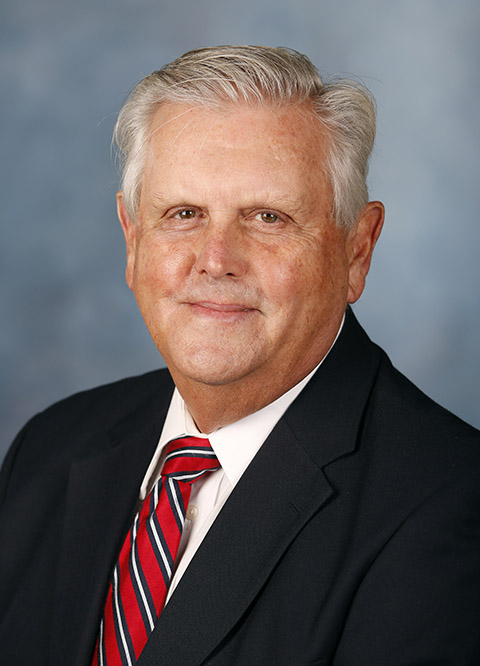

David Karem, chair of the Kentucky Board of Education (KBE), recently provided the following letter to the editor.
House Bill 2 supported
House Bill 2 is a piece of legislation in front of the General Assembly that would raise the state's high school dropout age from 16 to 18. One of the arguments being raised against this legislation is that it is an unfunded mandate. The truth is that one of the greatest “unfunded” mandates in our commonwealth is the enormous number of Kentucky adults who have no high school diploma.
It is an absolute that without a high school diploma, you are less employable, more likely to be a resident in one of our state prisons, more likely to require welfare, and will earn significantly less over your lifetime. One of Kentucky's great challenges with regard to economic development is demonstrating to employers that we have a high quality work force. Lack of a high school diploma contributes greatly to the negative image of our commonwealth.
So strongly does the Kentucky Board of Education feel about HB 2 that it is our No. 1 and only legislative priority. The board has taken a unanimous position in favor of this legislation. The time is now to move Kentucky forward and eliminate the true unfunded mandate of a lack of high school diploma.
DAVID K. KAREM
Chairman
State Board of Education
Louisville 40202
Chairman Karem and the KBE have been clear on their goals. As commissioner, I have worked to meet the goal of the KBE by working with numerous stakeholders to draft legislation that eventually became House Bill 2 (the Graduation Bill) in the 2011 Special Session. I have testified numerous times to House and Senate committees and have been a champion for this effort during numerous Graduate Kentucky summits across Kentucky and many other public events.
We need this tool to help children reach success; however, this tool alone is not enough. We must implement excellent alternative programs for students to address behavior and learning needs. We must have programs like early graduation, early college, virtual/blended learning, mastery based learning and career/technical education. We must provide support for teachers and principals as they improve their ability to meet the needs of ALL children.
Every day and in every speech, I try to put a face on this issue. In our schools today, there are 50,000 8th-grade students. If we don’t do something different, only 17,000 of these students will graduate in 2015 having the readiness skills for college and career. We are working hard to double that number to 34,000 by 2015 through the support of tools like 2009’s Senate Bill 1. However, we also know that about 15,000 of these 8th graders will drop out of school when they are 16 or 17.
We must do MANY things differently; however, the first step begins with changing the expectations for Kentucky children and the expectations of adults (parents, teachers and administrators). It is time to come together as policy makers and decision makers in Kentucky and set these expectations through legislation and then implement the programs to make the legislation successful.
Friday, March 25, 2011


Friday, March 18, 2011
Staff Evaluations: Performance and Process
Having been a teacher, principal, superintendent and commissioner, I have experienced the evaluation process at every level. My two key principles for evaluation are that all instruments should be aligned and that all instruments should be growth instruments.
I realize that employment decisions must eventually be made; however, I have always adhered to W. Edwards Deming’s principle that up to 95 percent of an organization’s performance is related to the processes in the organization, and most people want to do a great job. I always push for continuous improvement and growth of individuals while also working to improve processes in the organization.
The alignment principle takes some work. In Kentucky, we have 174 different versions of principal, teacher and superintendent evaluations. As I travel the state, most administrators tell me that we need to address this broken process. We are addressing this through two state committees that I have written about in numerous blogs. The Kentucky Department of Education’s (KDE’s) teacher and principal effectiveness committee work can be found at http://kyprofessionalgrowth.webs.com/.
The superintendent and school board evaluation process is work that properly resides with the Kentucky Association of School Administrators and the Kentucky School Boards Association. To ensure alignment, I hope that these groups will include the following components:
Learning Conditions/Environment – We expect every teacher to create positive conditions for learning in every classroom. We measure that by observation, discipline records, student input, parent input and many other evidences. We also should expect principals, superintendents and school boards to create a positive learning environment in the school or district. One possible measure for learning conditions is the TELL Kentucky survey that we initiated this year. Of course, the evaluation process should include the data from the survey only as a starting place to set priorities for improvement. The actual evaluation should be focused on setting goals and then working to improve processes such as facilities, empowerment, budgeting, resources and more.
Student Learning Results – Most teachers I talk with agree that student learning results are important; however, proficiency on standardized tests is not always the best way to measure teacher impact. A more valid and reliable method is growth. Most teachers agree that evaluations should include student growth from multiple measures (formative and summative). Also, most teachers agree that evaluations should include what teachers do to improve the instructional processes in the classroom, and again, there are multiple evidences of this improvement. Superintendents and principals also should be evaluated on student growth in learning. These evaluations should come from agreed-upon goals and evidences that are directly linked to the district’s strategic plan or school improvement plan.
Finally, as commissioner, I believe my evaluation process is a good model for local superintendents. The Kentucky Board of Education and I agree upon yearly goals that include student learning and improvement of key processes such as communications and support processes (e.g., budgeting, personnel, working conditions). The evaluation process happens mid-year and end-of-year and is done in public.
The ultimate goal that I want to be measured by is the college and career readiness of graduates from Kentucky public schools. The goal is a 50 percent increase in the number of graduates who are college- and career-ready. There are yearly goals that measure the progress and yearly goals for the processes that support the college and career readiness goal.
It is my hope that every board will work with their superintendents to include this key goal in the evaluation process, and then every superintendent will work with their principals to include measures that predict our success toward this goal. Finally, every teacher should know how their work is aligned to this goal of college and career readiness.
Evaluation systems should be driven by the student learning goals and learning conditions at each level. We have a lot of work to do in Kentucky, and I know our boards, superintendents, principals and teachers are all committed to this work that so directly impacts our children’s future.
I realize that employment decisions must eventually be made; however, I have always adhered to W. Edwards Deming’s principle that up to 95 percent of an organization’s performance is related to the processes in the organization, and most people want to do a great job. I always push for continuous improvement and growth of individuals while also working to improve processes in the organization.
The alignment principle takes some work. In Kentucky, we have 174 different versions of principal, teacher and superintendent evaluations. As I travel the state, most administrators tell me that we need to address this broken process. We are addressing this through two state committees that I have written about in numerous blogs. The Kentucky Department of Education’s (KDE’s) teacher and principal effectiveness committee work can be found at http://kyprofessionalgrowth.webs.com/.
The superintendent and school board evaluation process is work that properly resides with the Kentucky Association of School Administrators and the Kentucky School Boards Association. To ensure alignment, I hope that these groups will include the following components:
Learning Conditions/Environment – We expect every teacher to create positive conditions for learning in every classroom. We measure that by observation, discipline records, student input, parent input and many other evidences. We also should expect principals, superintendents and school boards to create a positive learning environment in the school or district. One possible measure for learning conditions is the TELL Kentucky survey that we initiated this year. Of course, the evaluation process should include the data from the survey only as a starting place to set priorities for improvement. The actual evaluation should be focused on setting goals and then working to improve processes such as facilities, empowerment, budgeting, resources and more.
Student Learning Results – Most teachers I talk with agree that student learning results are important; however, proficiency on standardized tests is not always the best way to measure teacher impact. A more valid and reliable method is growth. Most teachers agree that evaluations should include student growth from multiple measures (formative and summative). Also, most teachers agree that evaluations should include what teachers do to improve the instructional processes in the classroom, and again, there are multiple evidences of this improvement. Superintendents and principals also should be evaluated on student growth in learning. These evaluations should come from agreed-upon goals and evidences that are directly linked to the district’s strategic plan or school improvement plan.
Finally, as commissioner, I believe my evaluation process is a good model for local superintendents. The Kentucky Board of Education and I agree upon yearly goals that include student learning and improvement of key processes such as communications and support processes (e.g., budgeting, personnel, working conditions). The evaluation process happens mid-year and end-of-year and is done in public.
The ultimate goal that I want to be measured by is the college and career readiness of graduates from Kentucky public schools. The goal is a 50 percent increase in the number of graduates who are college- and career-ready. There are yearly goals that measure the progress and yearly goals for the processes that support the college and career readiness goal.
It is my hope that every board will work with their superintendents to include this key goal in the evaluation process, and then every superintendent will work with their principals to include measures that predict our success toward this goal. Finally, every teacher should know how their work is aligned to this goal of college and career readiness.
Evaluation systems should be driven by the student learning goals and learning conditions at each level. We have a lot of work to do in Kentucky, and I know our boards, superintendents, principals and teachers are all committed to this work that so directly impacts our children’s future.
Friday, March 11, 2011
ESEA/NCLB: Time for Refocusing
U.S. Education Secretary Arne Duncan testified at the House Education and Workforce Committee this week. He addressed many topics, including budget issues and the federal Elementary and Secondary Education Act (ESEA) reauthorization.
One statement he made gained attention from the media. Sec. Duncan said that the U.S. Department of Education was projecting that as many as 82 percent of schools will not make adequate yearly progress (AYP) next year. Many people have questioned this number; however, I believe he is pretty accurate in the projection. Certainly, something must be wrong with a system that labels 82 percent of our schools and districts as failures.
I have written about this issue in several past blogs. (NOTE: See the links at the end of this blog for those postings.) On a few occasions, my support for a rewrite of ESEA has been misinterpreted. Let me be clear that I support high expectations for all students, teachers, principals, school districts and state agencies. Our number-one goal should be student success. No Child Left Behind (NCLB) focused on student success; however, the actual details of implementation lacked equity across the nation.
What I am supporting is a change from the NCLB minimum levels of proficiency for students and schools to a focus on a college and career readiness and a focus on student growth. Kentucky is leading the way in developing an accountability model with these components to replace No Child Left Behind. I have requested that Sec. Duncan review our model. I have worked with the Council of Chief State School Officers’ (CCSSO’s) committee on next-generation accountability systems to mirror our state model after the committee’s work.
Our proposed model will be reviewed for the final time by the Kentucky Board of Education at its April 2011 meeting. If you are interested in the details of our model, see the model and the regulatory language that the KBE will be asked to approve next month here.
Finally, let me be clear that no one is trying to avoid the consequences of NCLB. We are trying to build a system that promotes high expectations for ALL children, accountability for students, teachers, principals, districts, and state agencies, and resources/support for all involved.
Blog Postings on ESEA
March 26, 2010 – Focusing on Post-High School Life and Achievement Gaps
April 23, 2010 – Vision for Education Reform in Kentucky
April 30, 2010 – Priorities for School and District Accountability
June 11, 2010 – Teacher Effectiveness
August 6, 2010 – Planning for Proficiency
One statement he made gained attention from the media. Sec. Duncan said that the U.S. Department of Education was projecting that as many as 82 percent of schools will not make adequate yearly progress (AYP) next year. Many people have questioned this number; however, I believe he is pretty accurate in the projection. Certainly, something must be wrong with a system that labels 82 percent of our schools and districts as failures.
I have written about this issue in several past blogs. (NOTE: See the links at the end of this blog for those postings.) On a few occasions, my support for a rewrite of ESEA has been misinterpreted. Let me be clear that I support high expectations for all students, teachers, principals, school districts and state agencies. Our number-one goal should be student success. No Child Left Behind (NCLB) focused on student success; however, the actual details of implementation lacked equity across the nation.
What I am supporting is a change from the NCLB minimum levels of proficiency for students and schools to a focus on a college and career readiness and a focus on student growth. Kentucky is leading the way in developing an accountability model with these components to replace No Child Left Behind. I have requested that Sec. Duncan review our model. I have worked with the Council of Chief State School Officers’ (CCSSO’s) committee on next-generation accountability systems to mirror our state model after the committee’s work.
Our proposed model will be reviewed for the final time by the Kentucky Board of Education at its April 2011 meeting. If you are interested in the details of our model, see the model and the regulatory language that the KBE will be asked to approve next month here.
Finally, let me be clear that no one is trying to avoid the consequences of NCLB. We are trying to build a system that promotes high expectations for ALL children, accountability for students, teachers, principals, districts, and state agencies, and resources/support for all involved.
Blog Postings on ESEA
March 26, 2010 – Focusing on Post-High School Life and Achievement Gaps
April 23, 2010 – Vision for Education Reform in Kentucky
April 30, 2010 – Priorities for School and District Accountability
June 11, 2010 – Teacher Effectiveness
August 6, 2010 – Planning for Proficiency
Thursday, March 3, 2011
Interesting Times in Frankfort
The final days of a “short session” are always interesting. This year is no exception. I informed superintendents via e-mail yesterday about the Senate budget language that would reduce education funding. Over numerous months and in many meetings, I have alerted educators to the Medicaid issue that would eventually have to be reconciled and its impact on P-12 education funding. (See earlier blog postings “Budget Facts and Effects,” “Budget Should Reflect the Needs of Children,” “The New Normal” and “Kentucky’s Moral, Economic and Civic Obligation.”)
Also, I have alerted educators on numerous occasions about the “funding cliff” that is approaching in 2012. I thought readers might be interested in the background about the budget process, and I found an excellent summary of events in the KEA Advocate. With permission from KEA, here are some highlights from the article.
As commissioner, I am extremely concerned about any cuts to public education; however, I also know that the budget situation is extremely complex, given the Medicaid situation. I also realize that the situation was made even more complicated by the unexpected increase in students that resulted in a $28 million shortfall for the Support Education Excellence in Kentucky (SEEK) funding in 2012.
I am also concerned about the impact of budget cuts on our children’s future. We are in the middle of major education reform with 2009’s Senate Bill1 implementation. This reform focuses on improving the college and career readiness of Kentucky students. This reform will mean an improved economy for Kentucky and improved futures for Kentucky children. Budget cuts will have a significant impact on our ability to deliver on the promise of this reform legislation.
I hope that the budget conferees will consider the future of Kentucky’s children as they make difficult decisions in the next few days.
Also, I have alerted educators on numerous occasions about the “funding cliff” that is approaching in 2012. I thought readers might be interested in the background about the budget process, and I found an excellent summary of events in the KEA Advocate. With permission from KEA, here are some highlights from the article.
Events
About 7:15 on Wednesday evening, the state Senate voted to cut school funding for the 2011-12 school year. The bill also removes class size limits, eliminates the requirement for kindergarten aides, and removes the requirement for preschool teachers to be certified.
The bill - HB 305 SCS - now goes back to the House to concur or not concur in the changes the Senate made to the bill. This bill will likely go to a conference committee of the two chambers.
Background
Because of less federal support than expected, Kentucky's Medicaid funding faces a significant shortfall. Governor Beshear proposed, and the House agreed, to a "fix" for this issue that did not require cuts in school funding. The House passed its bill - HB 305 - on Feb. 10, the 12th legislative day of this 30-day short session.
HB 305 sat in the Senate for more than two weeks with no action. Then on Tuesday, the 24th day of the session, after the Senate had already adjourned for the day, the Senate Appropriations and Revenue Committee adopted a substitute version of the bill that contains significant cuts in school funding.
About 24 hours after the bill passed Senate A&R, the entire Senate passed the Senate Committee Substitute (SCS) to HB 305.
Proposed Cuts
HB 305 SCS, as adopted by the Senate, contains these cuts in school funding:
SEEK: reductions of $38.6 million. When these cuts are added to the anticipated shortfall we already knew about, the total is $67.3 million for next school year, about a 2.3% cut.
NON-SEEK: other reductions in education funding amount to $9.4 million.
What Happens Next
On Thursday (3/3), HB 305 SCS will be returned to the House of Representatives. The first vote to occur will be whether or not to concur with the Senate's changes in the bill. If the House does not concur, it will inform the Senate. Then each chamber may appoint a joint conference committee to try to work out the differences. House and Senate leadership each appoint members of the conference committee. This process will probably take most of the day Thursday.
Next, the conference committee will meet and try to negotiate a compromise that both chambers can pass. If the committee is a "free" conference committee, other bills can be added to the committee's recommendations so literally, anything can happen. Making this situation more difficult is the legislative calendar. The General Assembly is scheduled to recess after its session on Monday, March 7. They will then reconvene on March 21 and 22 and then adjourn. All this means there is very little time for the General Assembly to consider and act on this crucial issue.
As commissioner, I am extremely concerned about any cuts to public education; however, I also know that the budget situation is extremely complex, given the Medicaid situation. I also realize that the situation was made even more complicated by the unexpected increase in students that resulted in a $28 million shortfall for the Support Education Excellence in Kentucky (SEEK) funding in 2012.
I am also concerned about the impact of budget cuts on our children’s future. We are in the middle of major education reform with 2009’s Senate Bill1 implementation. This reform focuses on improving the college and career readiness of Kentucky students. This reform will mean an improved economy for Kentucky and improved futures for Kentucky children. Budget cuts will have a significant impact on our ability to deliver on the promise of this reform legislation.
I hope that the budget conferees will consider the future of Kentucky’s children as they make difficult decisions in the next few days.
Friday, February 25, 2011
Certified Staff Can TELL Kentucky
In the coming weeks, every certified staff member in Kentucky’s public schools will have an opportunity to provide feedback to their schools, districts and state agency concerning working conditions. Through a survey document called TELL Kentucky, we will be asking certified staff to let us know about working conditions in areas such as leadership, facilities, resources, professional development, empowerment and time.
TELL stands for Teaching, Empowering, Leading and Learning. As a local superintendent in North Carolina, I found the feedback from the survey extremely important in improving student learning results for our school system. Kentucky is now joining North Carolina, Maryland, Tennessee and several other states in administering the survey. This summer, we will have comparative data on many survey questions, and we will have data on Kentucky specific issues.
There has been some confusion as to the sponsor of the survey. They survey was approved by the Kentucky Board of Education (KBE), and funding was provided through federal Title II funds and grant dollars. Many partners have supported the development of the communication and administration plans for the survey. We also have strong support from the Governor’s Office. For more information about the partners, please visit http://www.tellkentucky.org/.
There also has been some confusion over how the results will be used. The results WILL NOT be used as part of an accountability model. We are hoping to recognize schools and districts who have high percentages of participation. The results WILL be used by school-based decision making councils, schools, districts, the Kentucky Department of Education, KBE and numerous other organizations to improve the working conditions in our schools and districts. In the states that have been using the survey for a number of years, the survey results often have been used to implement school improvement team policy changes and local board policy changes, and even state statutes and regulations have been changed based on results from the survey.
I am very excited that we can offer this survey to all of our certified staff in Kentucky. I firmly believe that by addressing working conditions in our schools and districts, we will have a positive impact on student learning results, reduce teacher turnover rates and make a long-term impact on the economy of Kentucky.
I strongly encourage every certified staff member in Kentucky to take the survey and monitor the participation rates for your school and district through the TELL Kentucky Web page.
TELL stands for Teaching, Empowering, Leading and Learning. As a local superintendent in North Carolina, I found the feedback from the survey extremely important in improving student learning results for our school system. Kentucky is now joining North Carolina, Maryland, Tennessee and several other states in administering the survey. This summer, we will have comparative data on many survey questions, and we will have data on Kentucky specific issues.
There has been some confusion as to the sponsor of the survey. They survey was approved by the Kentucky Board of Education (KBE), and funding was provided through federal Title II funds and grant dollars. Many partners have supported the development of the communication and administration plans for the survey. We also have strong support from the Governor’s Office. For more information about the partners, please visit http://www.tellkentucky.org/.
There also has been some confusion over how the results will be used. The results WILL NOT be used as part of an accountability model. We are hoping to recognize schools and districts who have high percentages of participation. The results WILL be used by school-based decision making councils, schools, districts, the Kentucky Department of Education, KBE and numerous other organizations to improve the working conditions in our schools and districts. In the states that have been using the survey for a number of years, the survey results often have been used to implement school improvement team policy changes and local board policy changes, and even state statutes and regulations have been changed based on results from the survey.
I am very excited that we can offer this survey to all of our certified staff in Kentucky. I firmly believe that by addressing working conditions in our schools and districts, we will have a positive impact on student learning results, reduce teacher turnover rates and make a long-term impact on the economy of Kentucky.
I strongly encourage every certified staff member in Kentucky to take the survey and monitor the participation rates for your school and district through the TELL Kentucky Web page.
Friday, February 18, 2011
Kentucky’s Moral, Economic and Civic Obligation
I recently read a very disturbing report. Incarceration and Social Inequity by Bruce Western and Becky Pettit was published in the summer 2010 Daedalus. Here are some interesting facts from the report.
· Incarceration rates are currently at eight times the historic average.
· Men make up 90 percent of those incarcerated.
· African-American males are seven times more likely than white males to be incarcerated.
· More than 70 percent of the prison population are high school dropouts.
Put in real numbers, for every 100 African-American males who enter high school, only about 50 will graduate, and about 25 will be incarcerated at some point. African-American males born into poverty have a 1 in 4 chance of being incarcerated and a 1 in 17 chance of getting a college degree. More than 10 million people are incarcerated every year locally, and over 700,000 are incarcerated at the state or federal level.
The impact on African-American families is that 1 in 10 have a parent in jail. We have the highest incarceration rate among industrialized countries, and Kentucky has one of the highest incarceration rates in the nation. In the United States, incarceration costs us more than $70 billion each year.
We have a moral obligation, an economic obligation and a civic obligation to do something about this. What can we do?
· We need more early childhood programs.
· We must improve alternative education options.
· We must improve our ability for early identification of at-risk children.
· Our poor communities should have access to more jobs programs.
· The dropout age must be raised.
We can invest now at about $10,000 per child, or we can pay much more later. The Transforming Education in Kentucky Task Force report that will be released next week will provide recommendations addressing many of the suggestions from the report mentioned in this blog.
Let's take resources from programs not working and focus on strategies that will work. Now is the time for bold leaders. Let's get to work making a difference.
· Incarceration rates are currently at eight times the historic average.
· Men make up 90 percent of those incarcerated.
· African-American males are seven times more likely than white males to be incarcerated.
· More than 70 percent of the prison population are high school dropouts.
Put in real numbers, for every 100 African-American males who enter high school, only about 50 will graduate, and about 25 will be incarcerated at some point. African-American males born into poverty have a 1 in 4 chance of being incarcerated and a 1 in 17 chance of getting a college degree. More than 10 million people are incarcerated every year locally, and over 700,000 are incarcerated at the state or federal level.
The impact on African-American families is that 1 in 10 have a parent in jail. We have the highest incarceration rate among industrialized countries, and Kentucky has one of the highest incarceration rates in the nation. In the United States, incarceration costs us more than $70 billion each year.
We have a moral obligation, an economic obligation and a civic obligation to do something about this. What can we do?
· We need more early childhood programs.
· We must improve alternative education options.
· We must improve our ability for early identification of at-risk children.
· Our poor communities should have access to more jobs programs.
· The dropout age must be raised.
We can invest now at about $10,000 per child, or we can pay much more later. The Transforming Education in Kentucky Task Force report that will be released next week will provide recommendations addressing many of the suggestions from the report mentioned in this blog.
Let's take resources from programs not working and focus on strategies that will work. Now is the time for bold leaders. Let's get to work making a difference.
Friday, February 11, 2011
College and Career Readiness
The Kentucky Board of Education (KBE) has spent considerable amounts of time deliberating the proposed college and career readiness measures that are a component of the Senate Bill 1 (2009) accountability model.
Over the past few weeks, I have read numerous reports concerning the college and career readiness issue and how we as states and the nation must work to improve the readiness of our high school graduates -- or our nation faces loss of productivity and competitiveness. Of course, those of you have been in education for 40 or more years (like me) know that these challenges are not new. This issue has been around since the early 1800s, when Horace Mann was debating the purpose of schools. What is different now is the alignment of P-12 educators, businesses, government and higher education in promoting the agenda from one of access to opportunities for education to the new goal of universal SUCCESS for ALL children to reach proficiency and be prepared for success.
Some of the publications that I would recommend to readers are:
* Time magazine published an excellent group of articles in the January 17, 2011, issue entitled “Where the Jobs Are.”
* The Harvard Graduate School of Education published Pathways to Prosperity, which was released in early February. This report would seem to support the KBE focus on defining not only college-ready, but also career-ready.
http://www.gse.harvard.edu/news_events/features/2011/Pathways_to_Prosperity_Feb2011.pdf
* From ACT, Inc. last week, there was Breaking New Ground: Building a National Workforce Skills Credentialing System. This report also strongly supports the work of KBE in defining career-ready as well as college-ready.
http://act.org/research/policymakers/pdf/BreakingNewGround.pdf.
Some statistics from the Time article caught my attention:
* Detroit currently has a 13.3 percent unemployment rate; however, businesses cannot find mechanical engineers to fill jobs.
* General Electric has a major expansion of jobs at Appliance Park in Louisville that will require postsecondary skills and training for the new “green” refrigeration systems.
* Consulting firm Deloitte is currently scouring college campuses for tax specialists, lawyers and auditors.
* Who is currently out of work? This recession has not impacted all segments of the population equally. The currently unemployment rates are 5 percent for bachelor’s degree holders, 10 percent for high school grads and 16 percent for those with less than a high school diploma.
* As the jobs are coming back, they will not be spread equally across all levels of education. More than 80 percent of new jobs will require some education beyond high school whether a one-year certificate or two- or four-year degrees. These jobs will be heavily located in professional/business services, education and health services, and most will have strong technology requirements.
* Who will get the existing jobs? Bachelor’s degree holders will get 38 percent; associate degree holders or higher, 10 percent; those with some college, 18 percent; and high school grads will get 26 percent. That means we need about 92 percent of the students who are currently in 8th grade to obtain a high school diploma, and we need at least 68 percent of current 8th graders to achieve education beyond high school.
These statistics highlight our challenges for Kentucky.
1. If we do not do something different in Kentucky, about 25 percent of our current 8th graders will not graduate from high school in 2015. That is more than 12,000 students who will not graduate and will be competing for about 8 percent of the jobs available -- and those jobs will most likely not pay a living wage. We NEED the dropout prevention bill that raises the compulsory attendance age and provides students with alternative programs and a stronger focus on career and technical education.
2. Currently, we project that only 34 percent or 17,000 of our current 8th-grade class will meet college and career readiness measures. That means our employers will be like Detroit -- they will not have a supply of workers with the skills needed for the jobs available. We have already heard this from the Chamber of Commerce in northern Kentucky and other business leaders across the Commonwealth.
3. The future of the Commonwealth and the future of our 8th-grade class and all subsequent groups of children is that we need to improve our percentage of high school graduates who are college and career ready from the current level of 34 percent to at least 65 percent by 2015. That means we need to better prepare at least 17,000 more students in our current 8th-grade class and subsequent groups of students.
We cannot wait until these 8th-grade students become high school seniors. We cannot ignore the students who are currently in high school. We cannot ignore students who are in preschool through 7th grade.
Over the next few months, the Kentucky Department of Education will have a “laser focus” on college- and career-readiness strategies. We will provide one strategy every two weeks that we are either implementing or plan to implement during 2011-12 school year. What is unique about our effort is that we will connect the strategies to the districts, schools, classrooms, teachers, students and parents.
I hope readers will help spread the word that Kentucky is focused on our children’s future and the future of our Commonwealth.
Over the past few weeks, I have read numerous reports concerning the college and career readiness issue and how we as states and the nation must work to improve the readiness of our high school graduates -- or our nation faces loss of productivity and competitiveness. Of course, those of you have been in education for 40 or more years (like me) know that these challenges are not new. This issue has been around since the early 1800s, when Horace Mann was debating the purpose of schools. What is different now is the alignment of P-12 educators, businesses, government and higher education in promoting the agenda from one of access to opportunities for education to the new goal of universal SUCCESS for ALL children to reach proficiency and be prepared for success.
Some of the publications that I would recommend to readers are:
* Time magazine published an excellent group of articles in the January 17, 2011, issue entitled “Where the Jobs Are.”
* The Harvard Graduate School of Education published Pathways to Prosperity, which was released in early February. This report would seem to support the KBE focus on defining not only college-ready, but also career-ready.
http://www.gse.harvard.edu/news_events/features/2011/Pathways_to_Prosperity_Feb2011.pdf
* From ACT, Inc. last week, there was Breaking New Ground: Building a National Workforce Skills Credentialing System. This report also strongly supports the work of KBE in defining career-ready as well as college-ready.
http://act.org/research/policymakers/pdf/BreakingNewGround.pdf.
Some statistics from the Time article caught my attention:
* Detroit currently has a 13.3 percent unemployment rate; however, businesses cannot find mechanical engineers to fill jobs.
* General Electric has a major expansion of jobs at Appliance Park in Louisville that will require postsecondary skills and training for the new “green” refrigeration systems.
* Consulting firm Deloitte is currently scouring college campuses for tax specialists, lawyers and auditors.
* Who is currently out of work? This recession has not impacted all segments of the population equally. The currently unemployment rates are 5 percent for bachelor’s degree holders, 10 percent for high school grads and 16 percent for those with less than a high school diploma.
* As the jobs are coming back, they will not be spread equally across all levels of education. More than 80 percent of new jobs will require some education beyond high school whether a one-year certificate or two- or four-year degrees. These jobs will be heavily located in professional/business services, education and health services, and most will have strong technology requirements.
* Who will get the existing jobs? Bachelor’s degree holders will get 38 percent; associate degree holders or higher, 10 percent; those with some college, 18 percent; and high school grads will get 26 percent. That means we need about 92 percent of the students who are currently in 8th grade to obtain a high school diploma, and we need at least 68 percent of current 8th graders to achieve education beyond high school.
These statistics highlight our challenges for Kentucky.
1. If we do not do something different in Kentucky, about 25 percent of our current 8th graders will not graduate from high school in 2015. That is more than 12,000 students who will not graduate and will be competing for about 8 percent of the jobs available -- and those jobs will most likely not pay a living wage. We NEED the dropout prevention bill that raises the compulsory attendance age and provides students with alternative programs and a stronger focus on career and technical education.
2. Currently, we project that only 34 percent or 17,000 of our current 8th-grade class will meet college and career readiness measures. That means our employers will be like Detroit -- they will not have a supply of workers with the skills needed for the jobs available. We have already heard this from the Chamber of Commerce in northern Kentucky and other business leaders across the Commonwealth.
3. The future of the Commonwealth and the future of our 8th-grade class and all subsequent groups of children is that we need to improve our percentage of high school graduates who are college and career ready from the current level of 34 percent to at least 65 percent by 2015. That means we need to better prepare at least 17,000 more students in our current 8th-grade class and subsequent groups of students.
We cannot wait until these 8th-grade students become high school seniors. We cannot ignore the students who are currently in high school. We cannot ignore students who are in preschool through 7th grade.
Over the next few months, the Kentucky Department of Education will have a “laser focus” on college- and career-readiness strategies. We will provide one strategy every two weeks that we are either implementing or plan to implement during 2011-12 school year. What is unique about our effort is that we will connect the strategies to the districts, schools, classrooms, teachers, students and parents.
I hope readers will help spread the word that Kentucky is focused on our children’s future and the future of our Commonwealth.
Subscribe to:
Posts (Atom)