

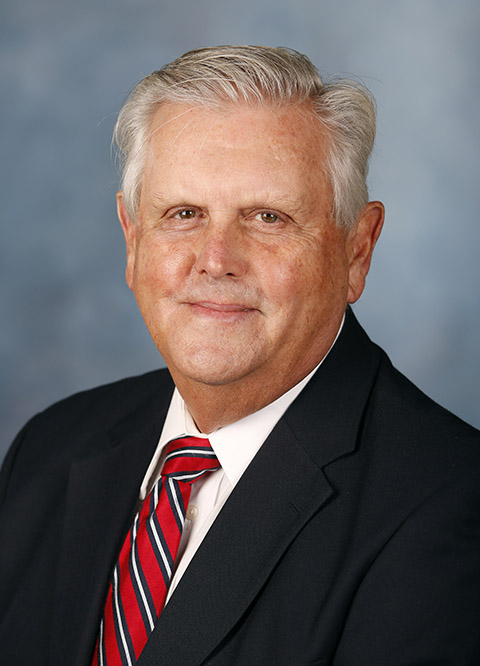

In the coming weeks, every certified staff member in Kentucky’s public schools will have an opportunity to provide feedback to their schools, districts and state agency concerning working conditions. Through a survey document called TELL Kentucky, we will be asking certified staff to let us know about working conditions in areas such as leadership, facilities, resources, professional development, empowerment and time.
TELL stands for Teaching, Empowering, Leading and Learning. As a local superintendent in North Carolina, I found the feedback from the survey extremely important in improving student learning results for our school system. Kentucky is now joining North Carolina, Maryland, Tennessee and several other states in administering the survey. This summer, we will have comparative data on many survey questions, and we will have data on Kentucky specific issues.
There has been some confusion as to the sponsor of the survey. They survey was approved by the Kentucky Board of Education (KBE), and funding was provided through federal Title II funds and grant dollars. Many partners have supported the development of the communication and administration plans for the survey. We also have strong support from the Governor’s Office. For more information about the partners, please visit http://www.tellkentucky.org/.
There also has been some confusion over how the results will be used. The results WILL NOT be used as part of an accountability model. We are hoping to recognize schools and districts who have high percentages of participation. The results WILL be used by school-based decision making councils, schools, districts, the Kentucky Department of Education, KBE and numerous other organizations to improve the working conditions in our schools and districts. In the states that have been using the survey for a number of years, the survey results often have been used to implement school improvement team policy changes and local board policy changes, and even state statutes and regulations have been changed based on results from the survey.
I am very excited that we can offer this survey to all of our certified staff in Kentucky. I firmly believe that by addressing working conditions in our schools and districts, we will have a positive impact on student learning results, reduce teacher turnover rates and make a long-term impact on the economy of Kentucky.
I strongly encourage every certified staff member in Kentucky to take the survey and monitor the participation rates for your school and district through the TELL Kentucky Web page.
Friday, February 25, 2011


Friday, February 18, 2011
Kentucky’s Moral, Economic and Civic Obligation
I recently read a very disturbing report. Incarceration and Social Inequity by Bruce Western and Becky Pettit was published in the summer 2010 Daedalus. Here are some interesting facts from the report.
· Incarceration rates are currently at eight times the historic average.
· Men make up 90 percent of those incarcerated.
· African-American males are seven times more likely than white males to be incarcerated.
· More than 70 percent of the prison population are high school dropouts.
Put in real numbers, for every 100 African-American males who enter high school, only about 50 will graduate, and about 25 will be incarcerated at some point. African-American males born into poverty have a 1 in 4 chance of being incarcerated and a 1 in 17 chance of getting a college degree. More than 10 million people are incarcerated every year locally, and over 700,000 are incarcerated at the state or federal level.
The impact on African-American families is that 1 in 10 have a parent in jail. We have the highest incarceration rate among industrialized countries, and Kentucky has one of the highest incarceration rates in the nation. In the United States, incarceration costs us more than $70 billion each year.
We have a moral obligation, an economic obligation and a civic obligation to do something about this. What can we do?
· We need more early childhood programs.
· We must improve alternative education options.
· We must improve our ability for early identification of at-risk children.
· Our poor communities should have access to more jobs programs.
· The dropout age must be raised.
We can invest now at about $10,000 per child, or we can pay much more later. The Transforming Education in Kentucky Task Force report that will be released next week will provide recommendations addressing many of the suggestions from the report mentioned in this blog.
Let's take resources from programs not working and focus on strategies that will work. Now is the time for bold leaders. Let's get to work making a difference.
· Incarceration rates are currently at eight times the historic average.
· Men make up 90 percent of those incarcerated.
· African-American males are seven times more likely than white males to be incarcerated.
· More than 70 percent of the prison population are high school dropouts.
Put in real numbers, for every 100 African-American males who enter high school, only about 50 will graduate, and about 25 will be incarcerated at some point. African-American males born into poverty have a 1 in 4 chance of being incarcerated and a 1 in 17 chance of getting a college degree. More than 10 million people are incarcerated every year locally, and over 700,000 are incarcerated at the state or federal level.
The impact on African-American families is that 1 in 10 have a parent in jail. We have the highest incarceration rate among industrialized countries, and Kentucky has one of the highest incarceration rates in the nation. In the United States, incarceration costs us more than $70 billion each year.
We have a moral obligation, an economic obligation and a civic obligation to do something about this. What can we do?
· We need more early childhood programs.
· We must improve alternative education options.
· We must improve our ability for early identification of at-risk children.
· Our poor communities should have access to more jobs programs.
· The dropout age must be raised.
We can invest now at about $10,000 per child, or we can pay much more later. The Transforming Education in Kentucky Task Force report that will be released next week will provide recommendations addressing many of the suggestions from the report mentioned in this blog.
Let's take resources from programs not working and focus on strategies that will work. Now is the time for bold leaders. Let's get to work making a difference.
Friday, February 11, 2011
College and Career Readiness
The Kentucky Board of Education (KBE) has spent considerable amounts of time deliberating the proposed college and career readiness measures that are a component of the Senate Bill 1 (2009) accountability model.
Over the past few weeks, I have read numerous reports concerning the college and career readiness issue and how we as states and the nation must work to improve the readiness of our high school graduates -- or our nation faces loss of productivity and competitiveness. Of course, those of you have been in education for 40 or more years (like me) know that these challenges are not new. This issue has been around since the early 1800s, when Horace Mann was debating the purpose of schools. What is different now is the alignment of P-12 educators, businesses, government and higher education in promoting the agenda from one of access to opportunities for education to the new goal of universal SUCCESS for ALL children to reach proficiency and be prepared for success.
Some of the publications that I would recommend to readers are:
* Time magazine published an excellent group of articles in the January 17, 2011, issue entitled “Where the Jobs Are.”
* The Harvard Graduate School of Education published Pathways to Prosperity, which was released in early February. This report would seem to support the KBE focus on defining not only college-ready, but also career-ready.
http://www.gse.harvard.edu/news_events/features/2011/Pathways_to_Prosperity_Feb2011.pdf
* From ACT, Inc. last week, there was Breaking New Ground: Building a National Workforce Skills Credentialing System. This report also strongly supports the work of KBE in defining career-ready as well as college-ready.
http://act.org/research/policymakers/pdf/BreakingNewGround.pdf.
Some statistics from the Time article caught my attention:
* Detroit currently has a 13.3 percent unemployment rate; however, businesses cannot find mechanical engineers to fill jobs.
* General Electric has a major expansion of jobs at Appliance Park in Louisville that will require postsecondary skills and training for the new “green” refrigeration systems.
* Consulting firm Deloitte is currently scouring college campuses for tax specialists, lawyers and auditors.
* Who is currently out of work? This recession has not impacted all segments of the population equally. The currently unemployment rates are 5 percent for bachelor’s degree holders, 10 percent for high school grads and 16 percent for those with less than a high school diploma.
* As the jobs are coming back, they will not be spread equally across all levels of education. More than 80 percent of new jobs will require some education beyond high school whether a one-year certificate or two- or four-year degrees. These jobs will be heavily located in professional/business services, education and health services, and most will have strong technology requirements.
* Who will get the existing jobs? Bachelor’s degree holders will get 38 percent; associate degree holders or higher, 10 percent; those with some college, 18 percent; and high school grads will get 26 percent. That means we need about 92 percent of the students who are currently in 8th grade to obtain a high school diploma, and we need at least 68 percent of current 8th graders to achieve education beyond high school.
These statistics highlight our challenges for Kentucky.
1. If we do not do something different in Kentucky, about 25 percent of our current 8th graders will not graduate from high school in 2015. That is more than 12,000 students who will not graduate and will be competing for about 8 percent of the jobs available -- and those jobs will most likely not pay a living wage. We NEED the dropout prevention bill that raises the compulsory attendance age and provides students with alternative programs and a stronger focus on career and technical education.
2. Currently, we project that only 34 percent or 17,000 of our current 8th-grade class will meet college and career readiness measures. That means our employers will be like Detroit -- they will not have a supply of workers with the skills needed for the jobs available. We have already heard this from the Chamber of Commerce in northern Kentucky and other business leaders across the Commonwealth.
3. The future of the Commonwealth and the future of our 8th-grade class and all subsequent groups of children is that we need to improve our percentage of high school graduates who are college and career ready from the current level of 34 percent to at least 65 percent by 2015. That means we need to better prepare at least 17,000 more students in our current 8th-grade class and subsequent groups of students.
We cannot wait until these 8th-grade students become high school seniors. We cannot ignore the students who are currently in high school. We cannot ignore students who are in preschool through 7th grade.
Over the next few months, the Kentucky Department of Education will have a “laser focus” on college- and career-readiness strategies. We will provide one strategy every two weeks that we are either implementing or plan to implement during 2011-12 school year. What is unique about our effort is that we will connect the strategies to the districts, schools, classrooms, teachers, students and parents.
I hope readers will help spread the word that Kentucky is focused on our children’s future and the future of our Commonwealth.
Over the past few weeks, I have read numerous reports concerning the college and career readiness issue and how we as states and the nation must work to improve the readiness of our high school graduates -- or our nation faces loss of productivity and competitiveness. Of course, those of you have been in education for 40 or more years (like me) know that these challenges are not new. This issue has been around since the early 1800s, when Horace Mann was debating the purpose of schools. What is different now is the alignment of P-12 educators, businesses, government and higher education in promoting the agenda from one of access to opportunities for education to the new goal of universal SUCCESS for ALL children to reach proficiency and be prepared for success.
Some of the publications that I would recommend to readers are:
* Time magazine published an excellent group of articles in the January 17, 2011, issue entitled “Where the Jobs Are.”
* The Harvard Graduate School of Education published Pathways to Prosperity, which was released in early February. This report would seem to support the KBE focus on defining not only college-ready, but also career-ready.
http://www.gse.harvard.edu/news_events/features/2011/Pathways_to_Prosperity_Feb2011.pdf
* From ACT, Inc. last week, there was Breaking New Ground: Building a National Workforce Skills Credentialing System. This report also strongly supports the work of KBE in defining career-ready as well as college-ready.
http://act.org/research/policymakers/pdf/BreakingNewGround.pdf.
Some statistics from the Time article caught my attention:
* Detroit currently has a 13.3 percent unemployment rate; however, businesses cannot find mechanical engineers to fill jobs.
* General Electric has a major expansion of jobs at Appliance Park in Louisville that will require postsecondary skills and training for the new “green” refrigeration systems.
* Consulting firm Deloitte is currently scouring college campuses for tax specialists, lawyers and auditors.
* Who is currently out of work? This recession has not impacted all segments of the population equally. The currently unemployment rates are 5 percent for bachelor’s degree holders, 10 percent for high school grads and 16 percent for those with less than a high school diploma.
* As the jobs are coming back, they will not be spread equally across all levels of education. More than 80 percent of new jobs will require some education beyond high school whether a one-year certificate or two- or four-year degrees. These jobs will be heavily located in professional/business services, education and health services, and most will have strong technology requirements.
* Who will get the existing jobs? Bachelor’s degree holders will get 38 percent; associate degree holders or higher, 10 percent; those with some college, 18 percent; and high school grads will get 26 percent. That means we need about 92 percent of the students who are currently in 8th grade to obtain a high school diploma, and we need at least 68 percent of current 8th graders to achieve education beyond high school.
These statistics highlight our challenges for Kentucky.
1. If we do not do something different in Kentucky, about 25 percent of our current 8th graders will not graduate from high school in 2015. That is more than 12,000 students who will not graduate and will be competing for about 8 percent of the jobs available -- and those jobs will most likely not pay a living wage. We NEED the dropout prevention bill that raises the compulsory attendance age and provides students with alternative programs and a stronger focus on career and technical education.
2. Currently, we project that only 34 percent or 17,000 of our current 8th-grade class will meet college and career readiness measures. That means our employers will be like Detroit -- they will not have a supply of workers with the skills needed for the jobs available. We have already heard this from the Chamber of Commerce in northern Kentucky and other business leaders across the Commonwealth.
3. The future of the Commonwealth and the future of our 8th-grade class and all subsequent groups of children is that we need to improve our percentage of high school graduates who are college and career ready from the current level of 34 percent to at least 65 percent by 2015. That means we need to better prepare at least 17,000 more students in our current 8th-grade class and subsequent groups of students.
We cannot wait until these 8th-grade students become high school seniors. We cannot ignore the students who are currently in high school. We cannot ignore students who are in preschool through 7th grade.
Over the next few months, the Kentucky Department of Education will have a “laser focus” on college- and career-readiness strategies. We will provide one strategy every two weeks that we are either implementing or plan to implement during 2011-12 school year. What is unique about our effort is that we will connect the strategies to the districts, schools, classrooms, teachers, students and parents.
I hope readers will help spread the word that Kentucky is focused on our children’s future and the future of our Commonwealth.
Friday, February 4, 2011
Being Comfortable in the “New Normal”
In a recent blog post, I stressed our need to embrace efficiency and productivity and define our own “New Normal.” By focusing on benchmarking, efficiency and productivity, we can increase our capacity and capability to do more with less. One of the most effective ways to increase efficiency and productivity is to share knowledge and learn from each other.
Imagine for a moment that a team in a Union County elementary school developed a breakthrough approach for helping students with disabilities make great learning gains; or a team at a high school in Clay County that greatly improved the utilization of the transportation fleet. How would the other 172 Kentucky school districts systematically learn of these new approaches and capitalize on them? If they could, the statewide benefits would be enormous.
Well, I have good news! We are now in the process of implementing a Web-based solution called the Performance Excellence Connection™. This tool is currently in use throughout Florida to share best practices among its 67 school districts and more than 3,500 public schools. Florida is in its second year of using the system, and best practices and process improvements are being submitted and shared for every aspect of the education process. We expect to derive similar benefits and perhaps share approaches with Florida educators.
In the Baldrige management system, there are about 200 specific areas that require effective, systematic approaches for accomplishing the work of education. I am convinced that, collectively, most of those areas have best practices or at least very sound approaches already in place somewhere in our 174 districts. However, what if we could find a way to share those approaches with each other so that we could be using all of them in every district? That’s what we hope to gain with the Performance Excellence Connection™.
In addition to sharing best practices and process improvements, the Performance Excellence Connection™ will serve as an efficiency and productivity improvement resource center, providing tools, techniques and information about KDE’s performance initiatives.
The Performance Excellence Connection™ is scheduled to launch on April 1. Our supplier, Electronic Training Solutions, Inc., a Florida performance consulting firm, is working closely with a KDE team and will most likely, beat that deadline. I am confident that this tool will help all of us to define the New Normal, and thrive in these uncertain times. Also, we are working closely with all of our education partners to plan a “Productivity and Efficiency Day” this spring or fall to bring together all districts in sharing best practices and learning about this new resource.
Imagine for a moment that a team in a Union County elementary school developed a breakthrough approach for helping students with disabilities make great learning gains; or a team at a high school in Clay County that greatly improved the utilization of the transportation fleet. How would the other 172 Kentucky school districts systematically learn of these new approaches and capitalize on them? If they could, the statewide benefits would be enormous.
Well, I have good news! We are now in the process of implementing a Web-based solution called the Performance Excellence Connection™. This tool is currently in use throughout Florida to share best practices among its 67 school districts and more than 3,500 public schools. Florida is in its second year of using the system, and best practices and process improvements are being submitted and shared for every aspect of the education process. We expect to derive similar benefits and perhaps share approaches with Florida educators.
In the Baldrige management system, there are about 200 specific areas that require effective, systematic approaches for accomplishing the work of education. I am convinced that, collectively, most of those areas have best practices or at least very sound approaches already in place somewhere in our 174 districts. However, what if we could find a way to share those approaches with each other so that we could be using all of them in every district? That’s what we hope to gain with the Performance Excellence Connection™.
In addition to sharing best practices and process improvements, the Performance Excellence Connection™ will serve as an efficiency and productivity improvement resource center, providing tools, techniques and information about KDE’s performance initiatives.
The Performance Excellence Connection™ is scheduled to launch on April 1. Our supplier, Electronic Training Solutions, Inc., a Florida performance consulting firm, is working closely with a KDE team and will most likely, beat that deadline. I am confident that this tool will help all of us to define the New Normal, and thrive in these uncertain times. Also, we are working closely with all of our education partners to plan a “Productivity and Efficiency Day” this spring or fall to bring together all districts in sharing best practices and learning about this new resource.
Friday, January 28, 2011
Don’t Slow Down on Senate Bill 1
On January 14, 2011, I sent a letter sent to legislative leaders opposing any moves to slow down implementation of or redirect funding for 2009’s Senate Bill 1 (SB 1).
The letter was addressed to Senate President David Williams and Speaker of the House Greg Stumbo. Gov. Steve Beshear, Rep. Carl Rollins (chair of the House Education Committee), Sen. Ken Winters (chair of the Senate Education Committee) and members of the Kentucky Board of Education also received copies of the letter.
I sent this letter to counter calls to slow down implementation and use any funding directed for SB 1 for other purposes.
SB 1 is a top priority for the Kentucky Department of Education and Kentucky Board of Education, because students and teachers need an education system that will prepare children for the competitive world environment. I know of no more important expenditure of funds than to prepare our children for their future.
Senate Bill 1 was passed in the 2009 session of the Kentucky General Assembly and is a comprehensive piece of legislation that addresses many items in the area of public school assessment and accountability. The bill, which revised 14 existing laws and created one new statute, requires that a new system of public school assessment and accountability be implemented in the 2011-12 school year.
Although the bill did not specify funding for implementation, monies in the P-12 education budget have been redirected for that purpose, including professional development funds.
You can see the full letter here. Please join me in advocating for steady, strong implementation of this crucial piece of legislation.
The letter was addressed to Senate President David Williams and Speaker of the House Greg Stumbo. Gov. Steve Beshear, Rep. Carl Rollins (chair of the House Education Committee), Sen. Ken Winters (chair of the Senate Education Committee) and members of the Kentucky Board of Education also received copies of the letter.
I sent this letter to counter calls to slow down implementation and use any funding directed for SB 1 for other purposes.
SB 1 is a top priority for the Kentucky Department of Education and Kentucky Board of Education, because students and teachers need an education system that will prepare children for the competitive world environment. I know of no more important expenditure of funds than to prepare our children for their future.
Senate Bill 1 was passed in the 2009 session of the Kentucky General Assembly and is a comprehensive piece of legislation that addresses many items in the area of public school assessment and accountability. The bill, which revised 14 existing laws and created one new statute, requires that a new system of public school assessment and accountability be implemented in the 2011-12 school year.
Although the bill did not specify funding for implementation, monies in the P-12 education budget have been redirected for that purpose, including professional development funds.
You can see the full letter here. Please join me in advocating for steady, strong implementation of this crucial piece of legislation.
Friday, January 21, 2011
Productivity and Efficiency in Education
The words in the title are very foreign to educators, and to some educators, they raise concerns that we are trying to be more like the business world. Let me say up front that education is an extremely complex social institution that is impacted by many factors other than the classroom. I do, however, believe that educators can certainly improve operational processes to make them more productive and efficient and, in turn, invest the savings in support for classrooms.
I also believe that classroom teachers can improve the learning results in their classrooms by improving key learning processes. The key processes such as instruction and student engagement must constantly be reviewed and improved in light of the student learning results.
Last week in my blog, I talked about the “new normal” that educators are facing. This new normal requires us to do much more to help more students achieve at higher levels and to achieve these results with fewer dollars than we have had in the past. I mentioned that I would be focusing this year on benchmarking, productivity and efficiency. This blog provides access to some recent articles and resources that may help readers gain a better understanding of the discussion that is taking place across education and government circles.
Of course, education is not alone in this issue of productivity. We are joined by health care, government, non-profit and all business sectors. Our challenge in education is not replicate business efforts, but to create sector specific language and improvement efforts.
This week, I reviewed a new report from the Center for American Progress: Return on Educational Investment: A District by District Evaluation of US Education Productivity. The link to the report is http://www.americanprogress.org/issues/2011/01/pdf/dwwroi.pdf.
While there have been many efforts over the years to define “return on investment,” productivity, efficiency and outcomes of education, it is extremely difficult to accomplish due to the complexity of education. This does not mean that we can ignore this issue as educators. Given the difficult economic situation that most states and school districts are facing, this is a time when we as educators must have a better understanding of terms like productivity and efficiency. A quote from the report provides insight into the debate:
"Our nation’s school system has for too long failed to ensure that education funding consistently promotes strong student achievement. After adjusting for inflation, education spending per student has nearly tripled over the past four decades. But while some states and districts have spent their additional dollars wisely—and thus shown significant increases in student outcomes—overall student achievement has largely remained flat. And besides Luxembourg, the United States spends more per student than any of the 65 countries that participated in a recent international reading assessment, and while Estonia and Poland scored at the same level as the United States on the exam, the United States spent roughly $60,000 more to educate each student to age 15 than either nation."
For additional information on quality, continuous improvement, productivity, efficiency and similar terms in education, I offer some of my favorite resources.
Baldrige National Quality Program -- http://www.nist.gov/baldrige
Readers may be most interested in the education criteria and the award recipients from education.
American Society for Quality -- http://asq.org/education/index.html
American Productivity Quality Council -- http://www.apqceducation.org
All three of these resources offer a number of free materials for educators. Educators will need to make their own decisions about purchases of products. I am not endorsing any particular product.
Look for more resources and links in the coming months. While I will continue to focus on asking legislators to fully fund SEEK and Flexible Focus Funds, educators also must look to productivity and efficiency for savings. I am excited about the work being done with energy management in most school districts in partnership with the Kentucky School Boards Association. This model is exactly the type of approach that educators can use in other operational processes.
I also believe that classroom teachers can improve the learning results in their classrooms by improving key learning processes. The key processes such as instruction and student engagement must constantly be reviewed and improved in light of the student learning results.
Last week in my blog, I talked about the “new normal” that educators are facing. This new normal requires us to do much more to help more students achieve at higher levels and to achieve these results with fewer dollars than we have had in the past. I mentioned that I would be focusing this year on benchmarking, productivity and efficiency. This blog provides access to some recent articles and resources that may help readers gain a better understanding of the discussion that is taking place across education and government circles.
Of course, education is not alone in this issue of productivity. We are joined by health care, government, non-profit and all business sectors. Our challenge in education is not replicate business efforts, but to create sector specific language and improvement efforts.
This week, I reviewed a new report from the Center for American Progress: Return on Educational Investment: A District by District Evaluation of US Education Productivity. The link to the report is http://www.americanprogress.org/issues/2011/01/pdf/dwwroi.pdf.
While there have been many efforts over the years to define “return on investment,” productivity, efficiency and outcomes of education, it is extremely difficult to accomplish due to the complexity of education. This does not mean that we can ignore this issue as educators. Given the difficult economic situation that most states and school districts are facing, this is a time when we as educators must have a better understanding of terms like productivity and efficiency. A quote from the report provides insight into the debate:
"Our nation’s school system has for too long failed to ensure that education funding consistently promotes strong student achievement. After adjusting for inflation, education spending per student has nearly tripled over the past four decades. But while some states and districts have spent their additional dollars wisely—and thus shown significant increases in student outcomes—overall student achievement has largely remained flat. And besides Luxembourg, the United States spends more per student than any of the 65 countries that participated in a recent international reading assessment, and while Estonia and Poland scored at the same level as the United States on the exam, the United States spent roughly $60,000 more to educate each student to age 15 than either nation."
For additional information on quality, continuous improvement, productivity, efficiency and similar terms in education, I offer some of my favorite resources.
Baldrige National Quality Program -- http://www.nist.gov/baldrige
Readers may be most interested in the education criteria and the award recipients from education.
American Society for Quality -- http://asq.org/education/index.html
American Productivity Quality Council -- http://www.apqceducation.org
All three of these resources offer a number of free materials for educators. Educators will need to make their own decisions about purchases of products. I am not endorsing any particular product.
Look for more resources and links in the coming months. While I will continue to focus on asking legislators to fully fund SEEK and Flexible Focus Funds, educators also must look to productivity and efficiency for savings. I am excited about the work being done with energy management in most school districts in partnership with the Kentucky School Boards Association. This model is exactly the type of approach that educators can use in other operational processes.
Friday, January 14, 2011
The New Normal
U.S. Secretary of Education Arne Duncan made the following statement at the American Enterprise Institute on November 17, 2010.
“I am here to talk today about what has been called the New Normal. For the next several years, preschool, K-12, and postsecondary educators are likely to face the great challenge of doing more with less. My message is this: challenge can, and should be, embraced as an opportunity to make dramatic improvements. I believe enormous opportunities for improving the productivity of our education system lie ahead if we are smart, innovative, and courageous in rethinking the status quo. It’s time to stop treating the problem of educational productivity as a grinding, eat-your-broccoli exercise. It’s time to start treating it as an opportunity for innovation and accelerating progress.”
On the CBS 60 Minutes broadcast of December 19, 2010, Steve Kroft did a piece on the looming meltdown of state budgets.
“By now, just about everyone in the country is aware of the federal deficit problem, but you should know that there is another financial crisis looming involving state and local governments. It has gotten much less attention because each state has a slightly different story. But in the two years since the "great recession" wrecked their economies and shriveled their income, the states have collectively spent nearly a half a trillion dollars more than they collected in taxes. There is also a trillion-dollar hole in their public pension funds. The states have been getting by on billions of dollars in federal stimulus funds, but the day of reckoning is at hand. The debt crisis is already making Wall Street nervous, and some believe that it could derail the recovery, cost a million public employees their jobs and require another big bailout package that no one in Washington wants to talk about.”
Why is Secretary Duncan talking about the “new normal?” Why is 60 Minutes talking about a looming financial crisis in the states that will dwarf the housing bust of the last few years? Why does this matter to educators? What do education leaders do to ensure the current generation of children are provided with an educational experience that prepares them for their future and not our past?
All education leaders know there is a funding cliff looming for 2012 and beyond. State and local education budgets have been propped up by federal stimulus funds for the past two years and through 2011; however, the stimulus funds are drying up, and most pundits predict that the federal government will not be able to support another round of stimulus funding to help state and local budgets.
Currently, the national debt has reached $14 trillion. That amounts to more than $40,000 for every American – including our children and grandchildren. By the end of the decade, the federal debt is predicted to exceed $20 trillion, and for every additional trillion, that means more than $3,000 added to our individual amount.
Recently, the National Commission on Fiscal Responsibility and Reform issued recommendations that would begin to address the rising tide of debt. Immediately, the recommendations were met with criticism and cynicism from the right and left.
In their book Stretching the School Dollar: How Schools and Districts Can Save Money While Serving Students Best, Frederick Hess and Eric Osberg offer several other reasons behind the “new normal” speech delivered by Secretary Duncan.
* Education has always been seen as the “sacred cow” in federal, state and local budgets. For more than 100 years with very few exceptions, the per-pupil expenditure for education has increased. Even during times of recession, education has seen increases in spending per pupil. Since the late ’50s, education has almost tripled the amount spent per pupil, while at the same time, our ranking among international comparisons and national assessments show stagnant performance as other countries are moving rapidly past the U.S.
* Over the past few years, the American public has signaled less support for continued increases in education spending. Given the constant bombardment of criticism placed on public schools and the current economic recession, the public has been persuaded that money is not the fix for public schools. Citizens reason that if they have to tighten their home budgets, then schools should be forced to do the same.
* The competing interests of other special interest groups have influenced education budgets and will continue to compete for declining federal, state and local resources. Education is facing competition with health care, criminal justice and the needs of an aging population.
* Public employee benefits are not sustainable and will become the final “brick” that breaks the back of federal, state and local budgets. The public pensions and other retirement benefits are structurally unsustainable. Current projections place an unfunded requirement of more than $1.3 trillion.
Last week, I announced a two percent reduction in the foundation funding (SEEK) for school systems. Over the past three years, Kentucky schools have faced reductions in not only foundation funding, but also in textbooks, professional development and other support processes. Kentucky schools are facing the “new normal.”
I am encouraged by superintendents to push state leaders for more funding for schools and at least the restoration of funding cuts. However, I also am faced with the four issues mentioned above from other stakeholders.
My position will continue to be this – as commissioner I will promote funding for what children need to be prepared for their future. I also will continue to focus on the most effective and efficient delivery methods to help children reach success. I WILL continue to encourage school leaders to look carefully at the status quo and determine if there are more effective and efficient ways to help students achieve success.
Over the coming months, I will continue to focus the conversation on four key areas that I believe will help Kentucky educators face the “new normal” and help the current generation of children in Kentucky achieve success. The four areas that I will focus on are:
* structure of schooling
* benchmarking processes
* effective and efficient labor costs
* productivity and effectiveness of all education processes
Our job as adults is to provide our children with the opportunity for a successful future. Let’s roll up our sleeves and get to work!
“I am here to talk today about what has been called the New Normal. For the next several years, preschool, K-12, and postsecondary educators are likely to face the great challenge of doing more with less. My message is this: challenge can, and should be, embraced as an opportunity to make dramatic improvements. I believe enormous opportunities for improving the productivity of our education system lie ahead if we are smart, innovative, and courageous in rethinking the status quo. It’s time to stop treating the problem of educational productivity as a grinding, eat-your-broccoli exercise. It’s time to start treating it as an opportunity for innovation and accelerating progress.”
On the CBS 60 Minutes broadcast of December 19, 2010, Steve Kroft did a piece on the looming meltdown of state budgets.
“By now, just about everyone in the country is aware of the federal deficit problem, but you should know that there is another financial crisis looming involving state and local governments. It has gotten much less attention because each state has a slightly different story. But in the two years since the "great recession" wrecked their economies and shriveled their income, the states have collectively spent nearly a half a trillion dollars more than they collected in taxes. There is also a trillion-dollar hole in their public pension funds. The states have been getting by on billions of dollars in federal stimulus funds, but the day of reckoning is at hand. The debt crisis is already making Wall Street nervous, and some believe that it could derail the recovery, cost a million public employees their jobs and require another big bailout package that no one in Washington wants to talk about.”
Why is Secretary Duncan talking about the “new normal?” Why is 60 Minutes talking about a looming financial crisis in the states that will dwarf the housing bust of the last few years? Why does this matter to educators? What do education leaders do to ensure the current generation of children are provided with an educational experience that prepares them for their future and not our past?
All education leaders know there is a funding cliff looming for 2012 and beyond. State and local education budgets have been propped up by federal stimulus funds for the past two years and through 2011; however, the stimulus funds are drying up, and most pundits predict that the federal government will not be able to support another round of stimulus funding to help state and local budgets.
Currently, the national debt has reached $14 trillion. That amounts to more than $40,000 for every American – including our children and grandchildren. By the end of the decade, the federal debt is predicted to exceed $20 trillion, and for every additional trillion, that means more than $3,000 added to our individual amount.
Recently, the National Commission on Fiscal Responsibility and Reform issued recommendations that would begin to address the rising tide of debt. Immediately, the recommendations were met with criticism and cynicism from the right and left.
In their book Stretching the School Dollar: How Schools and Districts Can Save Money While Serving Students Best, Frederick Hess and Eric Osberg offer several other reasons behind the “new normal” speech delivered by Secretary Duncan.
* Education has always been seen as the “sacred cow” in federal, state and local budgets. For more than 100 years with very few exceptions, the per-pupil expenditure for education has increased. Even during times of recession, education has seen increases in spending per pupil. Since the late ’50s, education has almost tripled the amount spent per pupil, while at the same time, our ranking among international comparisons and national assessments show stagnant performance as other countries are moving rapidly past the U.S.
* Over the past few years, the American public has signaled less support for continued increases in education spending. Given the constant bombardment of criticism placed on public schools and the current economic recession, the public has been persuaded that money is not the fix for public schools. Citizens reason that if they have to tighten their home budgets, then schools should be forced to do the same.
* The competing interests of other special interest groups have influenced education budgets and will continue to compete for declining federal, state and local resources. Education is facing competition with health care, criminal justice and the needs of an aging population.
* Public employee benefits are not sustainable and will become the final “brick” that breaks the back of federal, state and local budgets. The public pensions and other retirement benefits are structurally unsustainable. Current projections place an unfunded requirement of more than $1.3 trillion.
Last week, I announced a two percent reduction in the foundation funding (SEEK) for school systems. Over the past three years, Kentucky schools have faced reductions in not only foundation funding, but also in textbooks, professional development and other support processes. Kentucky schools are facing the “new normal.”
I am encouraged by superintendents to push state leaders for more funding for schools and at least the restoration of funding cuts. However, I also am faced with the four issues mentioned above from other stakeholders.
My position will continue to be this – as commissioner I will promote funding for what children need to be prepared for their future. I also will continue to focus on the most effective and efficient delivery methods to help children reach success. I WILL continue to encourage school leaders to look carefully at the status quo and determine if there are more effective and efficient ways to help students achieve success.
Over the coming months, I will continue to focus the conversation on four key areas that I believe will help Kentucky educators face the “new normal” and help the current generation of children in Kentucky achieve success. The four areas that I will focus on are:
* structure of schooling
* benchmarking processes
* effective and efficient labor costs
* productivity and effectiveness of all education processes
Our job as adults is to provide our children with the opportunity for a successful future. Let’s roll up our sleeves and get to work!
Subscribe to:
Posts (Atom)