

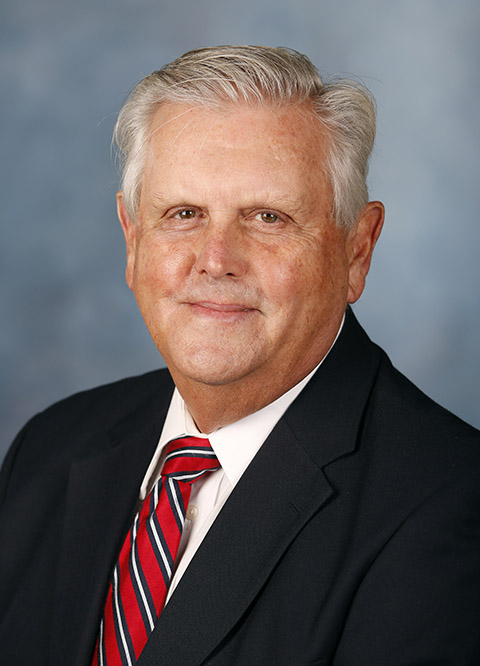

U.S. Secretary of Education Arne Duncan made the following statement at the American Enterprise Institute on November 17, 2010.
“I am here to talk today about what has been called the New Normal. For the next several years, preschool, K-12, and postsecondary educators are likely to face the great challenge of doing more with less. My message is this: challenge can, and should be, embraced as an opportunity to make dramatic improvements. I believe enormous opportunities for improving the productivity of our education system lie ahead if we are smart, innovative, and courageous in rethinking the status quo. It’s time to stop treating the problem of educational productivity as a grinding, eat-your-broccoli exercise. It’s time to start treating it as an opportunity for innovation and accelerating progress.”
On the CBS 60 Minutes broadcast of December 19, 2010, Steve Kroft did a piece on the looming meltdown of state budgets.
“By now, just about everyone in the country is aware of the federal deficit problem, but you should know that there is another financial crisis looming involving state and local governments. It has gotten much less attention because each state has a slightly different story. But in the two years since the "great recession" wrecked their economies and shriveled their income, the states have collectively spent nearly a half a trillion dollars more than they collected in taxes. There is also a trillion-dollar hole in their public pension funds. The states have been getting by on billions of dollars in federal stimulus funds, but the day of reckoning is at hand. The debt crisis is already making Wall Street nervous, and some believe that it could derail the recovery, cost a million public employees their jobs and require another big bailout package that no one in Washington wants to talk about.”
Why is Secretary Duncan talking about the “new normal?” Why is 60 Minutes talking about a looming financial crisis in the states that will dwarf the housing bust of the last few years? Why does this matter to educators? What do education leaders do to ensure the current generation of children are provided with an educational experience that prepares them for their future and not our past?
All education leaders know there is a funding cliff looming for 2012 and beyond. State and local education budgets have been propped up by federal stimulus funds for the past two years and through 2011; however, the stimulus funds are drying up, and most pundits predict that the federal government will not be able to support another round of stimulus funding to help state and local budgets.
Currently, the national debt has reached $14 trillion. That amounts to more than $40,000 for every American – including our children and grandchildren. By the end of the decade, the federal debt is predicted to exceed $20 trillion, and for every additional trillion, that means more than $3,000 added to our individual amount.
Recently, the National Commission on Fiscal Responsibility and Reform issued recommendations that would begin to address the rising tide of debt. Immediately, the recommendations were met with criticism and cynicism from the right and left.
In their book Stretching the School Dollar: How Schools and Districts Can Save Money While Serving Students Best, Frederick Hess and Eric Osberg offer several other reasons behind the “new normal” speech delivered by Secretary Duncan.
* Education has always been seen as the “sacred cow” in federal, state and local budgets. For more than 100 years with very few exceptions, the per-pupil expenditure for education has increased. Even during times of recession, education has seen increases in spending per pupil. Since the late ’50s, education has almost tripled the amount spent per pupil, while at the same time, our ranking among international comparisons and national assessments show stagnant performance as other countries are moving rapidly past the U.S.
* Over the past few years, the American public has signaled less support for continued increases in education spending. Given the constant bombardment of criticism placed on public schools and the current economic recession, the public has been persuaded that money is not the fix for public schools. Citizens reason that if they have to tighten their home budgets, then schools should be forced to do the same.
* The competing interests of other special interest groups have influenced education budgets and will continue to compete for declining federal, state and local resources. Education is facing competition with health care, criminal justice and the needs of an aging population.
* Public employee benefits are not sustainable and will become the final “brick” that breaks the back of federal, state and local budgets. The public pensions and other retirement benefits are structurally unsustainable. Current projections place an unfunded requirement of more than $1.3 trillion.
Last week, I announced a two percent reduction in the foundation funding (SEEK) for school systems. Over the past three years, Kentucky schools have faced reductions in not only foundation funding, but also in textbooks, professional development and other support processes. Kentucky schools are facing the “new normal.”
I am encouraged by superintendents to push state leaders for more funding for schools and at least the restoration of funding cuts. However, I also am faced with the four issues mentioned above from other stakeholders.
My position will continue to be this – as commissioner I will promote funding for what children need to be prepared for their future. I also will continue to focus on the most effective and efficient delivery methods to help children reach success. I WILL continue to encourage school leaders to look carefully at the status quo and determine if there are more effective and efficient ways to help students achieve success.
Over the coming months, I will continue to focus the conversation on four key areas that I believe will help Kentucky educators face the “new normal” and help the current generation of children in Kentucky achieve success. The four areas that I will focus on are:
* structure of schooling
* benchmarking processes
* effective and efficient labor costs
* productivity and effectiveness of all education processes
Our job as adults is to provide our children with the opportunity for a successful future. Let’s roll up our sleeves and get to work!
Showing posts with label spend. Show all posts
Showing posts with label spend. Show all posts
Friday, January 14, 2011


Friday, September 24, 2010
Transparency is Key
This week, we had an interesting presentation to the Budget Review Subcommittee of the Kentucky General Assembly.
The committee had asked for several updates. We provided an update on the funding from the American Recovery and Reinvestment Act (ARRA), an update on the new school facility classification system, an update on school calendars, an update on school tax levies and an update on end-of-year fund balances for school systems.
This week also saw the release of a tremendous amount of test data from our Kentucky Core Content Tests, Iowa Tests of Basic Skills, No Child Left Behind targets, gap-to-goal information and our new report required by 2009’s Senate Bill 1 for college and career readiness of the graduating class of 2010. If you missed this data, please visit our new OpenHouse site.
Issues around school calendars were of particular interest to legislators at the committee meeting. During the 2010 legislative session, the General Assembly reduced funding from the 2008-10 budget, providing one fewer day of instruction for the 2011-12 biennium. The information I presented at the meeting is as follows:
Instructional days -- 87 districts reduced the number of instructional days this year, while 13 increased days, and 74 districts maintained the same number of instructional days.
Teacher contract days -- 84 districts had no change in contract days, while 37 districts reduced contract days by one, and 53 districts reduced contract days by two.
We have released a tremendous amount of data, and we have a guiding principle of transparency of data at KDE. For that purpose, we also are providing access to the reports provided to the Budget Review Subcommittee. You can see those on my presentations page here.
We encourage school districts to be fully transparent about their fund balances and for what purposes those funds will be used. As a former superintendent, I certainly realize the need to have cash flow to meet payroll demands prior to tax receipts. I also know that many of our school systems are saving funds for early childhood centers, school facilities, textbooks, new school start-up costs and sick leave payment. Also, most financial experts recommend a 6-8 percent fund balance for emergency purposes. All of these purposes are valid; however, it is important to keep citizens fully informed of these and other issues.
The committee had asked for several updates. We provided an update on the funding from the American Recovery and Reinvestment Act (ARRA), an update on the new school facility classification system, an update on school calendars, an update on school tax levies and an update on end-of-year fund balances for school systems.
This week also saw the release of a tremendous amount of test data from our Kentucky Core Content Tests, Iowa Tests of Basic Skills, No Child Left Behind targets, gap-to-goal information and our new report required by 2009’s Senate Bill 1 for college and career readiness of the graduating class of 2010. If you missed this data, please visit our new OpenHouse site.
Issues around school calendars were of particular interest to legislators at the committee meeting. During the 2010 legislative session, the General Assembly reduced funding from the 2008-10 budget, providing one fewer day of instruction for the 2011-12 biennium. The information I presented at the meeting is as follows:
Instructional days -- 87 districts reduced the number of instructional days this year, while 13 increased days, and 74 districts maintained the same number of instructional days.
Teacher contract days -- 84 districts had no change in contract days, while 37 districts reduced contract days by one, and 53 districts reduced contract days by two.
We have released a tremendous amount of data, and we have a guiding principle of transparency of data at KDE. For that purpose, we also are providing access to the reports provided to the Budget Review Subcommittee. You can see those on my presentations page here.
We encourage school districts to be fully transparent about their fund balances and for what purposes those funds will be used. As a former superintendent, I certainly realize the need to have cash flow to meet payroll demands prior to tax receipts. I also know that many of our school systems are saving funds for early childhood centers, school facilities, textbooks, new school start-up costs and sick leave payment. Also, most financial experts recommend a 6-8 percent fund balance for emergency purposes. All of these purposes are valid; however, it is important to keep citizens fully informed of these and other issues.
Friday, December 18, 2009
Budget Facts and Effects
At a recent Kentucky Board of Education meeting, we had a presentation from Dave Adkisson, president and CEO of the Kentucky Chamber of Commerce. Rather than take a position concerning the presentation, I thought some of the facts were very interesting and should be part of any future budget discussions.
Corrections Spending in Kentucky
· Spending has seen 44 percent increase since 2000, as compared to 33 percent increase in General Fund.
· It costs $19,000 per year to incarcerate a prisoner and only $9,200 a year to educate a child in P-12.
· Could we not save money on corrections by reducing our dropout rates and investing in early childhood education?
Medicaid Spending in Kentucky
· Medicaid budget is growing twice as fast as the General Fund budget.
· Medicaid enrollment increase is three times the predicted and budgeted amount.
· There will be a significant decrease in federal funding support for Medicaid in FY11.
· Medicaid moved from 6.5 percent of the state budget to the current 13.7 percent.
· Is there not a correlation that better-educated citizenry has better health?
Public Employee Health Care
· Increasing five times faster than General Fund budget (174 percent increase, compared to 33 percent General Fund increase since 2000).
· Health care for public employees currently comprises 12 percent of the state budget and 16 percent of the P-12 education budget.
· Health care costs are 17.2 percent of salary for public employees, compared to 10.8 percent for private companies’ employees.
I don’t envy the General Assembly as the members reconvene to deal with budget issues. These are difficult times that will require lots of collaboration and consideration of many ideas for improving efficiency and effectiveness of all programs.
I asked today if we thought Santa would drop a sack of dollars for Kentucky into the General Fund, and I am afraid that the answer will probably be “no.” However, no matter the funding, we must educate our children and ensure their future.
Corrections Spending in Kentucky
· Spending has seen 44 percent increase since 2000, as compared to 33 percent increase in General Fund.
· It costs $19,000 per year to incarcerate a prisoner and only $9,200 a year to educate a child in P-12.
· Could we not save money on corrections by reducing our dropout rates and investing in early childhood education?
Medicaid Spending in Kentucky
· Medicaid budget is growing twice as fast as the General Fund budget.
· Medicaid enrollment increase is three times the predicted and budgeted amount.
· There will be a significant decrease in federal funding support for Medicaid in FY11.
· Medicaid moved from 6.5 percent of the state budget to the current 13.7 percent.
· Is there not a correlation that better-educated citizenry has better health?
Public Employee Health Care
· Increasing five times faster than General Fund budget (174 percent increase, compared to 33 percent General Fund increase since 2000).
· Health care for public employees currently comprises 12 percent of the state budget and 16 percent of the P-12 education budget.
· Health care costs are 17.2 percent of salary for public employees, compared to 10.8 percent for private companies’ employees.
I don’t envy the General Assembly as the members reconvene to deal with budget issues. These are difficult times that will require lots of collaboration and consideration of many ideas for improving efficiency and effectiveness of all programs.
I asked today if we thought Santa would drop a sack of dollars for Kentucky into the General Fund, and I am afraid that the answer will probably be “no.” However, no matter the funding, we must educate our children and ensure their future.
Subscribe to:
Posts (Atom)