

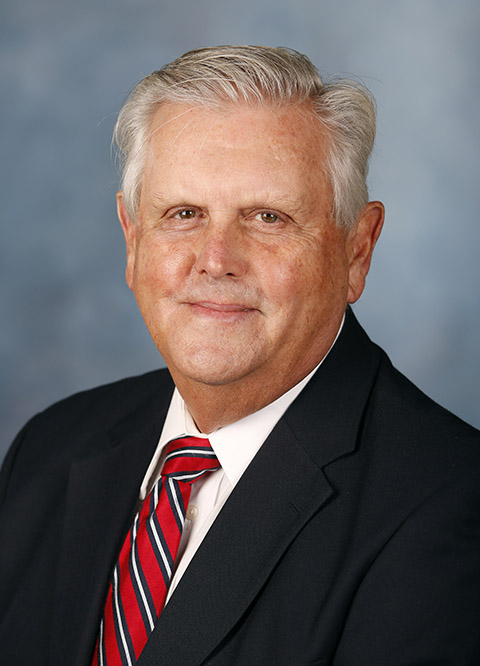

This week, several readers sent me a link to an NEAToday article: http://tinyurl.com/332xvzd.
Instead of my usual blog, I hope that readers will take a few moments to read this interesting article from a Florida teacher. (NEAToday is published by the National Education Association.)
My concern as commissioner is that we do not see similar disquiet from Kentucky teachers. With the decision this week concerning federal Race to the Top (RTTT) funds, we are now faced with a major issue of funding for the implementation of 2009’s Senate Bill 1 (SB 1).
SB 1’s mandates and our Race to the Top plan are excellent. I feel certain that if we deploy the Race to the Top plan, we will have better results for college and career readiness than any state that actually received RTTT funding. The major problem is finding the funds to provide support to teachers.
Teachers will need textbooks, instructional materials, intervention materials, professional development and time to plan and meet with other teachers. These strategies do not come without a cost. I do believe that existing funds in the state budget could be reallocated to address the needs of SB 1. Now that we know there are no dollars from RTTT, we must begin to work on moving funds. This strategy will not be popular; however, we must focus on the Commonwealth rather than individual projects that serve only one or a handful of schools and districts.
Our most important assets in education are the teachers in the classrooms. Our most important natural resources in Kentucky are the children in the classrooms. These children cannot wait a generation to see if we have funding to improve our schools. We must invest now to ensure the future.
Friday, August 27, 2010


Friday, August 20, 2010
College- and Career-Ready Students: More Work to Do
Last week, I highlighted projections for the Class of 2010. This week, I want to do a follow-up concerning the results of the ACT for the Class of 2010.
I know many of you heard reports this week that fewer than one in four high school graduates across the nation met benchmarks for college readiness. Through this blog, I hope to explain what those benchmarks measure.
Kentucky is one of a few states that require all 8th, 10th and 11th graders to take the components of ACT, Inc.’s Educational Planning and Assessment System (EPAS). In 8th grade, students take the EXPLORE assessment ,and then in 10th grade they take the PLAN assessment. At 11th grade, students actually take the ACT. EPAS reports results at each grade level showing whether or not students are scoring at the college-ready level for the specific grade. The reports are based on assessments of English, mathematics, reading and science.
At the 11th grade, the benchmark scores predict that a student has a 75 percent chance of making a C or better in a college entry-level course such as English 101, College Algebra, College Social Science and/or College Biology. Each subject-level component of the ACT has a separate benchmark score. ACT also reports on the percentage of students who score college-ready for all four areas. This is what is often reported in the media. Nationwide, 24 percent of students met benchmarks for all four areas. In Kentucky, 14 percent did.
Readers need to know a couple of things as they interpret the scores. Kentucky’s scores include all public school 11th-grade students. Most states do NOT assess all students, and the percentage assessed can range from 100 percent to less than 4 percent, depending on the state. In 2006, only 24,930 Kentucky 11th graders took the ACT, compared to 41,227 in 2010. So, comparing results from 2006 to 2010 is not appropriate, and comparing Kentucky results to other states who have significantly smaller numbers of students taking the ACT is inappropriate.
However, as Commissioner of Education, I am extremely concerned for our state and our nation. As I reported last week, our state’s and nation’s futures are tied to our level of education due to the increasing demands for higher levels of skills by employers. From 1970, when more than 80 percent of jobs in our state and nation only required a high school degree or less, we are now moving toward an economy that will have 80 percent of jobs that require training beyond high school, and 63 percent of those jobs will require a postsecondary degree. The ACT demonstrates one measure that reveals we have a large gap in our high school graduates’ readiness for college and career.
Another component of the ACT results that is worrisome to me is the HUGE gap between white students and African American students in our public schools.
* In English, 56 percent of white students met the benchmark, and only 30 percent of African American students met the benchmark.
* In math, 27 percent of white students met the benchmark, and only 9 percent of African American students met the benchmark.
* In reading, 41 percent of white students met the benchmark, compared to 18 percent of African American students.
* In science, 21 percent of white students and 6 percent of African American students met the benchmark.
* For all four benchmarks, 15 percent of white students, compared to 4 percent of African American students, met all four benchmarks.
In 2009, the Kentucky General Assembly passed and Governor Steve Beshear signed Senate Bill 1, which focuses the state on improving the college and career readiness of our high school graduates. Governor Beshear has followed up with the Transforming Education in Kentucky (TEK) Task Force, which will recommend specific strategies to improve the outcomes of our public school graduates. The Kentucky Board of Education, Council on Postsecondary Education and the Education Professional Standards Board are all working closely together to improve the student learning outcomes. Many partners in the business community and private foundation community have joined in the call to action.
This week, the TEK Talk community forums held across Kentucky sought the input of citizens for this important work. The eyes of the nation were on Kentucky in 1990, when we were the first state to implement major finance and school reform. The eyes of the nation are once again upon Kentucky as we lead the way in improving the college and career readiness of our public school graduates. No one in the Commonwealth should sit on the sidelines for this major initiative. Thank you in advance for what you will do to support the children and the future of Kentucky.
I know many of you heard reports this week that fewer than one in four high school graduates across the nation met benchmarks for college readiness. Through this blog, I hope to explain what those benchmarks measure.
Kentucky is one of a few states that require all 8th, 10th and 11th graders to take the components of ACT, Inc.’s Educational Planning and Assessment System (EPAS). In 8th grade, students take the EXPLORE assessment ,and then in 10th grade they take the PLAN assessment. At 11th grade, students actually take the ACT. EPAS reports results at each grade level showing whether or not students are scoring at the college-ready level for the specific grade. The reports are based on assessments of English, mathematics, reading and science.
At the 11th grade, the benchmark scores predict that a student has a 75 percent chance of making a C or better in a college entry-level course such as English 101, College Algebra, College Social Science and/or College Biology. Each subject-level component of the ACT has a separate benchmark score. ACT also reports on the percentage of students who score college-ready for all four areas. This is what is often reported in the media. Nationwide, 24 percent of students met benchmarks for all four areas. In Kentucky, 14 percent did.
Readers need to know a couple of things as they interpret the scores. Kentucky’s scores include all public school 11th-grade students. Most states do NOT assess all students, and the percentage assessed can range from 100 percent to less than 4 percent, depending on the state. In 2006, only 24,930 Kentucky 11th graders took the ACT, compared to 41,227 in 2010. So, comparing results from 2006 to 2010 is not appropriate, and comparing Kentucky results to other states who have significantly smaller numbers of students taking the ACT is inappropriate.
However, as Commissioner of Education, I am extremely concerned for our state and our nation. As I reported last week, our state’s and nation’s futures are tied to our level of education due to the increasing demands for higher levels of skills by employers. From 1970, when more than 80 percent of jobs in our state and nation only required a high school degree or less, we are now moving toward an economy that will have 80 percent of jobs that require training beyond high school, and 63 percent of those jobs will require a postsecondary degree. The ACT demonstrates one measure that reveals we have a large gap in our high school graduates’ readiness for college and career.
Another component of the ACT results that is worrisome to me is the HUGE gap between white students and African American students in our public schools.
* In English, 56 percent of white students met the benchmark, and only 30 percent of African American students met the benchmark.
* In math, 27 percent of white students met the benchmark, and only 9 percent of African American students met the benchmark.
* In reading, 41 percent of white students met the benchmark, compared to 18 percent of African American students.
* In science, 21 percent of white students and 6 percent of African American students met the benchmark.
* For all four benchmarks, 15 percent of white students, compared to 4 percent of African American students, met all four benchmarks.
In 2009, the Kentucky General Assembly passed and Governor Steve Beshear signed Senate Bill 1, which focuses the state on improving the college and career readiness of our high school graduates. Governor Beshear has followed up with the Transforming Education in Kentucky (TEK) Task Force, which will recommend specific strategies to improve the outcomes of our public school graduates. The Kentucky Board of Education, Council on Postsecondary Education and the Education Professional Standards Board are all working closely together to improve the student learning outcomes. Many partners in the business community and private foundation community have joined in the call to action.
This week, the TEK Talk community forums held across Kentucky sought the input of citizens for this important work. The eyes of the nation were on Kentucky in 1990, when we were the first state to implement major finance and school reform. The eyes of the nation are once again upon Kentucky as we lead the way in improving the college and career readiness of our public school graduates. No one in the Commonwealth should sit on the sidelines for this major initiative. Thank you in advance for what you will do to support the children and the future of Kentucky.
Friday, August 13, 2010
The Class of 2010: What Does Their Future Look Like?
Over the past few weeks, several reports have spurred me to write this blog entry. The upcoming Class of 2010 ACT report; a recent report from the Center on Education and Workforce at Georgetown University; the College Completion Agenda from the College Board; and Achieving the Possible: What Americans Think About the College and Career Ready Agenda from Achieve, Inc. have informed this blog and hopefully will help us focus on the college- and career-ready agenda for the August 17 Transforming Education in Kentucky (TEK) forums and KET’s Education Matters broadcast.
Readers should note that the numbers below come from all of these reports and from existing demographic data for Kentucky citizens.
This blog focuses on the national agenda of increasing the percentage of Kentucky citizens who hold a postsecondary degree (two- or four- year) and the Kentucky Senate Bill 1 (2009) focus on college-ready graduates. I use the Class of 2010 to provide a concrete example of the impact of the predictions from the reports and previous Kentucky demographic data.
Readers should consider how they would feel if they had a child or relative in the Class of 2010 who recently graduated from a Kentucky high school.
* For every 1,000 9th graders who entered high school in the 2006-07 school year, only 740 actually graduated in 2010.
* Of the 740 who graduated, 670 indicated they would attend two- or four-year postsecondary institutions; however, only 592 will actually attend a postsecondary institution.
* Of the 592, 112 will attend two-year colleges, and only 18 of the 112 will be college-ready (no remediation courses).
* Of the 480 graduates who will attend four-year colleges, only 237 will be college-ready (no remediation courses).
* Of the 112 graduates attending two-year colleges, only 67 will return for the second year of school.
* Of the 480 attending four-year colleges, only 340 will return for the second year.
* Of the 112 attending two-year colleges, only 26 will graduate within three years with a degree. * Of the 480 attending four-year colleges, only 225 will graduate within six years.
In summary, of the 1,000 bright and eager high school freshmen from 2006-07 who entered with dreams of college and career, only 251 will achieve their dream of a two- or four-year degree within three or six years of graduation from high school. What happened to the other 749?
If Kentucky demographics can predict the future, then 80 will not have a high school diploma; 370 will have a high school diploma but no college credits; 210 will have a high school diploma and some college; and 90 will have a GED by the time they reach age 34.
In years past, this scenario may not have concerned parents; however, from the Georgetown University report and numerous other workforce predictions, 63 percent of jobs in 2018 will require a two- or four-year postsecondary degree, and more than 80 percent of jobs will require postsecondary degrees and/or technical training. So, it appears that for Kentucky to have a competitive employment and strong economy, about 800 of the 1,000 graduates really need postsecondary and/or technical training beyond high school.
However, we are projecting that only 251 will achieve the two- or four-year degree, and 210 will have some training beyond high school, for a total of 461 students possibly ready for 800 jobs. Where will employers get the other 339 employees? As I talk to employers now, they tell me they are either importing the employees or have to provide significant training and education to prospective employees at a high cost that impacts the competitive ability of the business.
As much of a concern should be the remaining 539 students who do not have two- or four-year degrees and/or some training beyond high school. More than 200 of them will settle for low-skill and low-wage jobs that do not pay a living wage for a family. The remainder (340) will strain the state’s budget through unemployment and medical, criminal and social costs.
Parents and the public get it, as evidenced from the Achieve report.
* There is widespread agreement (almost 90 percent) that all students need additional education and training beyond high school.
* Support for policies aimed to prepare high school students for college and careers is broad, deep and fully bipartisan with equally high numbers of Democratic, Republican and Independent voters supporting such (almost 90 percent for each group).
* There is strong support (two-thirds of respondents) for the specific policies that put common expectations in place for all students – including common standards, common assessments and graduation requirements among all states.
* More generally, there is near-universal agreement across partisan, ethnic/racial and geographic lines that some education and training beyond high school is necessary – and that stronger expectations in high school will go a long way towards preparing students for their next steps.
The central question for us in Kentucky is not who is to blame for these results, but what are we going to do about these results? There are those who will say we cannot fund or support schools and colleges to improve these results and prepare our children for the future; however, if we do not work to support improvements in outcomes, then we will probably be sending our children forward to a continuing recession and loss of America’s leadership among world economies.
The Kentucky Board of Education and the Kentucky Department of Education will release the first college- and career-ready report in late September. We will show the results for each high school and district in Kentucky. We will adopt a new accountability system that focuses on improving the college-and career-ready rates for Kentucky high school graduates. Numerous regulations and support mechanisms will be put in place; however, the ultimate work is in every school and district in Kentucky. This work does not belong just to high schools and colleges -- every parent, school, teacher, business leader and politician in Kentucky must work together to impact the future for our children. What will YOU do to support the children?
Readers should note that the numbers below come from all of these reports and from existing demographic data for Kentucky citizens.
This blog focuses on the national agenda of increasing the percentage of Kentucky citizens who hold a postsecondary degree (two- or four- year) and the Kentucky Senate Bill 1 (2009) focus on college-ready graduates. I use the Class of 2010 to provide a concrete example of the impact of the predictions from the reports and previous Kentucky demographic data.
Readers should consider how they would feel if they had a child or relative in the Class of 2010 who recently graduated from a Kentucky high school.
* For every 1,000 9th graders who entered high school in the 2006-07 school year, only 740 actually graduated in 2010.
* Of the 740 who graduated, 670 indicated they would attend two- or four-year postsecondary institutions; however, only 592 will actually attend a postsecondary institution.
* Of the 592, 112 will attend two-year colleges, and only 18 of the 112 will be college-ready (no remediation courses).
* Of the 480 graduates who will attend four-year colleges, only 237 will be college-ready (no remediation courses).
* Of the 112 graduates attending two-year colleges, only 67 will return for the second year of school.
* Of the 480 attending four-year colleges, only 340 will return for the second year.
* Of the 112 attending two-year colleges, only 26 will graduate within three years with a degree. * Of the 480 attending four-year colleges, only 225 will graduate within six years.
In summary, of the 1,000 bright and eager high school freshmen from 2006-07 who entered with dreams of college and career, only 251 will achieve their dream of a two- or four-year degree within three or six years of graduation from high school. What happened to the other 749?
If Kentucky demographics can predict the future, then 80 will not have a high school diploma; 370 will have a high school diploma but no college credits; 210 will have a high school diploma and some college; and 90 will have a GED by the time they reach age 34.
In years past, this scenario may not have concerned parents; however, from the Georgetown University report and numerous other workforce predictions, 63 percent of jobs in 2018 will require a two- or four-year postsecondary degree, and more than 80 percent of jobs will require postsecondary degrees and/or technical training. So, it appears that for Kentucky to have a competitive employment and strong economy, about 800 of the 1,000 graduates really need postsecondary and/or technical training beyond high school.
However, we are projecting that only 251 will achieve the two- or four-year degree, and 210 will have some training beyond high school, for a total of 461 students possibly ready for 800 jobs. Where will employers get the other 339 employees? As I talk to employers now, they tell me they are either importing the employees or have to provide significant training and education to prospective employees at a high cost that impacts the competitive ability of the business.
As much of a concern should be the remaining 539 students who do not have two- or four-year degrees and/or some training beyond high school. More than 200 of them will settle for low-skill and low-wage jobs that do not pay a living wage for a family. The remainder (340) will strain the state’s budget through unemployment and medical, criminal and social costs.
Parents and the public get it, as evidenced from the Achieve report.
* There is widespread agreement (almost 90 percent) that all students need additional education and training beyond high school.
* Support for policies aimed to prepare high school students for college and careers is broad, deep and fully bipartisan with equally high numbers of Democratic, Republican and Independent voters supporting such (almost 90 percent for each group).
* There is strong support (two-thirds of respondents) for the specific policies that put common expectations in place for all students – including common standards, common assessments and graduation requirements among all states.
* More generally, there is near-universal agreement across partisan, ethnic/racial and geographic lines that some education and training beyond high school is necessary – and that stronger expectations in high school will go a long way towards preparing students for their next steps.
The central question for us in Kentucky is not who is to blame for these results, but what are we going to do about these results? There are those who will say we cannot fund or support schools and colleges to improve these results and prepare our children for the future; however, if we do not work to support improvements in outcomes, then we will probably be sending our children forward to a continuing recession and loss of America’s leadership among world economies.
The Kentucky Board of Education and the Kentucky Department of Education will release the first college- and career-ready report in late September. We will show the results for each high school and district in Kentucky. We will adopt a new accountability system that focuses on improving the college-and career-ready rates for Kentucky high school graduates. Numerous regulations and support mechanisms will be put in place; however, the ultimate work is in every school and district in Kentucky. This work does not belong just to high schools and colleges -- every parent, school, teacher, business leader and politician in Kentucky must work together to impact the future for our children. What will YOU do to support the children?
Friday, August 6, 2010
Planning for Proficiency
This week, the Kentucky Board of Education (KBE) reviewed progress toward the vision of “every child proficient and prepared for success.” The board presentation “The Good, the Bad, the Ugly” provided some background. To summarize from the presentation:
* There is good progress in 4th- and 8th-grade reading, with Kentucky outpacing the nation and also being the only state with significant gains between 2007 and 2009 National Assessment of Educational Progress (NAEP) scores.
* Over the last decade, Kentucky also has made good progress in improving graduation rates; however, as we move toward the cohort graduation rate, we will see a decline in those rates.
* We are not making as much progress with 4th- and 8th-grade math on NAEP, with Kentucky scores being at or below national average.
* The real concerns continue to be with the persistent achievement gaps between groups of students at all levels for every indicator.
The KBE gave support for the Kentucky Department of Education (KDE) to begin implementation of the proposed strategic plan. The plan will have four strategic priorities – Next-Generation Learners; Next-Generation Professionals; Next-Generation Support Systems; and Next-Generation Schools and Districts. The KBE gave me direction to develop specific measureable goals for my evaluation and, in turn, the evaluation of the department.
It is now time to turn our attention to finalizing how schools and districts will be measured under the proposed strategic plan. We have been conducting advisory group meetings to gain feedback on revisions to the Kentucky accountability model and school/district report cards. The proposed accountability model would include the following measures:
* Next-Generation Learners – schools and district will receive an A,B,C,D or F grade on student learning results based on new common core assessments. The grade would be derived from a composite of proficiency rates, closing gaps and growth. Middle schools would have a high school readiness component added based on the 8th-grade PLAN assessment. High schools would have a college readiness component and a graduation component added.
* Next-Generation Professionals – schools and districts will receive a grade based on percentage of effective teachers and leaders. This measure will be developed by the teacher and principal effectiveness steering committees.
* Next-Generation Support Systems – schools and districts will receive a grade based on results from the teacher/leader working conditions survey to be administered for the first time in spring 2011. Also, program review performance will be included to ensure schools and districts are continuing to focus on a complete education in addition to tested subjects.
* Next-Generation Schools/Districts – within this strategic priority, districts will be graded on percentage of schools they have at each grading level. Also, school report cards will be revised to show performance on the above measures.
Let me reiterate that the new report cards and accountability system are only PROPOSED at this point. We are gaining feedback from all stakeholders; however, the time for action by the Kentucky Board of Education is drawing close. The KBE will receive a draft proposal at the October board meeting, and a final vote will be taken at the December board meeting. Should legislation be required for any component, we will work with legislators during the 2011 short session.
We do anticipate the reauthorization of the federal Elementary and Secondary Education Act (ESEA) next spring, and we anticipate the revisions to ESEA will contain many of the components we are proposing in the Kentucky model. Also, 2009’s Senate Bill 1 (KRS 158.6453) required the KBE to develop and implement a new accountability model by the 2011-12 school year – thus, the reason for the timeline.
Thanks for reading this blog, and remember that the driving force behind all of this work is “every child proficient and prepared for success.” A vision without work is just a dream. We are working to make the dream a reality!
* There is good progress in 4th- and 8th-grade reading, with Kentucky outpacing the nation and also being the only state with significant gains between 2007 and 2009 National Assessment of Educational Progress (NAEP) scores.
* Over the last decade, Kentucky also has made good progress in improving graduation rates; however, as we move toward the cohort graduation rate, we will see a decline in those rates.
* We are not making as much progress with 4th- and 8th-grade math on NAEP, with Kentucky scores being at or below national average.
* The real concerns continue to be with the persistent achievement gaps between groups of students at all levels for every indicator.
The KBE gave support for the Kentucky Department of Education (KDE) to begin implementation of the proposed strategic plan. The plan will have four strategic priorities – Next-Generation Learners; Next-Generation Professionals; Next-Generation Support Systems; and Next-Generation Schools and Districts. The KBE gave me direction to develop specific measureable goals for my evaluation and, in turn, the evaluation of the department.
It is now time to turn our attention to finalizing how schools and districts will be measured under the proposed strategic plan. We have been conducting advisory group meetings to gain feedback on revisions to the Kentucky accountability model and school/district report cards. The proposed accountability model would include the following measures:
* Next-Generation Learners – schools and district will receive an A,B,C,D or F grade on student learning results based on new common core assessments. The grade would be derived from a composite of proficiency rates, closing gaps and growth. Middle schools would have a high school readiness component added based on the 8th-grade PLAN assessment. High schools would have a college readiness component and a graduation component added.
* Next-Generation Professionals – schools and districts will receive a grade based on percentage of effective teachers and leaders. This measure will be developed by the teacher and principal effectiveness steering committees.
* Next-Generation Support Systems – schools and districts will receive a grade based on results from the teacher/leader working conditions survey to be administered for the first time in spring 2011. Also, program review performance will be included to ensure schools and districts are continuing to focus on a complete education in addition to tested subjects.
* Next-Generation Schools/Districts – within this strategic priority, districts will be graded on percentage of schools they have at each grading level. Also, school report cards will be revised to show performance on the above measures.
Let me reiterate that the new report cards and accountability system are only PROPOSED at this point. We are gaining feedback from all stakeholders; however, the time for action by the Kentucky Board of Education is drawing close. The KBE will receive a draft proposal at the October board meeting, and a final vote will be taken at the December board meeting. Should legislation be required for any component, we will work with legislators during the 2011 short session.
We do anticipate the reauthorization of the federal Elementary and Secondary Education Act (ESEA) next spring, and we anticipate the revisions to ESEA will contain many of the components we are proposing in the Kentucky model. Also, 2009’s Senate Bill 1 (KRS 158.6453) required the KBE to develop and implement a new accountability model by the 2011-12 school year – thus, the reason for the timeline.
Thanks for reading this blog, and remember that the driving force behind all of this work is “every child proficient and prepared for success.” A vision without work is just a dream. We are working to make the dream a reality!
Friday, July 30, 2010
Early Childhood Benefits/Teacher Evaluations
In these days of Twitter, Facebook, Tumblr and other services that provide daily, hourly and even minute-by-minute updates, I get lots of information about reports, studies and education events. This week , on my Twitter and Facebook accounts, I highlighted two of the more interesting reports.
* a terrific new report on long-term benefits of early childhood education: http://obs.rc.fas.harvard.edu/chetty/STAR_slides.pdf
* an interesting report from the U.S. Department of Education’s Institute of Education Sciences (IES), which reinforces Kentucky’s caution on using value-added criteria for high-stakes decisions: http://ies.ed.gov/ncee/pubs/20104004/
Readers of these reports may find conflicting information. The early childhood report was mentioned in a New York Times article entitled “The Case for $320,000 Kindergarten Teachers.” The report came from Harvard economist Raj Chetty. Many critics of government spending on early childhood education allege that the early gains for children often wash out over the course of the school years. I really liked a quote attributed to Mr. Chetty – “We don’t really care about test scores. We care about adult outcomes.”
Mr. Chetty and his team reviewed the adult outcomes for students who were part of the Tennessee Star Project from the ‘80s. They found students who were in the most effective kindergarten classrooms were more likely as adults to go to college, less likely to be single parents, more likely to be saving for retirement and more likely to earn more than their peers in the same study who were in less effective classrooms. So, the article and study seem to support the big idea of teacher effectiveness having a major role in student learning and adult outcomes.
In a somewhat conflicting report from the National Center for Education and Evaluation, researchers raised many cautions about using teacher effectiveness data for high-stakes decisions like merit pay and tenure. The report, Error Rates in Measuring Teacher and School Performance Based on Test Score Gains, highlighted concerns about error rates when using this data. The report states that three years of teacher data that classifies teachers as low performing could be erroneous as much as one out of four times. The report shows that data classifying a teacher as high-performing also could be erroneous as much as one out of four times. With five years of data, the results become a little more stable, and if the data are used mainly for school classification, then the error rates decline. Regardless, this research does raise much concern about the use of one, two or even three years of data to make high-stakes decisions.
So, the question becomes, “how do we resolve the apparent conflict in these two reports with regard to outcomes and the impact of teachers on the learning outcomes?” The answer is in multiple measures. I have been clear with policy makers, superintendents, teachers and other stakeholders. Kentucky will not depend solely on test scores for high-stakes decisions for teachers and principals. Both of these studies point out concerns with just using test scores. In Kentucky, we will continue to work with teachers, principals and other stakeholders to develop evaluation systems that utilize multiple measures of effectiveness.
* a terrific new report on long-term benefits of early childhood education: http://obs.rc.fas.harvard.edu/chetty/STAR_slides.pdf
* an interesting report from the U.S. Department of Education’s Institute of Education Sciences (IES), which reinforces Kentucky’s caution on using value-added criteria for high-stakes decisions: http://ies.ed.gov/ncee/pubs/20104004/
Readers of these reports may find conflicting information. The early childhood report was mentioned in a New York Times article entitled “The Case for $320,000 Kindergarten Teachers.” The report came from Harvard economist Raj Chetty. Many critics of government spending on early childhood education allege that the early gains for children often wash out over the course of the school years. I really liked a quote attributed to Mr. Chetty – “We don’t really care about test scores. We care about adult outcomes.”
Mr. Chetty and his team reviewed the adult outcomes for students who were part of the Tennessee Star Project from the ‘80s. They found students who were in the most effective kindergarten classrooms were more likely as adults to go to college, less likely to be single parents, more likely to be saving for retirement and more likely to earn more than their peers in the same study who were in less effective classrooms. So, the article and study seem to support the big idea of teacher effectiveness having a major role in student learning and adult outcomes.
In a somewhat conflicting report from the National Center for Education and Evaluation, researchers raised many cautions about using teacher effectiveness data for high-stakes decisions like merit pay and tenure. The report, Error Rates in Measuring Teacher and School Performance Based on Test Score Gains, highlighted concerns about error rates when using this data. The report states that three years of teacher data that classifies teachers as low performing could be erroneous as much as one out of four times. The report shows that data classifying a teacher as high-performing also could be erroneous as much as one out of four times. With five years of data, the results become a little more stable, and if the data are used mainly for school classification, then the error rates decline. Regardless, this research does raise much concern about the use of one, two or even three years of data to make high-stakes decisions.
So, the question becomes, “how do we resolve the apparent conflict in these two reports with regard to outcomes and the impact of teachers on the learning outcomes?” The answer is in multiple measures. I have been clear with policy makers, superintendents, teachers and other stakeholders. Kentucky will not depend solely on test scores for high-stakes decisions for teachers and principals. Both of these studies point out concerns with just using test scores. In Kentucky, we will continue to work with teachers, principals and other stakeholders to develop evaluation systems that utilize multiple measures of effectiveness.
Friday, July 23, 2010
Challenges and Changing Times
Highlights from my remarks to the Kentucky Association of School Administrators Summer Conference in Louisville this morning.
A quote that I often use in presentations comes from Martin Luther King, Jr. “A man’s true measure is not where he stands in moments of comfort but in times of challenge.”
Given the many challenges that we face in Kentucky and across the nation, I think this quote is very much on target. As leaders, we have to make a decision. Will we rise to the challenge or will we fold under the pressure? As the leader of P-12 education in Kentucky, I am asking you today to rise to the challenge of leadership during difficult times.
Why is it so important to rise to this challenge? Over the past few weeks, there have been some remarkable events in our world. Amazon recently announced that the sale of e-books exceeded the sale of paper books for the first time in history. The U.S. is no longer the number-one user of energy in the world. We have been replaced by China. A Department of Agriculture employee’s video clips went viral and overshadowed the passage of the most expansive financial reform legislation since the Great Depression. Another story that went viral this week concerned an 11-year-old who was provided a computer, webcam and unrestricted Internet access by her parents, then became the brunt of an e-attack by a powerful online user group whose stated purpose is to attack people who annoy them. A report revealed that the nation has gone from leading the world in percentage of 25- to 34-year-olds with a postsecondary degree to lagging most of the industrialized nations (we rank 12th now). Another report documents that, in the 1970s, the percentage of the workforce with a high school degree or less was more than 70 percent. The same report predicts that almost 70 percent of the workforce in 2018 will need a postsecondary degree.
With a 1.5 percent decrease in funding, our challenges seem to pale in comparison to the other challenges around us. Furloughs seem insignificant when compared against what is happening to the citizens in Louisiana and other states as a result of the oil spill. As we fly our flags at half-staff in Kentucky to honor fallen soldiers, I do not take a lot of time concerning myself with who is hosting or not hosting a political fundraiser. What I challenge each of us to do is focus on the bigger picture of enabling the generation of children we have in front of us today to become better educated and more employable in the future. In 1990, bold leaders faced with difficult times did not back away from the challenge of KERA. Bold leaders stepped up to the plate and made a difference for a generation of children.
In 2010, we are provided another opportunity to also be bold leaders. We have been provided the platform for transforming the educational experience for a generation of children. In my 39 years of education, I have never seen the alignment so clear. Senate Bill 1, Race to the Top, the reauthorization of the federal Elementary and Secondary Education Act and the Governor’s Transforming Education in Kentucky Task Force are providing the road map to a brighter future for Kentucky children.
Let us not waste this opportunity to reshape the future. Let us not be sidetracked by the barriers and challenges we are faced with on a daily basis. So I ask … where will you stand in these challenging times? Will you join me in standing up for increasing the rigor of our academic standards in Kentucky? Will you stand up for measuring the effectiveness of teachers, principals, school-based councils, superintendents and school boards in part based on student learning outcomes? Will you stand up for better assessments that measure what children should be able to do rather than simple recall of facts? Will you stand up for the goal of EVERY child graduating from high school ready for college and career?
And most of all … will you stand up for the least among the children? Will you stand up for closing achievement gaps and ensuring that every child regardless of wealth, gender, color or zip code not only has the opportunity for success, but actually succeeds in school?
Thank you for rising to this challenge. You make a difference in your schools and districts. You make a difference for children. You make a difference for the future of Kentucky. Best wishes on a successful start to the school year!
A quote that I often use in presentations comes from Martin Luther King, Jr. “A man’s true measure is not where he stands in moments of comfort but in times of challenge.”
Given the many challenges that we face in Kentucky and across the nation, I think this quote is very much on target. As leaders, we have to make a decision. Will we rise to the challenge or will we fold under the pressure? As the leader of P-12 education in Kentucky, I am asking you today to rise to the challenge of leadership during difficult times.
Why is it so important to rise to this challenge? Over the past few weeks, there have been some remarkable events in our world. Amazon recently announced that the sale of e-books exceeded the sale of paper books for the first time in history. The U.S. is no longer the number-one user of energy in the world. We have been replaced by China. A Department of Agriculture employee’s video clips went viral and overshadowed the passage of the most expansive financial reform legislation since the Great Depression. Another story that went viral this week concerned an 11-year-old who was provided a computer, webcam and unrestricted Internet access by her parents, then became the brunt of an e-attack by a powerful online user group whose stated purpose is to attack people who annoy them. A report revealed that the nation has gone from leading the world in percentage of 25- to 34-year-olds with a postsecondary degree to lagging most of the industrialized nations (we rank 12th now). Another report documents that, in the 1970s, the percentage of the workforce with a high school degree or less was more than 70 percent. The same report predicts that almost 70 percent of the workforce in 2018 will need a postsecondary degree.
With a 1.5 percent decrease in funding, our challenges seem to pale in comparison to the other challenges around us. Furloughs seem insignificant when compared against what is happening to the citizens in Louisiana and other states as a result of the oil spill. As we fly our flags at half-staff in Kentucky to honor fallen soldiers, I do not take a lot of time concerning myself with who is hosting or not hosting a political fundraiser. What I challenge each of us to do is focus on the bigger picture of enabling the generation of children we have in front of us today to become better educated and more employable in the future. In 1990, bold leaders faced with difficult times did not back away from the challenge of KERA. Bold leaders stepped up to the plate and made a difference for a generation of children.
In 2010, we are provided another opportunity to also be bold leaders. We have been provided the platform for transforming the educational experience for a generation of children. In my 39 years of education, I have never seen the alignment so clear. Senate Bill 1, Race to the Top, the reauthorization of the federal Elementary and Secondary Education Act and the Governor’s Transforming Education in Kentucky Task Force are providing the road map to a brighter future for Kentucky children.
Let us not waste this opportunity to reshape the future. Let us not be sidetracked by the barriers and challenges we are faced with on a daily basis. So I ask … where will you stand in these challenging times? Will you join me in standing up for increasing the rigor of our academic standards in Kentucky? Will you stand up for measuring the effectiveness of teachers, principals, school-based councils, superintendents and school boards in part based on student learning outcomes? Will you stand up for better assessments that measure what children should be able to do rather than simple recall of facts? Will you stand up for the goal of EVERY child graduating from high school ready for college and career?
And most of all … will you stand up for the least among the children? Will you stand up for closing achievement gaps and ensuring that every child regardless of wealth, gender, color or zip code not only has the opportunity for success, but actually succeeds in school?
Thank you for rising to this challenge. You make a difference in your schools and districts. You make a difference for children. You make a difference for the future of Kentucky. Best wishes on a successful start to the school year!
Friday, July 16, 2010
An Interesting, Interconnected Week
This week was a very interesting week. Governor Beshear dropped in to visit with the Transforming Education in Kentucky (TEK) task force. His message was very clear and visionary. He recharged the task force with developing recommendations that will refocus our efforts in Kentucky to help prepare more children for the challenges they will face.
This charge is clear. ALL students must be prepared for college and career through a more challenging and rigorous education. After his message, the task force heard from our career and technical education (CTE) staff about the excellent work going on in this program. The message was clear that the current CTE program is not your father’s shop class anymore. The program integrates academics and technical skills to prepare students for jobs of the 21st century.
Gene Bottoms of the Southern Regional Education Board (SREB) delivered an excellent presentation on how to ensure more students graduate from high school with college- and career-ready skills. His presentation also included several excellent policy recommendations that the task force will certainly be reviewing for possible inclusion in the final report.
Also, this week, First Lady Jane Beshear was honored by the SREB for her leadership with the Graduate Kentucky Project. And, I had the honor to present at the Chamber of Commerce Economic Summit. All of these events are very much related.
I have begun to focus on the “Three Es.” Education, employment and the economy are tightly linked, and all of the events this week showed that linkage very clearly. A report I received in an e-mail from the Alliance for Excellent Education pulled it all together. Excerpts from the report are below, and I encourage readers to review the information for the nation and for our largest urban system – Louisville/Jefferson County.
Excerpts from the article:
In the nation's forty-five largest metropolitan areas, students of color made up a sizable portion of the estimated 600,000 students who dropped out from the Class of 2008: 113,600 African American, 200,000 Latino, 3,750 American Indian, and 30,800 Asian American1 students are estimated to have dropped out from this class.
Cutting the number of these dropouts in half would likely produce vast economic benefits by boosting the spending power of these communities of color and spurring job and economic growth in these regions. Below, see the likely contributions that these “new graduates” would make to their regional economies.
· All told, the students of color within this one class of new graduates could produce enormous benefits for their local economies:
· Together, their additional spending would likely generate 17,450 new jobs and boost the gross regional products of these areas by as much as $3.1 billion by the time they reach the midpoint of their careers.
· As a result of their increased wages and higher levels of spending, state and local tax revenues within these regions would likely grow by as much as $249.7 million during an average year.
· The regions would likely see increased human capital, with 48 percent of these new graduates likely continuing on to pursue some type of postsecondary education after earning a high school diploma.
To view the full report, visit http://all4ed.org/publication_material/EconMSAsoc.
This charge is clear. ALL students must be prepared for college and career through a more challenging and rigorous education. After his message, the task force heard from our career and technical education (CTE) staff about the excellent work going on in this program. The message was clear that the current CTE program is not your father’s shop class anymore. The program integrates academics and technical skills to prepare students for jobs of the 21st century.
Gene Bottoms of the Southern Regional Education Board (SREB) delivered an excellent presentation on how to ensure more students graduate from high school with college- and career-ready skills. His presentation also included several excellent policy recommendations that the task force will certainly be reviewing for possible inclusion in the final report.
Also, this week, First Lady Jane Beshear was honored by the SREB for her leadership with the Graduate Kentucky Project. And, I had the honor to present at the Chamber of Commerce Economic Summit. All of these events are very much related.
I have begun to focus on the “Three Es.” Education, employment and the economy are tightly linked, and all of the events this week showed that linkage very clearly. A report I received in an e-mail from the Alliance for Excellent Education pulled it all together. Excerpts from the report are below, and I encourage readers to review the information for the nation and for our largest urban system – Louisville/Jefferson County.
Excerpts from the article:
In the nation's forty-five largest metropolitan areas, students of color made up a sizable portion of the estimated 600,000 students who dropped out from the Class of 2008: 113,600 African American, 200,000 Latino, 3,750 American Indian, and 30,800 Asian American1 students are estimated to have dropped out from this class.
Cutting the number of these dropouts in half would likely produce vast economic benefits by boosting the spending power of these communities of color and spurring job and economic growth in these regions. Below, see the likely contributions that these “new graduates” would make to their regional economies.
· All told, the students of color within this one class of new graduates could produce enormous benefits for their local economies:
· Together, their additional spending would likely generate 17,450 new jobs and boost the gross regional products of these areas by as much as $3.1 billion by the time they reach the midpoint of their careers.
· As a result of their increased wages and higher levels of spending, state and local tax revenues within these regions would likely grow by as much as $249.7 million during an average year.
· The regions would likely see increased human capital, with 48 percent of these new graduates likely continuing on to pursue some type of postsecondary education after earning a high school diploma.
To view the full report, visit http://all4ed.org/publication_material/EconMSAsoc.
Subscribe to:
Posts (Atom)