

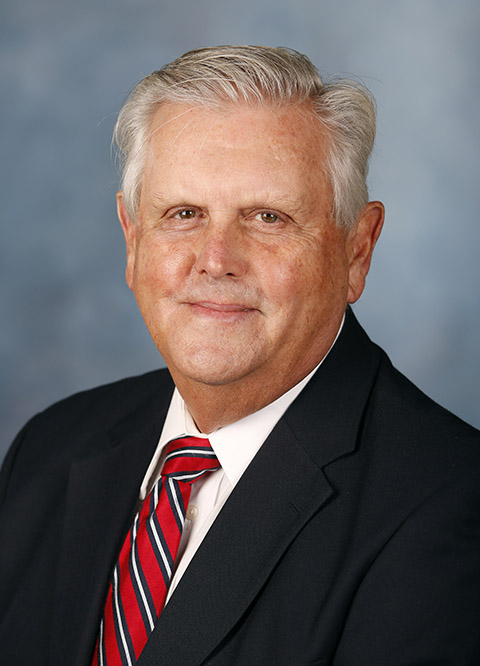

Recently, I attended the annual legislative meeting of the Council of Chief State School Officers (CCSSO) in Washington, D.C. We spent time talking about our responses to the Blueprint for Reauthorization of the Elementary and Secondary Education Act (ESEA). As Kentucky’s Education Commissioner, I took time while in D.C. to drop by the offices of our senators and met with Rep. Brett Guthrie, who serves on the House Education, Labor and Pensions subcommittee where the ESEA will be reviewed. I wanted to personally let him and the committee members know of my support for several key components of the legislation reauthorization plan.
The two major components I support are the change of adequate yearly progress (AYP) from an all-or-none proficiency rate to a focus on more students graduating from high school who are ready for college and career. The other component is the continued strong focus on closing gaps between student groups.
In Kentucky, we have Senate Bill 1 and other legislation that focus our work on both of these goals. We are required to reduce the college remediation rate by 50 percent by 2014. This translates into more students graduating high school ready for college. Currently, the percentages of Kentucky high school juniors ready for college in the four areas measured by ACT - English, mathematics, reading and science – are low. The numbers range from more than 40 percent ready in reading to 16 percent ready in science, with fewer than 21 percent ready for college-level algebra.
The overall readiness is a concern, and the gaps also are a concern. If we look closely at the data, we find gaps between white students and other student groups. While we did receive some great news this week that our National Assessment of Educational Progress (NAEP) scores are improving, we continue to have large gaps between whites and other student groups.
This week, the Commissioner’s Raising Achievement and Closing Gaps Committee met to work on possible recommendations for an accountability model that will focus Kentucky schools and districts on proficiency rates, growth rates and closing gap rates. The early work of the committee recommends a state report card that provides parents and other interested stakeholders with access to information that is easy to read, with depths of data about how well all student groups are doing with proficiency, growth and closing gaps on state assessments, graduation rates and college readiness rates. Hopefully, based on that data, schools and districts would then make certain that all of the student groups receive a focus on growth, proficiency and closing gaps.
The recommendations will be presented to the Accountability Task Force, various advisory councils and eventually to the Kentucky Board of Education. The Kentucky Department of Education is required to have a new accountability process in place by the 2011-12 school year. It appears that our work around readiness and closing gaps will align closely with the reauthorization of ESEA. These are exciting times in Kentucky.
Friday, March 26, 2010


Friday, March 19, 2010
Budget Should Reflect the Needs of Children
It is that time of year when the state budget process really kicks into high gear. The Governor proposed a budget, and the House passed a budget. Now, the ball is in the Senate’s court, and the expectation is that a conference committee will finalize the budget.
We must have a budget, and the reality of our current economic situation is that the budget will show less in expenditures than in previous years. As commissioner, I do not want ANY cuts to education; however, I know that we must be prepared for reductions in expenditures.
This week, I sent an update on the House budget to key stakeholders and a counter-proposal that I am working with on the Senate side as the members develop a budget.
My first priority is to protect the educational needs of children. Reducing instructional time through a loss of instructional days, either due to budget reductions or missed days for weather or other emergencies, is not in the best interest of children’s learning.
My second priority is to protect the resources needed to educate children. In the House budget, SEEK base funding was reduced by $34 million per year, which reflects the loss of two instructional days. As I understand the workings of SEEK, the dollars are distributed with a formula that helps provide equalization. If we implemented the House budget, then districts who receive more SEEK funding per pupil would have a greater reduction than those districts who receive less SEEK funding per pupil. This would create greater inequities among districts.
Also, my reading of the House budget indicates that the $29 million provided for facilities debt repayment really comes at the loss of instructional time. Plus, I have heard from many superintendents and stakeholders that the capital projects list seemed to not be based on previous critical needs lists.
I am very much against reducing instructional time and the following points show my logic.
· Reducing two instructional days puts Kentucky children at a disadvantage, relative to the amount of time spent in the classroom devoted to student learning, with children from other states and countries as they compete for jobs in a global economy.
· Reducing two instructional days will result in a 1 percent pay cut to teachers and classified staff, but no apparent pay cut to administrators or state employees.
· Reducing instructional time will jeopardize our Race to the Top application for up to $200 million in federal funds, since U.S. Secretary Arne Duncan is opposed to reductions in instructional time.
· An option enabling districts to pay for the two instructional days from local sources will exacerbate the inequity among school districts in Kentucky, since some districts will fund the days and others will not.
My counter-proposal was very simple. If we do have to reduce funding, then allow local superintendents and school boards the maximum in flexibility with capital dollars, flexible focus, SEEK and other state funds to address the reductions. Superintendents have testified at the House A&R Committee on the types of flexibility they would like to have. My proposal simply attempts to provide the flexibility that was requested. My proposal also would reduce the amount districts would have to cut by 50 percent from the House budget and maintain instructional time. The other 50 percent would be gained from reductions to legislative grants that the Kentucky Department of Education manages.
I have received a number of e-mails, letters and phone calls concerning the alternative proposal. Thanks to all of you for asking the questions, since that is the only way I know that you need additional communications about the budget.
We must have a budget, and the reality of our current economic situation is that the budget will show less in expenditures than in previous years. As commissioner, I do not want ANY cuts to education; however, I know that we must be prepared for reductions in expenditures.
This week, I sent an update on the House budget to key stakeholders and a counter-proposal that I am working with on the Senate side as the members develop a budget.
My first priority is to protect the educational needs of children. Reducing instructional time through a loss of instructional days, either due to budget reductions or missed days for weather or other emergencies, is not in the best interest of children’s learning.
My second priority is to protect the resources needed to educate children. In the House budget, SEEK base funding was reduced by $34 million per year, which reflects the loss of two instructional days. As I understand the workings of SEEK, the dollars are distributed with a formula that helps provide equalization. If we implemented the House budget, then districts who receive more SEEK funding per pupil would have a greater reduction than those districts who receive less SEEK funding per pupil. This would create greater inequities among districts.
Also, my reading of the House budget indicates that the $29 million provided for facilities debt repayment really comes at the loss of instructional time. Plus, I have heard from many superintendents and stakeholders that the capital projects list seemed to not be based on previous critical needs lists.
I am very much against reducing instructional time and the following points show my logic.
· Reducing two instructional days puts Kentucky children at a disadvantage, relative to the amount of time spent in the classroom devoted to student learning, with children from other states and countries as they compete for jobs in a global economy.
· Reducing two instructional days will result in a 1 percent pay cut to teachers and classified staff, but no apparent pay cut to administrators or state employees.
· Reducing instructional time will jeopardize our Race to the Top application for up to $200 million in federal funds, since U.S. Secretary Arne Duncan is opposed to reductions in instructional time.
· An option enabling districts to pay for the two instructional days from local sources will exacerbate the inequity among school districts in Kentucky, since some districts will fund the days and others will not.
My counter-proposal was very simple. If we do have to reduce funding, then allow local superintendents and school boards the maximum in flexibility with capital dollars, flexible focus, SEEK and other state funds to address the reductions. Superintendents have testified at the House A&R Committee on the types of flexibility they would like to have. My proposal simply attempts to provide the flexibility that was requested. My proposal also would reduce the amount districts would have to cut by 50 percent from the House budget and maintain instructional time. The other 50 percent would be gained from reductions to legislative grants that the Kentucky Department of Education manages.
I have received a number of e-mails, letters and phone calls concerning the alternative proposal. Thanks to all of you for asking the questions, since that is the only way I know that you need additional communications about the budget.
Friday, March 12, 2010
Investment in Early Childhood Education Pays Off
While we have a lot of discussion going on in Frankfort about budgets, facilities, jobs, economy and Race to the Top, I don’t want us to forget the best investment we could make in the long term. That investment is certainly education; however, I want to focus this blog on closing the achievement gap through investment in early childhood education.
Our friends at the Prichard Committee have shown through numerous reports that a dollar invested in early childhood can repay the state between $5 and $6 in the long term. Let us not forget the future while we are trying to balance the present.
Researchers have well-documented the achievement gap that exists between advantaged (average and above income) and disadvantaged (poverty-level income) children by as early as age 3. Researchers have documented that advantaged children have a vocabulary of more than 1,100 words by age 3, while disadvantaged children have a vocabulary of 525 words. Parent utterances to their children in advantaged homes average 487 per hour. Parent utterances to children in disadvantaged homes average 178 per hour.
Not only do advantaged children’s parents talk to them more and read to them more, they also provide more encouragement than parents of disadvantaged children. Children in advantaged homes average 500,000 words of encouragement overall and 75,000 words of encouragement from their parents by age 3. Children in disadvantaged homes receive 80,000 words of encouragement overall and 200,000 words of discouragement by age 3. Researchers documented that disadvantaged children not only hear fewer words from their parents, the words they do hear are mostly discouraging words. Researchers further documented that this vocabulary and encouragement difference impacts the children’s IQs. Children from advantaged homes had an average IQ of 117, and children in disadvantaged homes have an average IQ of 79.
All of this research points to one thing – disadvantaged children enter kindergarten at least two grade levels below their advantaged peers. These numbers are based on extensive research and represent averages. Individual parents do make a difference and can certainly create conditions better than or worse than the research averages.
However, schools have to deal with the achievement gap that already exists for children when they enter school. The option of slowing all children down until the disadvantaged students catch up is not one that schools should or will consider. The key to addressing this achievement gap comes from addressing preschool programs and addressing the vocabulary and encouragement gap.
I recently heard a CNN report that California spends more than $45,000 per year for each prison inmate. Most states spend more than $30,000 per year. The research is very clear. If we do not close the achievement gaps with our most disadvantaged students, then the odds of dropping out of school are tripled or even higher. In most of our prisons, the majority of the population are high school dropouts. Let’s connect the dots and invest now in our most precious resource – the children – and save future generations from bearing the burden of ever-increasing justice costs.
Our friends at the Prichard Committee have shown through numerous reports that a dollar invested in early childhood can repay the state between $5 and $6 in the long term. Let us not forget the future while we are trying to balance the present.
Researchers have well-documented the achievement gap that exists between advantaged (average and above income) and disadvantaged (poverty-level income) children by as early as age 3. Researchers have documented that advantaged children have a vocabulary of more than 1,100 words by age 3, while disadvantaged children have a vocabulary of 525 words. Parent utterances to their children in advantaged homes average 487 per hour. Parent utterances to children in disadvantaged homes average 178 per hour.
Not only do advantaged children’s parents talk to them more and read to them more, they also provide more encouragement than parents of disadvantaged children. Children in advantaged homes average 500,000 words of encouragement overall and 75,000 words of encouragement from their parents by age 3. Children in disadvantaged homes receive 80,000 words of encouragement overall and 200,000 words of discouragement by age 3. Researchers documented that disadvantaged children not only hear fewer words from their parents, the words they do hear are mostly discouraging words. Researchers further documented that this vocabulary and encouragement difference impacts the children’s IQs. Children from advantaged homes had an average IQ of 117, and children in disadvantaged homes have an average IQ of 79.
All of this research points to one thing – disadvantaged children enter kindergarten at least two grade levels below their advantaged peers. These numbers are based on extensive research and represent averages. Individual parents do make a difference and can certainly create conditions better than or worse than the research averages.
However, schools have to deal with the achievement gap that already exists for children when they enter school. The option of slowing all children down until the disadvantaged students catch up is not one that schools should or will consider. The key to addressing this achievement gap comes from addressing preschool programs and addressing the vocabulary and encouragement gap.
I recently heard a CNN report that California spends more than $45,000 per year for each prison inmate. Most states spend more than $30,000 per year. The research is very clear. If we do not close the achievement gaps with our most disadvantaged students, then the odds of dropping out of school are tripled or even higher. In most of our prisons, the majority of the population are high school dropouts. Let’s connect the dots and invest now in our most precious resource – the children – and save future generations from bearing the burden of ever-increasing justice costs.
Friday, March 5, 2010
Superintendent Evaluations – Transparency vs. Effectiveness
Early in my tenure in Kentucky, I was informed about an Attorney General’s opinion (08 OMD 165) that superintendent evaluations were required to be conducted in public. I asked –“You mean they are required to report the outcome of the evaluation in public?” I was told – “No, the actual evaluation must be conducted in public.”
I can tell you that this was a new one on me. Having been in education for 37 years, I certainly know that evaluations are very important and that privacy and confidentiality are crucial in the process of evaluation. Having served as a superintendent in two districts for more than 12 years, I have spent many mid-year and end-of-year evaluations having excellent discussions with school board members about personnel matters and other components of superintendent evaluation. The key to the evaluation was always a unified summative report that listed the positive elements of the evaluation and the areas for improvement.
While I am very supportive of transparency in conducting the public’s business, I believe that neither a school board nor a superintendent could possibly engage in a full and informative discussion of the components of an evaluation system during an open meeting. The system that I have seen work best includes specific goals and performance targets for the superintendent heavily focused on student learning results, financial management and other key business processes in the school district. Also, each board member provides feedback on key performance expectations to the chair of the board, who then compiles the results for a one-on-one preview with the superintendent.
Then, the board meets with the superintendent in closed session to review the results of the feedback and clarify any questions or concerns. The board prioritizes improvement areas for the superintendent and then both agree on performance targets for the coming year. At the end of the meeting, the board develops a summative statement of the evaluation to include strengths and areas for improvement, along with performance targets for the coming year.
The Kentucky School Boards Association and the Kentucky Association of School Superintendents have excellent models and tools for superintendent evaluation, and Kentucky’s Race to the Top application made a commitment to ensure that all 174 superintendents and school boards would utilize high-quality superintendent and school board evaluations.
While the public certainly has a right to know the results of the superintendent evaluation, the process described above will lead to a richer and more productive evaluation than attempting to conduct the full evaluation in public. Certainly, no one would expect a teacher’s evaluation or a principal’s evaluation to be conducted in public, and I find it very difficult to have a different standard for the superintendent.
The Senate Education Committee took a very important step this week in this matter, and Senate Bill 178, sponsored by Sen. David Givens, gained unanimous and bipartisan support. I hope the full Senate and the House will act to correct this situation prior to the end-of-year evaluations of superintendents.
I can tell you that this was a new one on me. Having been in education for 37 years, I certainly know that evaluations are very important and that privacy and confidentiality are crucial in the process of evaluation. Having served as a superintendent in two districts for more than 12 years, I have spent many mid-year and end-of-year evaluations having excellent discussions with school board members about personnel matters and other components of superintendent evaluation. The key to the evaluation was always a unified summative report that listed the positive elements of the evaluation and the areas for improvement.
While I am very supportive of transparency in conducting the public’s business, I believe that neither a school board nor a superintendent could possibly engage in a full and informative discussion of the components of an evaluation system during an open meeting. The system that I have seen work best includes specific goals and performance targets for the superintendent heavily focused on student learning results, financial management and other key business processes in the school district. Also, each board member provides feedback on key performance expectations to the chair of the board, who then compiles the results for a one-on-one preview with the superintendent.
Then, the board meets with the superintendent in closed session to review the results of the feedback and clarify any questions or concerns. The board prioritizes improvement areas for the superintendent and then both agree on performance targets for the coming year. At the end of the meeting, the board develops a summative statement of the evaluation to include strengths and areas for improvement, along with performance targets for the coming year.
The Kentucky School Boards Association and the Kentucky Association of School Superintendents have excellent models and tools for superintendent evaluation, and Kentucky’s Race to the Top application made a commitment to ensure that all 174 superintendents and school boards would utilize high-quality superintendent and school board evaluations.
While the public certainly has a right to know the results of the superintendent evaluation, the process described above will lead to a richer and more productive evaluation than attempting to conduct the full evaluation in public. Certainly, no one would expect a teacher’s evaluation or a principal’s evaluation to be conducted in public, and I find it very difficult to have a different standard for the superintendent.
The Senate Education Committee took a very important step this week in this matter, and Senate Bill 178, sponsored by Sen. David Givens, gained unanimous and bipartisan support. I hope the full Senate and the House will act to correct this situation prior to the end-of-year evaluations of superintendents.
Friday, February 26, 2010
School Calendars and Instructional Time
In a communication to board members and superintendents last week, I provided the following information concerning attendance.
For school year 2009-10, current state law and budget bill language require that school districts provide the equivalent of 177 six-hour days and 1,062 hours of instruction. That total must include two more six-hour days in addition to the number of six-hour days that were fulfilled during the 2005-06 school year. School districts also must provide four professional development days and may designate four holidays, one opening day and one closing day.
Districts must meet the requirements for both the number of six-hour instructional days and the 1,062 instructional hours. Adding additional minutes to the school days remaining in the calendar to make up required instructional time will only be an option if used to provide the minimum of 1,062 hours or to increase a short day to a six-hour day. Adding additional minutes to multiple days is not an option for making up the equivalent of a full six-hour day missed due to weather conditions or flu.
Other calendar allowances include:
· Districts may change spring break days to instructional days.
· Districts may change scheduled shortened days into six-hour instructional days.
· Districts may use a total of five emergency hours for days shortened due to an emergency.
· Districts may hold professional development days on Saturday, at their discretion. Professional development day activities should occur with supporting documentation and evidence that activities can be substantiated.
· Districts may not have school on a regular election day or a primary election day. This year, May 18 is primary election day in Kentucky.
State regulation 702 KAR 7:140 (section 4) says that a school district can seek “forgiveness” of days missed. However, the district must have missed at least 20 days and must make up the first 20 days missed.
Although I’m relatively new to Kentucky, the issues surrounding school calendars – weather- or illness-related closings, makeup days, instructional time requirements and more -- are ones that I’ve dealt with in the past.
I strongly believe that children should get the instructional time that they are entitled to each year under state law. I also believe that school calendars should be designed with the best interests of children – not adults – in mind.
The balance between providing a safe and healthy school environment and ensuring that children receive the instructional time they deserve is sometimes difficult to maintain. But, with thoughtful calendar planning, the struggle to meet the mandates of state law related to time in school can be eased.
I have encouraged school districts to begin looking at school calendars now and using their experiences over the past few winters to make decisions for the future. Ask the hard questions – Is a fall break really necessary? Is spring break an untouchable time? Are the start and end dates for the school year set appropriately?
The vagaries of weather and the impact of flu and other illnesses are hard to predict. But, with careful planning, we can provide our students with consistent time in school and strong instructional practices.
I have been very clear and consistent in my message. I believe our children have a right to a minimum of 1,062 hours of instruction within 177 days. It is inconsistent on the one hand to cry “foul” when the legislators seek a two-day reduction in instruction and then to request a waiver from instructional time due to weather-related issues that could be addressed through improved calendar management. In this case, I will always err on the side of instruction for our children, and while makeup days may inconvenience adults, the instruction of our children is the foundation for all of my decisions.
Of course, the General Assembly could pass legislation that would make my position moot.
For school year 2009-10, current state law and budget bill language require that school districts provide the equivalent of 177 six-hour days and 1,062 hours of instruction. That total must include two more six-hour days in addition to the number of six-hour days that were fulfilled during the 2005-06 school year. School districts also must provide four professional development days and may designate four holidays, one opening day and one closing day.
Districts must meet the requirements for both the number of six-hour instructional days and the 1,062 instructional hours. Adding additional minutes to the school days remaining in the calendar to make up required instructional time will only be an option if used to provide the minimum of 1,062 hours or to increase a short day to a six-hour day. Adding additional minutes to multiple days is not an option for making up the equivalent of a full six-hour day missed due to weather conditions or flu.
Other calendar allowances include:
· Districts may change spring break days to instructional days.
· Districts may change scheduled shortened days into six-hour instructional days.
· Districts may use a total of five emergency hours for days shortened due to an emergency.
· Districts may hold professional development days on Saturday, at their discretion. Professional development day activities should occur with supporting documentation and evidence that activities can be substantiated.
· Districts may not have school on a regular election day or a primary election day. This year, May 18 is primary election day in Kentucky.
State regulation 702 KAR 7:140 (section 4) says that a school district can seek “forgiveness” of days missed. However, the district must have missed at least 20 days and must make up the first 20 days missed.
Although I’m relatively new to Kentucky, the issues surrounding school calendars – weather- or illness-related closings, makeup days, instructional time requirements and more -- are ones that I’ve dealt with in the past.
I strongly believe that children should get the instructional time that they are entitled to each year under state law. I also believe that school calendars should be designed with the best interests of children – not adults – in mind.
The balance between providing a safe and healthy school environment and ensuring that children receive the instructional time they deserve is sometimes difficult to maintain. But, with thoughtful calendar planning, the struggle to meet the mandates of state law related to time in school can be eased.
I have encouraged school districts to begin looking at school calendars now and using their experiences over the past few winters to make decisions for the future. Ask the hard questions – Is a fall break really necessary? Is spring break an untouchable time? Are the start and end dates for the school year set appropriately?
The vagaries of weather and the impact of flu and other illnesses are hard to predict. But, with careful planning, we can provide our students with consistent time in school and strong instructional practices.
I have been very clear and consistent in my message. I believe our children have a right to a minimum of 1,062 hours of instruction within 177 days. It is inconsistent on the one hand to cry “foul” when the legislators seek a two-day reduction in instruction and then to request a waiver from instructional time due to weather-related issues that could be addressed through improved calendar management. In this case, I will always err on the side of instruction for our children, and while makeup days may inconvenience adults, the instruction of our children is the foundation for all of my decisions.
Of course, the General Assembly could pass legislation that would make my position moot.
Friday, February 19, 2010
Remarks to House Education Committee Concerning HB 301
During the early ‘80s, I was doing an internship in order to receive my principal license. I was matched with a veteran high school principal, and I started at the beginning of the school year. During the first few days, I walked along with him as he patrolled the halls. He told me that his job for the first two weeks was to single out 10 to 12 “drop-back-in” students. The purpose, he told me, was to get them out as quickly as possible.
Why? The students usually just dropped back in to see if the rules had changed, and when they found out nothing had changed, they then started creating problems for teachers. He said teachers really liked this visible show of support for a safe environment. I thought at the time – what about the kids? What happens to them?
When I became an assistant principal at the same school, I was determined to do something different for the drop-back-in students. That was when I started to really investigate alternative programs. I quickly figured out that the adults needed to change, rather than expecting the children to be something they were not able to be.
As with most things, I was probably a little ahead of my time, but when I became a superintendent in North Carolina, I had to meet with 16-year-olds who wanted to drop out of school. At most of these meetings, I was frustrated and the parents were frustrated. Why?
There was something terribly wrong with these scenarios – the 16-year-old students were making the decisions and telling the adults what they were going to do. A 16-year-old does not have the capacity to understand how a short-term decision is going to have such long-lasting ramifications on his/her life.
In my next superintendent position, I established a policy that would not allow students to get a waiver to drop out and get a GED. While this frustrated parents, students and teachers, it was the right thing to do. What happened as a result was that we created model programs that lowered the dropout rate from being the highest in North Carolina to one of the 10 best. The graduation rate moved from 58 percent to more than 80 percent.
We have the capacity to implement House Bill 301 in Kentucky. The Kentucky Board of Education strongly supports college- and career-ready graduates as being the number 1 goal for our agency. We have initiatives in place that already support this bill, and in March and April meetings, the Governor’s Transforming Education in Kentucky Task Force will be looking at specific programs that can be implemented based on Section 2, Part 6 of this bill.
Many districts, like Warren County, Jessamine County and Fayette County, are already implementing initiatives that address the dropout rate. The adults can figure out how to address the needs of the children. While we could do this without the bill, the bill gives the adults the leverage we need to change what we do.
I encourage you to send a strong signal to students, parents and teachers - support this bill based on what is right for children and the future of Kentucky, not on what is convenient for adults.
Why? The students usually just dropped back in to see if the rules had changed, and when they found out nothing had changed, they then started creating problems for teachers. He said teachers really liked this visible show of support for a safe environment. I thought at the time – what about the kids? What happens to them?
When I became an assistant principal at the same school, I was determined to do something different for the drop-back-in students. That was when I started to really investigate alternative programs. I quickly figured out that the adults needed to change, rather than expecting the children to be something they were not able to be.
As with most things, I was probably a little ahead of my time, but when I became a superintendent in North Carolina, I had to meet with 16-year-olds who wanted to drop out of school. At most of these meetings, I was frustrated and the parents were frustrated. Why?
There was something terribly wrong with these scenarios – the 16-year-old students were making the decisions and telling the adults what they were going to do. A 16-year-old does not have the capacity to understand how a short-term decision is going to have such long-lasting ramifications on his/her life.
In my next superintendent position, I established a policy that would not allow students to get a waiver to drop out and get a GED. While this frustrated parents, students and teachers, it was the right thing to do. What happened as a result was that we created model programs that lowered the dropout rate from being the highest in North Carolina to one of the 10 best. The graduation rate moved from 58 percent to more than 80 percent.
We have the capacity to implement House Bill 301 in Kentucky. The Kentucky Board of Education strongly supports college- and career-ready graduates as being the number 1 goal for our agency. We have initiatives in place that already support this bill, and in March and April meetings, the Governor’s Transforming Education in Kentucky Task Force will be looking at specific programs that can be implemented based on Section 2, Part 6 of this bill.
Many districts, like Warren County, Jessamine County and Fayette County, are already implementing initiatives that address the dropout rate. The adults can figure out how to address the needs of the children. While we could do this without the bill, the bill gives the adults the leverage we need to change what we do.
I encourage you to send a strong signal to students, parents and teachers - support this bill based on what is right for children and the future of Kentucky, not on what is convenient for adults.
Friday, February 12, 2010
Common Core State Standards
This week, Kentucky took bold steps toward improving education outcomes for the future of our Commonwealth – our children.
Gov. Steve Beshear enabled Kentucky’s participation in the development of Common Core State Standards with his signature last year on an agreement that states develop common core standards. This collaborative effort of 51 states and territories, many national organizations, the National Governors Association, the Council of Chief State School Officers, Achieve, ACT, ETS and others signaled a major step in placing America back in the front of educational attainment in the world.
By any measure you care to review, our education system has continued to achieve; however, we have been outpaced by most of the industrialized world. We no longer lead the world in high school graduates or postsecondary graduates, and on most international assessments ,our student achievement scores place our education system well below the international average. There are many causes of this change in our relative position; however, the most obvious is that the rest of the world finally caught on to America’s advantage – education.
Our state leadership recognized that Kentucky needed to not only compare districts and schools in Kentucky to each other, but also recognized the need for international and national comparisons. If Singapore outperforms U.S. students in mathematics, then we need to look at what they are doing in Singapore. When we looked, we found what teachers have been telling us for years. We were expecting too much to be taught. This meant that teachers covered material rather than helping every child master the material. Our focus on multiple-choice testing has led us to actually “dumb down” the curriculum and assess mostly recall and short-term memory items. Our practices across education in Kentucky and throughout the U.S. focused more on “gaming” the testing and accountability system rather than really focusing on student mastery of high-level material.
This week, the Kentucky Board of Education, Council on Postsecondary Education and Education Professional Standards Board came together to signal the change in direction as required by Senate Bill 1 and the Common Core State Standards movement. While this is a bold move, it will not have any impact on classrooms unless we continue to engage teachers and college faculty in the next steps.
During the review of the Common Core Standards, hundreds of college and P-12 faculty were involved in the review. Comments from Kentucky were widely utilized by the national writing teams. The next steps now must include every mathematics and language arts teacher in Kentucky. We have a deployment plan that will engage selected faculty this summer and then engage all math and language arts teachers during the 2010-11 school year.
We are scheduling a statewide summit in early April to roll out the plan, and we will then keep the public and legislative leaders informed of our progress through a Web-based project management plan. The plan ensures the level of engagement, professional development and public awareness that will be necessary to make certain every parent and every businessperson in Kentucky knows why we are implementing the Common Core Standards. The main reason – our children. A young person who graduates from a Kentucky high school should know that he/she is prepared for college and/or career based on his/her choice. We must eliminate the need for high school graduates to pay for remediation courses for which they do not receive college credit.
The responsibility will be a shared responsibility. Teachers must address the needs of ALL students, students must be held accountable for individual progress, and parents must be involved in supporting schools and their children. The future is in all of our hands, and my few months in Kentucky have convinced me that Kentucky teachers, students and parents can rise to challenge.
You can see more information about the historic meeting on Feb. 10 here.
Gov. Steve Beshear enabled Kentucky’s participation in the development of Common Core State Standards with his signature last year on an agreement that states develop common core standards. This collaborative effort of 51 states and territories, many national organizations, the National Governors Association, the Council of Chief State School Officers, Achieve, ACT, ETS and others signaled a major step in placing America back in the front of educational attainment in the world.
By any measure you care to review, our education system has continued to achieve; however, we have been outpaced by most of the industrialized world. We no longer lead the world in high school graduates or postsecondary graduates, and on most international assessments ,our student achievement scores place our education system well below the international average. There are many causes of this change in our relative position; however, the most obvious is that the rest of the world finally caught on to America’s advantage – education.
Our state leadership recognized that Kentucky needed to not only compare districts and schools in Kentucky to each other, but also recognized the need for international and national comparisons. If Singapore outperforms U.S. students in mathematics, then we need to look at what they are doing in Singapore. When we looked, we found what teachers have been telling us for years. We were expecting too much to be taught. This meant that teachers covered material rather than helping every child master the material. Our focus on multiple-choice testing has led us to actually “dumb down” the curriculum and assess mostly recall and short-term memory items. Our practices across education in Kentucky and throughout the U.S. focused more on “gaming” the testing and accountability system rather than really focusing on student mastery of high-level material.
This week, the Kentucky Board of Education, Council on Postsecondary Education and Education Professional Standards Board came together to signal the change in direction as required by Senate Bill 1 and the Common Core State Standards movement. While this is a bold move, it will not have any impact on classrooms unless we continue to engage teachers and college faculty in the next steps.
During the review of the Common Core Standards, hundreds of college and P-12 faculty were involved in the review. Comments from Kentucky were widely utilized by the national writing teams. The next steps now must include every mathematics and language arts teacher in Kentucky. We have a deployment plan that will engage selected faculty this summer and then engage all math and language arts teachers during the 2010-11 school year.
We are scheduling a statewide summit in early April to roll out the plan, and we will then keep the public and legislative leaders informed of our progress through a Web-based project management plan. The plan ensures the level of engagement, professional development and public awareness that will be necessary to make certain every parent and every businessperson in Kentucky knows why we are implementing the Common Core Standards. The main reason – our children. A young person who graduates from a Kentucky high school should know that he/she is prepared for college and/or career based on his/her choice. We must eliminate the need for high school graduates to pay for remediation courses for which they do not receive college credit.
The responsibility will be a shared responsibility. Teachers must address the needs of ALL students, students must be held accountable for individual progress, and parents must be involved in supporting schools and their children. The future is in all of our hands, and my few months in Kentucky have convinced me that Kentucky teachers, students and parents can rise to challenge.
You can see more information about the historic meeting on Feb. 10 here.
Subscribe to:
Posts (Atom)