

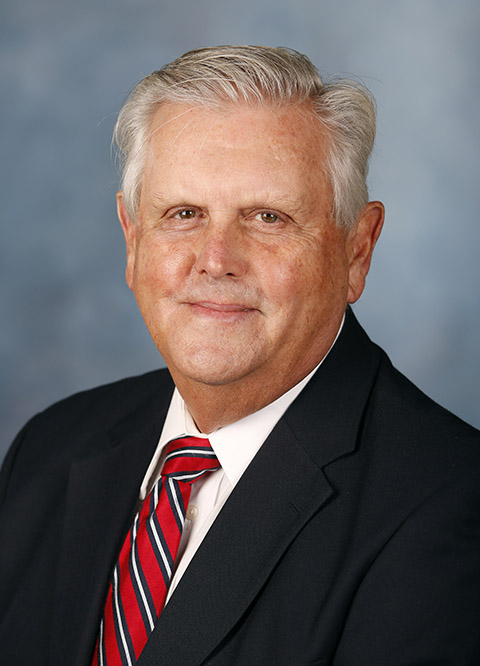

Recently, I had the privilege to attend the 5th annual International Summit on the Teaching Profession in Banff, Canada. I was part of a U.S. delegation comprised of Secretary of Education Arne Duncan, teacher union representatives, classroom teachers (including a teacher from Spencer County, Ky.), chief state school officers from North Carolina and Nebraska and support staff from U.S. Department of Education.
The international summits began in New York City and have expanded each year as their location has moved around the world. The primary focus has been to bring countries together to highlight key issues to enhance the teaching profession and take actions to address issues.
This year, one of the many interesting presentations came from Andreas Schleicher, who works at the Organization for Economic Collaboration and Development (OECD). Andreas is one of the world’s leading experts on education issues and he always has excellent presentations that are loaded with great information and policy recommendations. His presentation was based on a recent report from OECD titled Schools for 21st Century Learners: Strong Leaders, Confident Teachers, and Innovative Approaches.
One chart showed teacher perceptions of the value their society places on the teaching profession. It was no surprise to see that many Asian countries, Finland and several other European countries had the highest percentage of teachers saying that their society valued the teaching profession. One of the lowest countries in the survey was the United States. Why do U.S. teachers believe that our society does not value the teaching profession?
Recently, I spoke to the annual Kentucky Education Association Delegate Assembly and I offered a couple of reasons as to why teachers in this country do not think that the U.S. society values the teaching profession.
1. Over emphasis on testing – the U.S is the only country in the world that seems totally fixated on annual testing. The U.S is fixated on using student test scores to evaluate teachers. The media reports are constantly focused on the singular issue of rankings on test scores and too many of our policy leaders “blame” teachers for poor academic performance of students in poverty.
2. Lack of teacher voice and leadership – throughout the recent international summit, a key theme emerged: that we must engage teachers in decision making and provide opportunities for teacher leadership in our schools without teachers having to completely give up teaching. Most of our international competitors have been working on career pathways for a number of years. In the U.S., we have always focused on years of experience and postgraduate degrees for teacher pay increases rather than focus on teacher performance and leadership roles.
3. Working conditions – it comes as no surprise that teachers do not believe society values the teaching profession given working conditions survey results in areas like school leadership, professional development, time, resources, community support and facilities.
4. Teacher pay – in many countries starting teacher pay is similar to what comparable professions pay. In the US, starting teacher pay is well below what a starting engineer would receive.
5. Selectivity of teacher candidates – for years, the public has been bombarded with the concept that our teacher training programs are not recruiting from the best and brightest high school graduates. Countries like Singapore, Finland and South Korea are pointed to as examples of teacher training programs that recruit from the top 10 percent of high school graduates. An interesting slide in the presentation showed that this is not necessarily the case. This is an area that will need more research.
As I look forward to my retirement after 43 years in education, I am very concerned about the public’s perception of public schools and even more concerned that teachers in the U.S. do not feel that the public values the teaching profession. If policy leaders at the local, state and national level do not address teacher perceptions in this area, we will have extreme difficulty in the future recruiting and retaining highly effective teachers.
In the coming months, Kentucky will receive the 2015 results from the TELL Kentucky working conditions survey. Kentucky has the highest percentage of teacher respondents of any state in the nation. Using the results from this survey to address key policy issues during the 2016 session of the General Assembly could go a long way in addressing teacher concerns about the value the public puts on the teaching profession.
Showing posts with label working conditions. Show all posts
Showing posts with label working conditions. Show all posts
Friday, April 10, 2015


Friday, March 29, 2013
TELL Kentucky
As we wrap up the 2013 Teaching, Empowering, Leading and Learning (TELL) Kentucky survey, I want to thank the coalition of partners who supported the survey. I also want to thank Governor Beshear for his support and vision for TELL Kentucky.
The 2013 TELL Kentucky survey was a huge success. We had more than 42,000 teachers and principals respond –more than 83 percent of school-based certified staff in the state. In addition, more than 90 percent of our schools reached the 50 percent response rate required to receive a feedback report.
Now the hard work begins. It is extremely important that school councils and principals, school boards and superintendents, review the results from the survey and make plans on what to celebrate and what to improve. We are honored that many of our partners in Kentucky have developed tools to help councils, principals, superintendents and school boards review the data and put the results to use for school improvement. For more information on available resources, please check out the web site www.tellkentucky.org.
Sometime this summer, the Kentucky Board of Education will also review the survey results and the Kentucky Department of Education (KDE) will work with our partners to celebrate successes and plan statewide strategies to address needed improvements. KDE will also conduct research on which survey domains most strongly correlate to improving student achievement.
It is my hope that all of our partners will join together in using the results of the survey to push for additional resources and support for classroom teachers and principals. Our Kentucky educators have done tremendous work in the last few years. With the implementation of common core standards, assessments, accountability and professional learning, we have asked educators to do much more with a whole lot less. As we approach the General Assembly budget session in 2014, it will be a tremendous asset to say that according to more than 42,000 teachers in Kentucky, we need the following …
When I came to Kentucky in 2009, Phil Rogers who was then the Executive Director of the Education Professional Standards Board and Mary Ann Blankenship with the Kentucky Education Association approached me to garner my support for the TELL Kentucky survey. As a former superintendent in North Carolina, I used the working conditions survey that is the basis for TELL Kentucky, so I knew firsthand how important it is to determine teachers’ and principals’ views about their working conditions. Having worked with the survey for more than 10 years, I am very confident in the following statement – Ensuring great working conditions for educators ensures great learning conditions for students!
Again, thank you teachers, principals, superintendents and all of our partners for your support of the TELL Kentucky survey and the data it generates that is so critical for improving education in our state.
The 2013 TELL Kentucky survey was a huge success. We had more than 42,000 teachers and principals respond –more than 83 percent of school-based certified staff in the state. In addition, more than 90 percent of our schools reached the 50 percent response rate required to receive a feedback report.
Now the hard work begins. It is extremely important that school councils and principals, school boards and superintendents, review the results from the survey and make plans on what to celebrate and what to improve. We are honored that many of our partners in Kentucky have developed tools to help councils, principals, superintendents and school boards review the data and put the results to use for school improvement. For more information on available resources, please check out the web site www.tellkentucky.org.
Sometime this summer, the Kentucky Board of Education will also review the survey results and the Kentucky Department of Education (KDE) will work with our partners to celebrate successes and plan statewide strategies to address needed improvements. KDE will also conduct research on which survey domains most strongly correlate to improving student achievement.
It is my hope that all of our partners will join together in using the results of the survey to push for additional resources and support for classroom teachers and principals. Our Kentucky educators have done tremendous work in the last few years. With the implementation of common core standards, assessments, accountability and professional learning, we have asked educators to do much more with a whole lot less. As we approach the General Assembly budget session in 2014, it will be a tremendous asset to say that according to more than 42,000 teachers in Kentucky, we need the following …
When I came to Kentucky in 2009, Phil Rogers who was then the Executive Director of the Education Professional Standards Board and Mary Ann Blankenship with the Kentucky Education Association approached me to garner my support for the TELL Kentucky survey. As a former superintendent in North Carolina, I used the working conditions survey that is the basis for TELL Kentucky, so I knew firsthand how important it is to determine teachers’ and principals’ views about their working conditions. Having worked with the survey for more than 10 years, I am very confident in the following statement – Ensuring great working conditions for educators ensures great learning conditions for students!
Again, thank you teachers, principals, superintendents and all of our partners for your support of the TELL Kentucky survey and the data it generates that is so critical for improving education in our state.
Subscribe to:
Posts (Atom)