

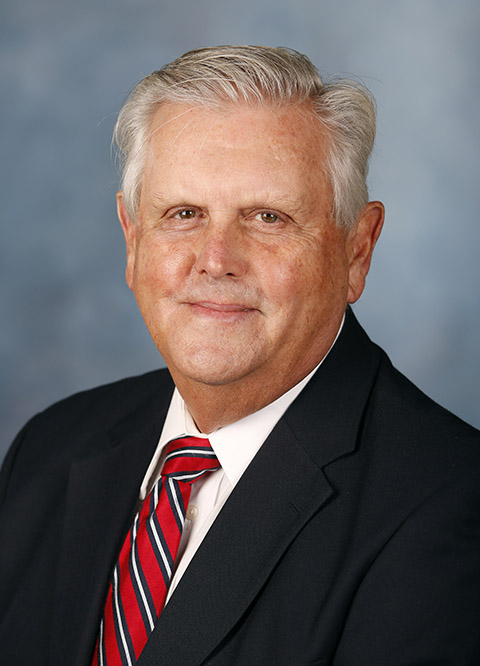

Since the day Senate Bill 1 passed the General Assembly in spring 2009 and was signed into law, the Kentucky Department of Education and the Kentucky Board of Education have been working diligently to fully realize the requirements of this visionary legislation: more rigorous academic standards, new assessments, a balanced accountability system and professional development for educators in support of the new standards.
In early 2010, the Kentucky Board of Education, Council on Postsecondary and the Education Professional Standards Board took the first big step in carrying out Senate Bill 1 when they joined to adopt the Common Core State Standards in English/language arts and mathematics. Teachers immediately began working to unpack and interpret the standards. During the 2010-11 school year, educators began developing curricula and instructional materials. Schools gave the first assessments of the new standards in spring 2012. Teachers had almost two years to develop instruction and materials that were aligned to the new standards prior to the assessments.
States began working to develop new science standards in 2010. These standards went through numerous review cycles and to date, 12 states have fully adopted the Next-Generation Science Standards. Kentucky did so in 2013, and since that time, we have been working with educators to repeat the process used for implementing the English/language arts and math standards. Also, just as we did with the new standards in the first two content areas, we will delay assessment of the new standards until teachers have had nearly years to implement. Testing on the new science standards will occur in spring of 2016.
The new science assessments will be very different than any previous assessments – not confined to paper and pencil, fill-in-the-bubble, multiple choice. The science assessments would be taken online – similar to what is being done with the new National Assessment of Education Progress (NAEP) assessment in Technology and Engineering Literacy (TEL). This assessment measures not only science content, but also measures scientific process and problem solving. Early reports from the first administration of the TEL assessment are extremely positive. Students are much more engaged in the test- taking process and the data provide educators not only information on students’ factual knowledge but also their problem solving skills.
Due to the complexity of developing such a test, the new science assessment will require more funding to create than traditional tests. However, online assessments produce savings in the long run since we are able to eliminate printing paper tests, shipping, storage and other related costs. With the need for additional funding to develop the science assessment, the Kentucky Department of Education identified a short term cost savings by not administering the K-PREP science exam in 4th and 7th grades in 2014-15. Teachers and administrators strongly supported this decision since the current K-PREP test in science assessed the old standards and starting in the fall, students would be learning the new standards.
However, this decision does not mean that we cannot track science learning in Kentucky. In 2014-15, our students will still take science assessments as part of the Explore (8th grade), Plan (10th grade), ACT (11th grade), and Biology end-of-course (high school) assessments. These assessments will provide a clear picture of our performance in science relative to other states and the rest of the nation. Also, Kentucky will continue to participate in and receive state-level results for the National Assessment of Education Progress science assessment for 4th- and 8th-grade students.
By 2015-16, we will have one remaining subject area to implement – social studies. We anticipate that the draft social studies standards will go out for public comment this fall and we will begin working with teachers in 2015-16 to implement the standards and develop new social studies assessments for 2016-17.
Transformation does not happen overnight. From a concept laid out in Senate Bill 1 in 2009 through actual implementation of all the requirements in 2017, will be an eight year journey that, thus far, has been very rewarding, frustrating and just plain hard work for teachers and administrators. Parents and students have also had to endure many changes and modifications to K-12 schooling during this time.
Over the next year or so, we will hear from many politicians (state and national) who were not involved in the Senate Bill 1 process. For political reasons, they will push for “education reform.” We will hear calls for new standards, new assessments and new accountability – once again. However, we should all be persistent in asking why change is needed, what the cost will be, what impact another change would have on teacher morale, and what the impact would be for parents and students.
Showing posts with label test. Show all posts
Showing posts with label test. Show all posts
Friday, June 6, 2014


Friday, October 5, 2012
Getting Ready for the Numbers
The work done over the past three years by legislators, staff at the Kentucky Department of Education (KDE), teachers, administrators, school staff, students, parents, community members and education partners will start to bear fruit soon. Next week at the Kentucky Board of Education meeting, I’ll share some estimates of state-level performance connected to the Unbridled Learning assessment and accountability system. School districts are reviewing their data closely, and in a few weeks, district- and school-level data related to the system will be released publicly.
This work began before I accepted the post of commissioner of education, with the passage of 2009’s Senate Bill 1. From the very earliest discussions and plans for a new system, a primary goal was to involve as many groups and individuals as possible and to communicate the work broadly. I believe these efforts have been very successful.
Although it’s a challenge to communicate information about new test scores and accountability categories before we have data in hand, we’ve engaged in a series of activities over the past 12 months to reach out to the audiences that will be impacted by and interested in the data.
I and other KDE staff have visited the state’s educational cooperatives and presented information on the upcoming data release. We’ve produced parent-friendly brochures and FAQs on the system and shared those widely. KDE’s flagship publication, Kentucky Teacher, has featured assessment and accountability in many stories. Our advisory groups have included discussion about the new system on their agendas. I recently hosted a webcast targeted at reporters and editors who will be covering the results of the new system.
Behind the scenes, KDE staff are involved in projects like designing the new School Report Card, which will be our primary vehicle for sharing the new data. Cross-agency teams are ensuring that staff in each office is kept up to date on the latest developments related to Unbridled Learning. We’re even redesigning the agency’s website to make it easier for visitors to find information.
We realized early on that KDE could not communicate about this ongoing work without the help of our partners, who have contributed their time, staff and energy to sharing information.
The Prichard Committee’s ReadyKentucky initiative, the Kentucky Chamber of Commerce’s summer speaking tour, the chamber’s Business Leader Champions for Education initiative, the discussions at the state’s educational cooperative meetings, the Kentucky School Boards Association’s (KSBA’s) video on how to talk to the media about test scores and accountability, and the work in our school districts to prepare local communities and media outlets for the coming data release have been vital to spreading the word about the Unbridled Learning system.
All of this is in preparation for what will be the start of a new era in Kentucky public education; a time during which we will focus on the ultimate goal of college and career readiness for all students. These data are crucial to planning and improvement – for our schools, districts and this agency – and providing information about what it all will mean is a shared effort.
Monday, August 6, 2012
Changes in Proficiency Percentages: A State-Level View
As I have shared in presentations and webcasts over the past few months, Kentucky’s adoption of the Common Core Standards in English/language arts and mathematics, coupled with the new Kentucky Performance Rating for Educational Progress (K-PREP) assessments tied to those standards, will lead to proficiency rates among students that are lower than what we’ve seen previously in the Kentucky Core Content Tests (KCCT).
Staff in KDE’s Office of Assessment and Accountability have provided a state-level look at potential changes in the percentages of students scoring at proficient on the state reading and mathematics assessments.
Although these data represent a broad view of potential dips in proficiency percentages, you also can get a sense of how your high schools will perform by looking at the percentage of students meeting the Council on Postsecondary Education’s ACT benchmarks (18 in English, 19 in math and 20 in reading). The higher the percentage of students meeting those benchmarks, the higher your likely overall rates of proficiency. Grades 3-8 may conduct similar projections by looking at the EXPLORE proficiency rates. Please remember that the projections are only estimates, and the actual proficiency rates will not be available until results are reported in October.
Science and social studies data are based on the 2007 Kentucky Core Content for Assessment 4.1; therefore, distributions of proficiency will be similar to those in 2011.
We are sending this projected proficiency chart out so that local superintendents, principals and teachers will not be surprised when the actual results are reported in October. As commissioner, I am working to communicate with all stakeholders about these significant changes. Our partners at the Prichard Committee and the Kentucky Chamber of Commerce also have been working hard for over a year to communicate these changes.
As local superintendents and principals estimate what their results will be, it is important to remind your teachers, parents, students and community members of a few important points.
- These results cannot be compared to previous results, since we are assessing students on a different standard. The previous standard was basic proficiency on math and reading. The new standard is college and career readiness.
· We made the change to college and career readiness due to the competitive global economy that was the basis of 2009’s Senate Bill 1, which required KDE and the Kentucky Board of Education to provide new standards and assessments that are internationally benchmarked.
· The results of the Kentucky assessments are more closely aligned to results from the National Assessment of Educational Progress (NAEP). Those results report proficiency at a much higher level than most state tests. Being proficient on NAEP is similar to our new college- and career-ready proficiency. One could say that proficiency on NAEP and the new K-PREP is similar to getting a B or B+ and being advanced/distinguished is similar to an A.
Our intent in raising the standard is to help more students prepare for a competitive employment atmosphere. Currently, we project that over 60 percent of jobs in the future will require some training beyond high school. This means that students must be better prepared for college-level work and career-entry requirements. We should not dwell on trying to compare previous years’ data with the new results. We should focus on what we need to do to help more students be competitive, which means Kentucky will be more competitive.
Friday, June 15, 2012
Education Reform: What is a Chief to Do?
This week I had the opportunity to welcome participants to the International Symposium on Education Reform (ISER) that was hosted by Lars Bjork, Ph.D. and the University of Kentucky. It was great to see representatives from across the globe coming to Kentucky to discuss education reform. I offered a “chief’s” perspective on education reform. I divide the education reform issue into basically two camps – the reformers and the defenders.
Education reformers across the U.S. seem to have a few commonalities. The key tenet of the reformers is that public schools are failing as evidenced by national and international ranks in testing. The reformers claim that in order to “fix” public schools, we must have greater emphasis on assessment and accountability; choice options (charters and vouchers); improving teacher and principal evaluation systems; improving teacher preparation programs; addressing contract issues such as LIFO (last in, first out), tenure, pension and health care; data-driven decision making; and standardized teaching and learning.
The defenders blame poverty and changing demographics for the low performance of our public schools on national and international assessments. They say our top-performing schools are as good as any in the world, and most of these top-performing U.S. schools have very low poverty rates. In order to “fix” our public schools, they look to Finland for the answer. Finland focuses on elevating teaching as a profession and does not have annual standardized tests; teachers focus on assessment to improve instruction and learning; teacher preparation was reformed; teachers are seen as action researchers; and the social welfare system helps alleviate problems around poverty and demographics.
As a chief state school officer, my job is to balance the reformers and the defenders as we seek to help more students graduate college- and career-ready. The key strategies I use are to honor the terrific work that our educators have done in Kentucky for the last 20 years. Focus the conversation on the challenges of increased poverty and changing demographics, do not blame any group. Encourage collaboration and professional dialogue with all stakeholders about the education changes necessary to help more students succeed. Build relations with all stakeholder groups so there is some level of trust and mutual respect. And finally, communicating through as many channels as possible.
These are indeed difficult times in our nation as the need to improve education and improve the economy are inextricably linked; however, I know that Kentucky educators and key policy makers will continue to lead the way in making the right decisions about education reform as we ensure a brighter future for children.
Friday, February 24, 2012
Testing Accommodations: Changes to Benefit Students
The Kentucky Board of Education (KBE) recently approved changes in 703 KAR 5:070, the regulation related to testing accommodations for students with disabilities. Due to the legislative process, these changes will not take place until the 2012-13 state assessments. The most controversial change in accommodations was the elimination of adult or technology-based readers for the Kentucky reading tests. There were three major reasons for this decision.
1. Validity – Kentucky is changing its state assessments this year, and the reading test for 2012 and beyond will be a decoding and comprehension assessment. If we allow adult or technology-based readers on the reading test, then we are invalidating the construct of the test, and we would have to invalidate the assessment scores of any student provided with a reader. Allowing readers on a decoding and comprehension test turns the test into a listening comprehension test.
2. More than 42 percent of special education students in Kentucky were allowed readers on the reading test in 2011. This number has grown steadily since the enactment of the Kentucky Education Reform Act. Schools and teachers are under great pressure to produce proficient scores on state and federal assessments. By allowing the use of a reader, we have provided a negative incentive to help students with disabilities learn to read. It is the goal of special education to help students become independent readers so they can be successful in college, military and/or the workplace.
3. 2009’s Senate Bill 1 mandates national comparisons. Kentucky’s performance on the National Assessment of Educational Progress (NAEP) could be questioned due to the large number of students who are provided readers. Students who are provided readers on state assessments are exempted from the NAEP assessments. NAEP allows a state to exempt up to 15 percent of its disabled students; however, in Kentucky 58.2 percent of the 8th-grade disabled students and 53.1 percent of the 4th-grade disabled students were excluded from 2011 NAEP reading tests. Therefore, the NAEP results could be questioned, and in the future, states that have large percentages of exempted students will come under increasing scrutiny.
Moving forward, it is essential to provide teachers and students with the levels of support needed to help more students become independent readers. While the KBE action does eliminate readers for state assessments on reading, readers will continue to be allowed for mathematics, social studies and science assessments, since those are tests of content and not reading. Also, daily instructional practice is not impacted by the change. Teachers certainly will continue to utilize readers with students during daily instruction as they move to transition students to independent reading.
Some national organizations have questioned Kentucky’s decision; however, once they realize that Kentucky changed the assessment to a reading assessment and Kentucky’s decision is in alignment with recommendations from the National Assessment Governing Board, then it is clear that the Kentucky decision was based on research and ensuring validity of assessments.
See information on the changes to state regulation 703 KAR 5:070 made by the KBE at its December 2011 meeting here.
Friday, July 8, 2011
Our Students Are Watching Our Behaviors
In the spring of 2009, I had the honor of standing on stage with my fellow state superintendents of the year at the annual American Association of School Administrators (AASA) conference in San Francisco. Little did I know that one day I would be working with one of the four finalists -- Stu Silberman -- in Kentucky.
This past week, I was reminded of that recognition ceremony but not in a positive way. Beverly Hall was selected as the AASA National Superintendent of the Year in 2009. Beverly was the superintendent of the Atlanta Public Schools at that time. This week, the state of Georgia released the results of an investigation concerning cheating by principals and teachers on standardized tests.
This report from Georgia comes on the heels of two major national reports on standardized testing. From the National Academy of Sciences (NAS), a recent report entitled Incentives and Test-Based Accountability in Education and from the National Center on Education and the Economy (NCEE), a report entitled Standing on the Shoulders of Giants: An American Agenda for Education Reform. I think it appropriate to highlight some of the key points from these reports.
The NAS report has two major conclusions and two major recommendations. The report concludes that test-based incentive programs have not increased student achievement enough to bring the U.S. close to the levels of the highest-achieving countries. The other conclusion is that high school exit exam programs decrease the rate of high school graduation without increasing achievement.
The recommendations from the report promote the development and evaluation of promising new models that use test-based incentives in more sophisticated ways as one aspect of a richer accountability and improvement process. Also, the report recommends that policymakers and researchers design and evaluate new test-based incentive programs in ways that provide information about alternative approaches to incentives and accountability.
From the NCEE report, the basic premise is that the U.S. should look to those practices from countries that are performing at higher levels than the U.S. on international assessments. The report discusses a focus on teacher preparation, rigorous standards, continuous improvement and support for the existing teaching force. The report highlights the fact that no country performing at higher levels than the U.S. has a singular focus on standardized testing and incentives related to performance on standardized testing.
What does the Atlanta scandal and other testing scandals in D.C. and Baltimore mean for our work in Kentucky? What implications do we draw from these recent reports? The key learning for me is balance. Standardized tests do not create scandals. People create scandals. How leaders both in the classroom and outside the classroom utilize results from standardized tests can either create a focus on improvement of teaching and learning or create negative pressure. How leaders use the results for personnel decisions and incentives can either create a focus on teaching and learning or create negative conditions for teaching and learning.
In Kentucky we are committed to a growth model for our accountability system that is balanced. We are committed to utilizing standardized test results as part of the accountability model; however, test results will not be the singular component of the model. While the state can certainly set the tone, it will always be up to individual school boards, superintendents, principals and teachers to model professional behavior for the eyes that are watching – the students.
This past week, I was reminded of that recognition ceremony but not in a positive way. Beverly Hall was selected as the AASA National Superintendent of the Year in 2009. Beverly was the superintendent of the Atlanta Public Schools at that time. This week, the state of Georgia released the results of an investigation concerning cheating by principals and teachers on standardized tests.
This report from Georgia comes on the heels of two major national reports on standardized testing. From the National Academy of Sciences (NAS), a recent report entitled Incentives and Test-Based Accountability in Education and from the National Center on Education and the Economy (NCEE), a report entitled Standing on the Shoulders of Giants: An American Agenda for Education Reform. I think it appropriate to highlight some of the key points from these reports.
The NAS report has two major conclusions and two major recommendations. The report concludes that test-based incentive programs have not increased student achievement enough to bring the U.S. close to the levels of the highest-achieving countries. The other conclusion is that high school exit exam programs decrease the rate of high school graduation without increasing achievement.
The recommendations from the report promote the development and evaluation of promising new models that use test-based incentives in more sophisticated ways as one aspect of a richer accountability and improvement process. Also, the report recommends that policymakers and researchers design and evaluate new test-based incentive programs in ways that provide information about alternative approaches to incentives and accountability.
From the NCEE report, the basic premise is that the U.S. should look to those practices from countries that are performing at higher levels than the U.S. on international assessments. The report discusses a focus on teacher preparation, rigorous standards, continuous improvement and support for the existing teaching force. The report highlights the fact that no country performing at higher levels than the U.S. has a singular focus on standardized testing and incentives related to performance on standardized testing.
What does the Atlanta scandal and other testing scandals in D.C. and Baltimore mean for our work in Kentucky? What implications do we draw from these recent reports? The key learning for me is balance. Standardized tests do not create scandals. People create scandals. How leaders both in the classroom and outside the classroom utilize results from standardized tests can either create a focus on improvement of teaching and learning or create negative pressure. How leaders use the results for personnel decisions and incentives can either create a focus on teaching and learning or create negative conditions for teaching and learning.
In Kentucky we are committed to a growth model for our accountability system that is balanced. We are committed to utilizing standardized test results as part of the accountability model; however, test results will not be the singular component of the model. While the state can certainly set the tone, it will always be up to individual school boards, superintendents, principals and teachers to model professional behavior for the eyes that are watching – the students.
Friday, June 3, 2011
Ships Passing in the Night
During my recent visit to China with the Asia Society and Council of Chief State School Officers, I was impressed with many of the efforts that are being made to improve education in China. However, there was one striking difference between Chinese education and American education reform efforts. I told my fellow delegation members that it seemed we were two ships passing in the night.
Chinese education has long been focused on exam results. Students in China have exams every semester during the nine years of compulsory schooling (ages 6-15). High school entrance exams are very intense. Scores on high school entrance exams can lead to three paths: key schools (better schools), vocational schools or dropouts. The key schools serve to better prepare students for the university exams, and the vocational schools focus on technical skills and jobs.
The Chinese college entrance exam dates back to 900 A.D., when it was used to screen for civil servants. It is expected that there will be five to seven percent of students prepared for university. (This is steadily increasing as the Chinese expand higher education.) About 30 to 40 percent of the high school graduates actually pass the entrance exam; however, space in the universities is limited, so many students go to work, and some go to technical colleges.
Chinese families really focus on the exam preparation of their child. (Chinese families are limited to one child.) Chinese teenagers do not date, spend 25 to 30 percent more time with studies than American teenagers and don’t work outside the home, and the teenagers understand that education is their JOB.
However, the focus in China is slowly changing. As we met with school and government officials, the constant theme of questions was focused on how American schools teach innovation, problem-solving and creativity. WOW! Even in Shanghai (top scorers on the Programme for International Student Assessment, or PISA), the focus was on providing students with more creativity options – like music and art – and providing students with more opportunities to conduct scientific experiments and solve problems that were of interest to them. It seems the Chinese ship is sailing in a direction away from complete focus on standardized test scores.
Readers recognize where I am headed here. Since 2001, the U.S. has focused heavily on test scores. Not a day goes by that we do not have editorials and national panels talking about the poor job we are doing in the nation due to our poor performance on test scores.
Our ship is sailing toward more focus on test scores. Our ship is sailing toward judging teachers and principals solely on the basis of test scores. Our ship is sailing toward elimination of art and music programs to focus more on getting students prepared for reading and math tests.
These ships do not have to pass in the night. There is a way that they can sail together. We must have some focus on accountability and measurement of student progress; however, we must find ways to assess and measure creativity, problem-solving and innovation. We must provide a more balanced assessment and accountability system.
I truly believe we are headed in that direction with Senate Bill 1 and the accountability model that is being developed in Kentucky. We do not have to make an either/or choice. We need not bow to the tyranny of “or;” we need to embrace the genius of “and.”
Chinese education has long been focused on exam results. Students in China have exams every semester during the nine years of compulsory schooling (ages 6-15). High school entrance exams are very intense. Scores on high school entrance exams can lead to three paths: key schools (better schools), vocational schools or dropouts. The key schools serve to better prepare students for the university exams, and the vocational schools focus on technical skills and jobs.
The Chinese college entrance exam dates back to 900 A.D., when it was used to screen for civil servants. It is expected that there will be five to seven percent of students prepared for university. (This is steadily increasing as the Chinese expand higher education.) About 30 to 40 percent of the high school graduates actually pass the entrance exam; however, space in the universities is limited, so many students go to work, and some go to technical colleges.
Chinese families really focus on the exam preparation of their child. (Chinese families are limited to one child.) Chinese teenagers do not date, spend 25 to 30 percent more time with studies than American teenagers and don’t work outside the home, and the teenagers understand that education is their JOB.
However, the focus in China is slowly changing. As we met with school and government officials, the constant theme of questions was focused on how American schools teach innovation, problem-solving and creativity. WOW! Even in Shanghai (top scorers on the Programme for International Student Assessment, or PISA), the focus was on providing students with more creativity options – like music and art – and providing students with more opportunities to conduct scientific experiments and solve problems that were of interest to them. It seems the Chinese ship is sailing in a direction away from complete focus on standardized test scores.
Readers recognize where I am headed here. Since 2001, the U.S. has focused heavily on test scores. Not a day goes by that we do not have editorials and national panels talking about the poor job we are doing in the nation due to our poor performance on test scores.
Our ship is sailing toward more focus on test scores. Our ship is sailing toward judging teachers and principals solely on the basis of test scores. Our ship is sailing toward elimination of art and music programs to focus more on getting students prepared for reading and math tests.
These ships do not have to pass in the night. There is a way that they can sail together. We must have some focus on accountability and measurement of student progress; however, we must find ways to assess and measure creativity, problem-solving and innovation. We must provide a more balanced assessment and accountability system.
I truly believe we are headed in that direction with Senate Bill 1 and the accountability model that is being developed in Kentucky. We do not have to make an either/or choice. We need not bow to the tyranny of “or;” we need to embrace the genius of “and.”
Friday, April 9, 2010
Assessment Plans for Kentucky
Senate Bill 1 requires development of new standards in language arts, mathematics, science and social studies by December 2010. As of today, we have been able to partner with 48 other states to develop internationally benchmarked standards in language arts and mathematics.
Kentucky was the first state to adopt the standards, and work begins on April 12 to unpack the standards and begin to translate them into teacher-friendly tools that should help guarantee a strong curriculum in every classroom in Kentucky. We also are in conversation with national leaders who are working on science standards; however, we do not anticipate those standards being completed until 2012. Due to the complicated nature of social studies standards, we are continuing to explore possible partnerships with other states.
Our attention now turns to development of summative and formative assessments based on the Common Core Academic Standards. The federal Race to the Top (RTTT) funds provided $350 million for this work. This week, the U.S. Department of Education released guidelines for states who are interested in applying for the funds. There are two categories of funding.
Category 1 addresses states who want to develop assessments in language arts and mathematics for grades 3-8 and high school (one assessment). States may apply for up to $160 million. The guidelines require a minimum of 15 states for a consortium, with five states serving as governing states. States also may work as design states and/or partnering states. In joining a consortium, states agree to implement the assessments, and the assessments would meet all requirements of No Child Left Behind (NCLB). Currently, there are two excellent consortia, and Kentucky is a member of both. However, we may only belong to one consortium, and we have to make a decision on membership within the next few weeks. Kentucky teachers would be heavily involved over the next few years in the development of assessment items and field testing the items from other states, regardless of which consortium we join.
The second category for funding is for development of high school course assessments. Again, Kentucky is well-positioned for this work. The Kentucky Board of Education has provided direction for end-of-course assessments. Senate Bill 1 provided end-of-course assessments as an option. Funding from the RTTT grants is up to $30 million. Through our partnership with the National Center on Education and the Economy, we will apply for these funds to assist in the adaption of existing international assessments to meet requirements of the grant.
Based on the guidelines, we believe that Kentucky will be a member of a funded consortium for both grants. However, we will encounter difficulties with Senate Bill 1 deadlines. We are scheduled to have an assessment ready by spring 2012. Under the funding guidelines, the new NCLB common core assessments would not be ready until the 2014-15 school year. The high school end-of-course assessments could be ready as soon as 2012.
Once the General Assembly session ends, we will meet with key legislators and the Interim Joint Committee on Education to seek guidance on the interim period. We hope to have clarity on this issue by the June-July state conferences. So … the good news is that the cost of development should be provided by the Race to the Top funding. The bad news is that the Senate Bill 1 deadlines may be a concern.
Our goal for state assessments is to provide formative assessment items throughout the year that are open-response, problem-solving and higher-order thinking types of assessment. We will provide standard scoring rubrics or allow school districts to develop and validate their own assessments. The summative assessments will be primarily multiple choice and constructed response. We are hoping to have a plan to score regionally and/or locally and provide feedback on assessments in a much shorter period than current practice. Reaching this goal will depend on our ability to gain funding for deployment. We have great leadership at KDE with the Office of Assessment and Accountability’s Associate Commissioner Ken Draut and the assessment team. Couple that with the terrific leadership of the district assessment coordinators, and Kentucky is in great shape for the future.
Kentucky was the first state to adopt the standards, and work begins on April 12 to unpack the standards and begin to translate them into teacher-friendly tools that should help guarantee a strong curriculum in every classroom in Kentucky. We also are in conversation with national leaders who are working on science standards; however, we do not anticipate those standards being completed until 2012. Due to the complicated nature of social studies standards, we are continuing to explore possible partnerships with other states.
Our attention now turns to development of summative and formative assessments based on the Common Core Academic Standards. The federal Race to the Top (RTTT) funds provided $350 million for this work. This week, the U.S. Department of Education released guidelines for states who are interested in applying for the funds. There are two categories of funding.
Category 1 addresses states who want to develop assessments in language arts and mathematics for grades 3-8 and high school (one assessment). States may apply for up to $160 million. The guidelines require a minimum of 15 states for a consortium, with five states serving as governing states. States also may work as design states and/or partnering states. In joining a consortium, states agree to implement the assessments, and the assessments would meet all requirements of No Child Left Behind (NCLB). Currently, there are two excellent consortia, and Kentucky is a member of both. However, we may only belong to one consortium, and we have to make a decision on membership within the next few weeks. Kentucky teachers would be heavily involved over the next few years in the development of assessment items and field testing the items from other states, regardless of which consortium we join.
The second category for funding is for development of high school course assessments. Again, Kentucky is well-positioned for this work. The Kentucky Board of Education has provided direction for end-of-course assessments. Senate Bill 1 provided end-of-course assessments as an option. Funding from the RTTT grants is up to $30 million. Through our partnership with the National Center on Education and the Economy, we will apply for these funds to assist in the adaption of existing international assessments to meet requirements of the grant.
Based on the guidelines, we believe that Kentucky will be a member of a funded consortium for both grants. However, we will encounter difficulties with Senate Bill 1 deadlines. We are scheduled to have an assessment ready by spring 2012. Under the funding guidelines, the new NCLB common core assessments would not be ready until the 2014-15 school year. The high school end-of-course assessments could be ready as soon as 2012.
Once the General Assembly session ends, we will meet with key legislators and the Interim Joint Committee on Education to seek guidance on the interim period. We hope to have clarity on this issue by the June-July state conferences. So … the good news is that the cost of development should be provided by the Race to the Top funding. The bad news is that the Senate Bill 1 deadlines may be a concern.
Our goal for state assessments is to provide formative assessment items throughout the year that are open-response, problem-solving and higher-order thinking types of assessment. We will provide standard scoring rubrics or allow school districts to develop and validate their own assessments. The summative assessments will be primarily multiple choice and constructed response. We are hoping to have a plan to score regionally and/or locally and provide feedback on assessments in a much shorter period than current practice. Reaching this goal will depend on our ability to gain funding for deployment. We have great leadership at KDE with the Office of Assessment and Accountability’s Associate Commissioner Ken Draut and the assessment team. Couple that with the terrific leadership of the district assessment coordinators, and Kentucky is in great shape for the future.
Subscribe to:
Posts (Atom)