

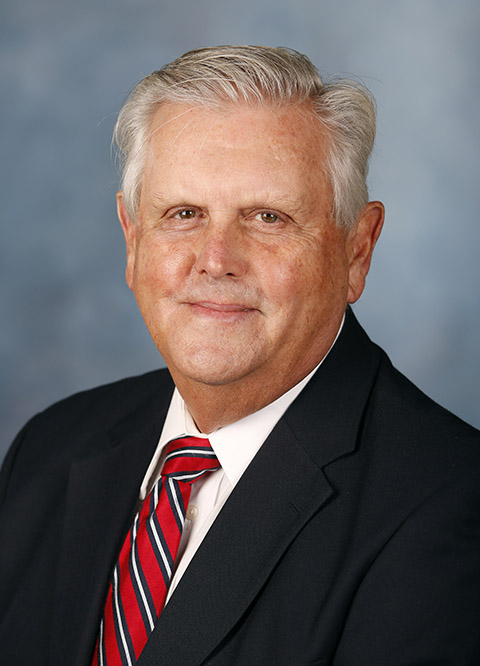

The Kentucky Department of Education (KDE) has posted the state’s application for flexibility under the Elementary and Secondary Education Act (ESEA) of 1965, which was reauthorized in 2001 as the No Child Left Behind (NCLB) Act.
KDE welcomes public comment on the state’s application, which is posted on KDE’s Unbridled Learning page, here. Comments and feedback may be sent to eseawaiverrequest@education.ky.gov. Comments will be accepted until Tuesday, November 8.
Today’s posting marks the culmination of over two years of work by the Kentucky Board of Education (KBE) and KDE. Since the passage of Senate Bill 1 in 2009, KDE and KBE have been working with partners across Kentucky and the nation to develop the model for next-generation teaching and learning. Through the adoption of the Common Core Standards, implementation of those standards in Kentucky classrooms, building of resources to support the Common Core Standards, professional development to support the standards, assessment of Common Core Standards and now an accountability model that drives the focus on college/career readiness and student growth, Kentucky has led the nation in this important work.
Over the last two years, there have been thousands of manpower hours spent in meeting with partners and key stakeholder groups to develop the model that is the basis for the NCLB waiver request. I wanted to use this blog to let the staff at KDE know what a terrific job they have done in working closely with our partners and stakeholders to develop the model for next-generation teaching and learning. I want to thank the General Assembly for its overwhelming support for the focus on college/career readiness for all students. I want to thank the members of the Kentucky Board of Education for their resolve in developing a balanced model focused on college and career readiness.
I hope readers will take the time to review the waiver application and provide feedback and suggestions.
Our next step is to submit the waiver application by November 14 and then work closely with the U.S. Department of Education in a peer review process to get approval for our model in January 2012. The waiver would begin immediately; however, most flexibility actions would happen after results from the 2011-12 school year.
You can see more details on the process at http://www.ed.gov/esea/flexibility.
Friday, October 28, 2011


Friday, October 21, 2011
Closing the Achievement Gap
Last Sunday as I was returning from the airport, I listened to the CNN coverage of the Martin Luther King, Jr. memorial dedication. I listened to President Barack Obama’s remarks as part of the dedication ceremony, and I listened to the entire “I Have a Dream” speech played as part of the dedication.
I could not help but reflect on the past 50 years. As a student in a segregated school until 10th grade, I can vividly remember the activities around integration in our local school system. Then as a college student, I recall traveling with the Furman University band in Washington, D.C. during the riots in the late 1960s. Then as a teacher, I recall the integration of the Gaffney, South Carolina schools and the student walkouts and near-riots related to forced integration.
Throughout my 40-year education career, I have watched our nation and our schools struggle with issues related to integration and helping all children succeed. Our nation began the path toward equity with the Brown v. Board of Education case. One of the cases that was combined into the Brown case came from a school district in South Carolina (Clarendon 3). I visited that school district as part of a team assigned to support the school district in the 1990s. I was saddened to see that not much had changed. The system was still segregated. The public schools were almost 100 percent minority, and white parents sent their students to private academies. The local board was still controlled by local land owners who would not support raising taxes to adequately fund the needs of students.
This system and others were highlighted in a documentary that aired a few years ago called Corridor of Shame. President Obama even highlighted a student who had written about the need for improved schools in this area, and if my memory is correct, there were substantial changes to the school where she attended in a Dillon, South Carolina district.
All of this reflection comes back to a couple of core questions – are we providing equity in access and outcomes for ALL children? Have we closed achievement gaps? These are questions that certainly have clear answers based on the data across the nation and across Kentucky. Look carefully at the achievement gap data in your school and school district. Look carefully at the suspension and discipline rates for minority students in your schools. Look carefully at the percentage of minority students that graduate from high school that are college/career ready, attend postsecondary and graduate from postsecondary. How many minority teachers, principals, superintendents and board members serve in our local school districts?
Almost two years ago, I revitalized the Commissioners Raising Achievement and Closing Gaps Council (CRACGC). This council recently published recommendations to ensure equity in access and outcomes. The recommendations from the council will become a required component for a new group of schools and districts that will be identified as part of our No Child Left Behind (NCLB) waiver request.
This new group of schools will be called “focus schools.” The Kentucky Department of Education will identify those schools that have the largest achievement gaps. These schools will be required to address achievement gap issues through school and district plans. Targeted interventions will increase with each year that the school or district does not meet targets to close achievement gaps.
My biggest fear is that, even with our best efforts through state accountability, a commissioner of education will be writing an article in another 40 years documenting that not much progress has been made ensuring equity of access and outcomes for ALL children.
What will the collective WE do differently over the next 5-10 years? The collective WE must involve communities in addressing poverty and access. The collective WE must address early childhood education, since that is where the gap can best be closed. The collective WE must address jobs and hope in our most challenged communities.
We cannot rely solely on teachers and schools to make a difference (we tried that with No Child Left Behind). We cannot mandate equity. Equity must be a belief that a community holds dear and then takes action to accomplish.
You are part of the collective WE. What will YOU do?
I could not help but reflect on the past 50 years. As a student in a segregated school until 10th grade, I can vividly remember the activities around integration in our local school system. Then as a college student, I recall traveling with the Furman University band in Washington, D.C. during the riots in the late 1960s. Then as a teacher, I recall the integration of the Gaffney, South Carolina schools and the student walkouts and near-riots related to forced integration.
Throughout my 40-year education career, I have watched our nation and our schools struggle with issues related to integration and helping all children succeed. Our nation began the path toward equity with the Brown v. Board of Education case. One of the cases that was combined into the Brown case came from a school district in South Carolina (Clarendon 3). I visited that school district as part of a team assigned to support the school district in the 1990s. I was saddened to see that not much had changed. The system was still segregated. The public schools were almost 100 percent minority, and white parents sent their students to private academies. The local board was still controlled by local land owners who would not support raising taxes to adequately fund the needs of students.
This system and others were highlighted in a documentary that aired a few years ago called Corridor of Shame. President Obama even highlighted a student who had written about the need for improved schools in this area, and if my memory is correct, there were substantial changes to the school where she attended in a Dillon, South Carolina district.
All of this reflection comes back to a couple of core questions – are we providing equity in access and outcomes for ALL children? Have we closed achievement gaps? These are questions that certainly have clear answers based on the data across the nation and across Kentucky. Look carefully at the achievement gap data in your school and school district. Look carefully at the suspension and discipline rates for minority students in your schools. Look carefully at the percentage of minority students that graduate from high school that are college/career ready, attend postsecondary and graduate from postsecondary. How many minority teachers, principals, superintendents and board members serve in our local school districts?
Almost two years ago, I revitalized the Commissioners Raising Achievement and Closing Gaps Council (CRACGC). This council recently published recommendations to ensure equity in access and outcomes. The recommendations from the council will become a required component for a new group of schools and districts that will be identified as part of our No Child Left Behind (NCLB) waiver request.
This new group of schools will be called “focus schools.” The Kentucky Department of Education will identify those schools that have the largest achievement gaps. These schools will be required to address achievement gap issues through school and district plans. Targeted interventions will increase with each year that the school or district does not meet targets to close achievement gaps.
My biggest fear is that, even with our best efforts through state accountability, a commissioner of education will be writing an article in another 40 years documenting that not much progress has been made ensuring equity of access and outcomes for ALL children.
What will the collective WE do differently over the next 5-10 years? The collective WE must involve communities in addressing poverty and access. The collective WE must address early childhood education, since that is where the gap can best be closed. The collective WE must address jobs and hope in our most challenged communities.
We cannot rely solely on teachers and schools to make a difference (we tried that with No Child Left Behind). We cannot mandate equity. Equity must be a belief that a community holds dear and then takes action to accomplish.
You are part of the collective WE. What will YOU do?
Friday, October 14, 2011
Great Teachers and Leaders in Kentucky
As readers know, I have a goal to visit all 174 Kentucky school districts by August 2012. Currently, I have visited more than 100 districts and over 300 schools. When I visit, I like to ask teachers and principals about the challenges they are facing.
In 2009, the General Assembly passed Senate Bill 1 (SB 1)without opposition. This legislation required implementation of new standards, new assessments and a new accountability system by the 2011-12 school year. When I talk with teachers and principals, this is usually the focus of my conversation.
What I often hear is the overwhelming nature of what we have asked teachers and leaders to do. They have been asked to completely transform expectations for students and student performance during a time when there have been significant cuts to professional development and instructional resources.
In spite of the challenges, I have found terrific leaders and teachers in every school. They are working hard to meet the challenges of SB 1. They are digging hard to find resources to help each other and to help each student reach his or her potential.
To all the teachers and leaders in our schools, I want to say “thank you” for your professionalism and dedication to the future of our children. Hang in there, because two or three years from now, we will certainly see the payoff for your hard work and dedication.
In 2009, the General Assembly passed Senate Bill 1 (SB 1)without opposition. This legislation required implementation of new standards, new assessments and a new accountability system by the 2011-12 school year. When I talk with teachers and principals, this is usually the focus of my conversation.
What I often hear is the overwhelming nature of what we have asked teachers and leaders to do. They have been asked to completely transform expectations for students and student performance during a time when there have been significant cuts to professional development and instructional resources.
In spite of the challenges, I have found terrific leaders and teachers in every school. They are working hard to meet the challenges of SB 1. They are digging hard to find resources to help each other and to help each student reach his or her potential.
To all the teachers and leaders in our schools, I want to say “thank you” for your professionalism and dedication to the future of our children. Hang in there, because two or three years from now, we will certainly see the payoff for your hard work and dedication.
Friday, October 7, 2011
Progress in Persistently Low-Achieving Schools
At the Kentucky Board of Education meeting this week, Associate Commissioner Dewey Hensley and the District 180 team provided an update on the persistently low-achieving (PLA) schools identified in 2010.
We are very excited to see excellent progress in year one. While one year of data does not make a trend, we are anticipating a more detailed evaluation report from the University of Kentucky in coming months. These data suggest that the districts, schools, principals, teachers and students are dedicated to improvement in student learning outcomes. These data also suggest that Kentucky and districts stay the course in working with PLAs.
Our No Child Left Behind (NCLB) waiver request must address the issue of “priority schools,” which are defined the same as the PLAs, so I anticipate that the Kentucky waiver request will have an excellent story to share with the reviewers.
Here are some highlights from the report on PLA schools.
Data Summary: 90 percent of the schools identified as “Persistently Low-Achieving Schools — Cohort One” demonstrated statistically significant increases in the percentage of students scoring proficient or distinguished in math. Ninety percent of the PLA Cohort One schools also demonstrated statistically significant increases in reading.


* The average gain for all the PLA Cohort Schools combined in mathematics was 16 percent.
* The average gain for all the PLA Cohort Schools combined in reading was 10.33 percent.
* The combined average growth for all PLA schools was 13.16 percent.
* Kentucky’s overall math proficient/distinguished percentage stayed statistically the same.
* Kentucky’s overall gain for reading proficient/distinguished was 1.06 percent.
* Averages and gains disaggregated by turnaround model employed:
o Schools using the Transformation Model posted average increase of 14.43 percent in math and an average increase of 7.02 percent in reading.
o Schools using the Re-Staffing Model posted average increases of 16 percent in math and an average increase of 12.27 percent in reading.
Data Inferences
* Although the overall gains were larger in mathematics, that content area lags behind literacy across the state.
* The present Educational Recovery system, with a team of three Educational Recovery Specialists and an Educational Recovery Director in each region, seems an effective means for increasing achievement due to the fact that 100 percent of schools showed improvement in at least one of the two content areas.
* Rapid rises in achievement are possible in larger schools.
* The “team approach” to support PLAs has paid dividends for our investment in achievement.
* There is much to do — some schools gained, but had fewer students tested due to dropouts and enrollment changes.
* Focus on achievement — whether internally or externally motivated — is a good trait.
We are very excited to see excellent progress in year one. While one year of data does not make a trend, we are anticipating a more detailed evaluation report from the University of Kentucky in coming months. These data suggest that the districts, schools, principals, teachers and students are dedicated to improvement in student learning outcomes. These data also suggest that Kentucky and districts stay the course in working with PLAs.
Our No Child Left Behind (NCLB) waiver request must address the issue of “priority schools,” which are defined the same as the PLAs, so I anticipate that the Kentucky waiver request will have an excellent story to share with the reviewers.
Here are some highlights from the report on PLA schools.
Data Summary: 90 percent of the schools identified as “Persistently Low-Achieving Schools — Cohort One” demonstrated statistically significant increases in the percentage of students scoring proficient or distinguished in math. Ninety percent of the PLA Cohort One schools also demonstrated statistically significant increases in reading.


* The average gain for all the PLA Cohort Schools combined in mathematics was 16 percent.
* The average gain for all the PLA Cohort Schools combined in reading was 10.33 percent.
* The combined average growth for all PLA schools was 13.16 percent.
* Kentucky’s overall math proficient/distinguished percentage stayed statistically the same.
* Kentucky’s overall gain for reading proficient/distinguished was 1.06 percent.
* Averages and gains disaggregated by turnaround model employed:
o Schools using the Transformation Model posted average increase of 14.43 percent in math and an average increase of 7.02 percent in reading.
o Schools using the Re-Staffing Model posted average increases of 16 percent in math and an average increase of 12.27 percent in reading.
Data Inferences
* Although the overall gains were larger in mathematics, that content area lags behind literacy across the state.
* The present Educational Recovery system, with a team of three Educational Recovery Specialists and an Educational Recovery Director in each region, seems an effective means for increasing achievement due to the fact that 100 percent of schools showed improvement in at least one of the two content areas.
* Rapid rises in achievement are possible in larger schools.
* The “team approach” to support PLAs has paid dividends for our investment in achievement.
* There is much to do — some schools gained, but had fewer students tested due to dropouts and enrollment changes.
* Focus on achievement — whether internally or externally motivated — is a good trait.
Friday, September 30, 2011
NCLB Waiver Update
Last week, I had the honor of participating in the announcement of the No Child Left Behind (NCLB) waiver process by President Barack Obama and U.S. Secretary of Education Arne Duncan. Also, I was honored to participate in a media call after the announcement with Sec. Duncan and Georgia State School Superintendent John Barge.
I applaud President Obama and Sec. Duncan for listening to governors, state superintendents, local superintendents, parents, teachers and students who have asked for NCLB flexibility. While we all would prefer that Congress reauthorize NCLB (currently four years past due), we certainly appreciate the President and Sec. Duncan for allowing states to generate innovation and reform to establish higher levels of performance for students, schools and districts.
For interested readers, the U.S. Department of Education has lots of information concerning the waiver process at www.ed.gov/esea/flexibility. The flexibility and waiver do require states to respond to four major areas – college/career ready standards; differentiated accountability and support; improving instruction and leadership; and state review of regulations to allow local districts flexibility from NCLB requirements.
Thanks to 2009’s Senate Bill 1, Kentucky is in a strong position to address these major areas. For over two years, Kentucky has been engaged in developing a differentiated accountability model based on college/career-ready standards and individual student growth. The staff at the Kentucky Department of Education are working overtime to prepare our waiver application, and we believe that Kentucky has an excellent opportunity to meet the requirements for the waiver.
Our timeline for the waiver application is very short; however, we do not anticipate any problems in meeting the deadline. We have to submit by November 14. We will have a statewide webinar on October 19 and meet either face-to-face or through webinars with all advisory groups. Our final draft will be reviewed by our teacher, principal and superintendent advisory groups in late October, and we will provide a public review of our application prior to submission.
I want to assure readers that the waiver process is not an attempt to lower standards or expectations. It is just the opposite. Senate Bill 1 raised expectations to college and career ready for all students AND proficiency for all students. Our waiver request will push for the innovation and flexibility to meet these increased expectations.
As the President stated in his announcement, we cannot wait another generation to get this right. Our children’s future and the economic future of our state and nation are dependent upon our improvement in getting more graduates ready for college and career.
I applaud President Obama and Sec. Duncan for listening to governors, state superintendents, local superintendents, parents, teachers and students who have asked for NCLB flexibility. While we all would prefer that Congress reauthorize NCLB (currently four years past due), we certainly appreciate the President and Sec. Duncan for allowing states to generate innovation and reform to establish higher levels of performance for students, schools and districts.
For interested readers, the U.S. Department of Education has lots of information concerning the waiver process at www.ed.gov/esea/flexibility. The flexibility and waiver do require states to respond to four major areas – college/career ready standards; differentiated accountability and support; improving instruction and leadership; and state review of regulations to allow local districts flexibility from NCLB requirements.
Thanks to 2009’s Senate Bill 1, Kentucky is in a strong position to address these major areas. For over two years, Kentucky has been engaged in developing a differentiated accountability model based on college/career-ready standards and individual student growth. The staff at the Kentucky Department of Education are working overtime to prepare our waiver application, and we believe that Kentucky has an excellent opportunity to meet the requirements for the waiver.
Our timeline for the waiver application is very short; however, we do not anticipate any problems in meeting the deadline. We have to submit by November 14. We will have a statewide webinar on October 19 and meet either face-to-face or through webinars with all advisory groups. Our final draft will be reviewed by our teacher, principal and superintendent advisory groups in late October, and we will provide a public review of our application prior to submission.
I want to assure readers that the waiver process is not an attempt to lower standards or expectations. It is just the opposite. Senate Bill 1 raised expectations to college and career ready for all students AND proficiency for all students. Our waiver request will push for the innovation and flexibility to meet these increased expectations.
As the President stated in his announcement, we cannot wait another generation to get this right. Our children’s future and the economic future of our state and nation are dependent upon our improvement in getting more graduates ready for college and career.
Friday, September 23, 2011
Career and Technical Education: Innovation and Integration
In 2009, Governor Steve Beshear created the Task Force on Transforming Education in Kentucky (TEK). Over a 15-month period, the TEK Task Force met 10 times and hosted a statewide community forum in which more than 1,500 Kentuckians shared their views on improving education in the Commonwealth. On February 21, 2011, the TEK Task Force released a report, Breaking New Ground: Final report of the Governor’s Task Force on Transforming Education in Kentucky, which contained 35 recommendations derived from this process.
One of the recommendations made in that report called for the Secretary of the Education and Workforce Development Cabinet and the Commissioner of Education to establish a steering committee to develop a comprehensive statewide plan to implement a new model of secondary career and technical education (CTE) with an emphasis on innovation and integrating core academics, 21st-century skills, project-based learning and the establishment of full-time CTE programs. This plan was intended to be implemented by the 2012 General Assembly.
This week, the steering committee reviewed the first draft of a discussion paper that addresses the recommendations from the TEK Task Force. The discussion paper included the recommendations from six study groups. These groups were focused on sector strategies; curriculum and programs; assessment and accountability; professional development; operations; and Perkins fund management. The study groups included stakeholders from across the CTE spectrum.
Recently, I had the opportunity to review CTE programs in China and Brazil. These countries are among the fastest-growing in jobs that have a positive impact on the economy. In Brazil, I was particularly interested in the rapid decision-making process to implement CTE programs that meet the sector needs of the country. Given that Brazil is hosting the 2016 Olympics, there is a huge unmet need for construction workers and other skilled workers to address infrastructure needs for the Olympic games. Through this focus on career and technical education and alignment with the jobs that are needed, Brazil is enlarging and strengthening its middle class.
While traveling to Brazil, I read Tom Friedman’s new book – That Used to be Us. Friedman promotes the theory that many of the countries (China, Brazil, India and Russia) have taken a page from the U.S. in promoting education, infrastructure and innovation, while the U.S. seems to be mired in a political quagmire of inaction. As I was watching the excitement and commitment to career and technical education in Brazil, I could not help but think Friedman got the title of the book right.
I hope that our General Assembly will follow the recommendations from the CTE committees and integrate/elevate career technical education in this state so that Kentucky graduates are prepared for the world that they will face and the jobs of the future.
One of the recommendations made in that report called for the Secretary of the Education and Workforce Development Cabinet and the Commissioner of Education to establish a steering committee to develop a comprehensive statewide plan to implement a new model of secondary career and technical education (CTE) with an emphasis on innovation and integrating core academics, 21st-century skills, project-based learning and the establishment of full-time CTE programs. This plan was intended to be implemented by the 2012 General Assembly.
This week, the steering committee reviewed the first draft of a discussion paper that addresses the recommendations from the TEK Task Force. The discussion paper included the recommendations from six study groups. These groups were focused on sector strategies; curriculum and programs; assessment and accountability; professional development; operations; and Perkins fund management. The study groups included stakeholders from across the CTE spectrum.
Recently, I had the opportunity to review CTE programs in China and Brazil. These countries are among the fastest-growing in jobs that have a positive impact on the economy. In Brazil, I was particularly interested in the rapid decision-making process to implement CTE programs that meet the sector needs of the country. Given that Brazil is hosting the 2016 Olympics, there is a huge unmet need for construction workers and other skilled workers to address infrastructure needs for the Olympic games. Through this focus on career and technical education and alignment with the jobs that are needed, Brazil is enlarging and strengthening its middle class.
While traveling to Brazil, I read Tom Friedman’s new book – That Used to be Us. Friedman promotes the theory that many of the countries (China, Brazil, India and Russia) have taken a page from the U.S. in promoting education, infrastructure and innovation, while the U.S. seems to be mired in a political quagmire of inaction. As I was watching the excitement and commitment to career and technical education in Brazil, I could not help but think Friedman got the title of the book right.
I hope that our General Assembly will follow the recommendations from the CTE committees and integrate/elevate career technical education in this state so that Kentucky graduates are prepared for the world that they will face and the jobs of the future.
Friday, September 16, 2011
Follow-Up on Digital Summit
Last week, I mentioned several articles concerning digital learning. One article gave me concern -- “In Classroom of Future, Stagnant Scores.” This article from the New York Times seemed to take us back about 20 years by looking at outdated models of technology with a focus on measures that limit the creativity and innovation of our students and teachers to create higher levels of learning and success. As I was beginning to prepare the blog for this week, I ran across a response from Tom Vander Ark that spoke so well to the issue that I share his response below.
In Kentucky, we are working toward the transformational model for digital learning. We have launched the Unbridled Learning strategic plan that focuses on unleashing the innovation and creativity of our students and teachers to meet the goal of college/career readiness for all. Look for the final set of recommendations from our digital summit later this fall
Matt Richtel wrote the rearview mirror story of the last decade -- technology layered on top of how we've always done school yielding meager results, at least when measured in traditional ways. The story of this decade is that personal digital learning will change the world.
The Sunday feature in the New York Times did a disservice to the field. It's easy to make sweeping statements about the past and prop up critics. Richtel knows well the case for digital learning; he just chose to leave it out.
Where technology is designed in rather than layered on, it is transformational. When it creates entirely new learning opportunities, like the 4 million students learning online, it is transformational. When it enables schools that blend the best of online and onsite learning, it is transformational. Why would Matt look only at weak examples and skip the 40 blended models featured in the Innosight Report, "The Rise of Blended Learning?”
For two years, Gov. Bob Wise's Alliance for Excellent Education has been calling attention to the skill gap, the funding gap and the effective teacher gap. A July report stated, "The Alliance concludes that taking advantage of digital learning to expand opportunities and access for students, especially in rural and urban areas, is the only way to address these issues." The Alliance report goes on to outline 10 examples of smart uses of instructional technology. Why didn't Matt talk to Bob? Why didn't Matt talk to Susan Patrick from the online learning association?
Weak ROI on computers in schools is an old story, but the future will not look like the past. Hundreds of schools and pilot projects make the case for personal digital learning. More broadband, cheap access devices, new apps and powerful platforms are reshaping how people learn. Learning technology is reshaping the world by making education more personal and by creating more time and opportunity.
1. More personal. Instruction at the right level, in the best mode, at the right time, is more effective teaching to the middle of a class with big skill differences; Rocketship's John Danner thinks it's often 10 times more effective. Personalized math products like MIND Research, McGraw's Power of U, and games-based products like Dreambox and Mangahigh have all demonstrated great early results.
2. More time. Online learning allows schools to stretch staffing ratios and leverage teacher talent. Schools that blend online and onsite instruction can afford a longer day and year. Engaging work and motivating feedback are extending learning time. Schools like Rocketship show that it's possible to double productive learning time for kids who need it most.
3. More opportunity. Where policy barriers have come down, online learning is creating more opportunity for every student: access to every AP course, every foreign language course, every STEM course. Online learning is powering virtual schools and new blended models. It's helping students at risk catch up and graduate.
These benefits are evident today in schools like Carpe Diem and in networks like AdvancePath. The benefits are accelerating, and there's no going back. All new teachers grew up digital. Kids come to school wired. Many new learning apps are free and expanding virally. The "new normal" economy is demanding more knowledge and skill, but the fiscal crisis is demanding better outcomes for less money.
A look back is only of value if we learn from success stories as well as mistakes. Matt knows the story; he just left out the good parts: personal digital learning is transforming American public education and extending access to millions of students worldwide.
In Kentucky, we are working toward the transformational model for digital learning. We have launched the Unbridled Learning strategic plan that focuses on unleashing the innovation and creativity of our students and teachers to meet the goal of college/career readiness for all. Look for the final set of recommendations from our digital summit later this fall
Subscribe to:
Posts (Atom)