

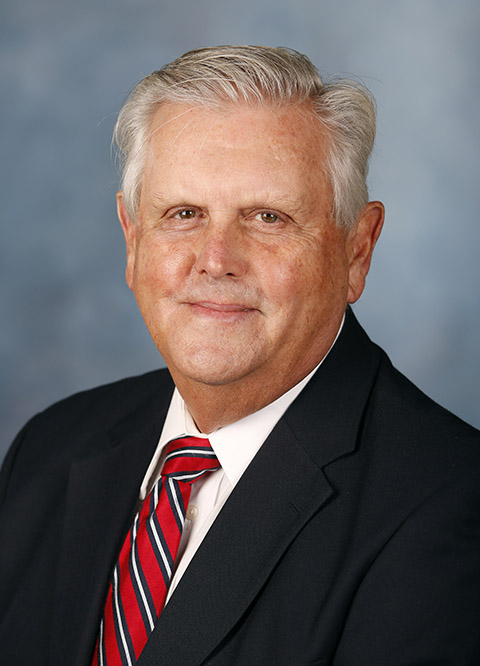

As my family and I get ready to enjoy our second Christmas in Kentucky, I wanted to take this opportunity to express my personal thanks to all the educators and education supporters in Kentucky.
As Denise and I travel across Kentucky to visit schools, attend meetings, present at conferences and attend special events, it is apparent to us that there are wonderful people in Kentucky who care for children very deeply.
Also, I want to say a personal “thank you” to a wonderful and dedicated Kentucky Department of Education staff in Frankfort, at the Kentucky School for the Blind, at the Kentucky School for the Deaf and numerous other field staff in co-ops and other assignments. In spite of the numerous funding challenges, you make a difference for children every day.
So … from the Holliday family to the education family all across Kentucky, Merry Christmas and Happy Holidays. May you all find a time of peace and joy to spend with your family.
Friday, December 17, 2010


Friday, December 10, 2010
KBE Takes Historic First Step
The Kentucky Board of Education (KBE) began an historic journey this week. The board took the first steps in the approval of the first “next-generation” accountability model in the U.S. based on common core standards that have now been adopted by 44 states.
I thought readers might be interested in the “talking points” I used as the board approved the goals and guiding principles for the accountability model that were developed in collaboration with the Council of Chief State School Officers (CCSSO).
(Note: the goals and guiding principals document posted does not reflect the many changes made by the board at its meeting. Staff is working to incorporate those changes now, and the final document will be shared widely.)
Events Leading to Proposal for Accountability Model
· 2009’s Senate Bill 1 passed -- one of the most visionary pieces of legislation in the country.
· Federal Elementary and Secondary Education Act (ESEA) reauthorization is past due – should have been done in 2007.
· President Barack Obama establishes goal of regaining U.S. leadership among competing nations for percentage of students with college degrees (two- and four-year) – goal is 60 percent (Speech to Congress, 2009).
· U.S. Department of Education and President Obama proposed ESEA reauthorization Blueprint – spring 2010.
· Aspen Institute convened discussion on accountability model with House/Senate staff – spring 2010.
· CCSSO Standards, Assessment and Accountability Committee recommends task force to develop next-generation accountability model for ESEA reauthorization – spring 2010.
· CCSSO task force convenes – summer 2010.
· AdvanceEd and CCSSO team convene discussion on accountability and accreditation – fall 2010.
· CCSSO task force conducts virtual meetings – fall 2010.
· CCSSO Annual Policy Forum in Louisville provides public access to proposed accountability model – November 2010.
Kentucky’s Position
· First to adopt Common Core Standards – 44 states have now adopted.
· First to issue a Request for Proposals (RFP) for state assessment based on Common Core Standards – November 2010
· First to implement Common Core Standards – curriculum framework available June 2011, and teachers set to implement in August 2011.
· First to assess Common Core Standards – May 2012.
· Proposed – first to implement accountability model based on Common Core Standards and goal of “college- and career-ready” – August 2011.
· Proposed – first state to gain waiver of adequate yearly progress (AYP) with replacement of systemic approach to meet goal of “college- and career-ready” – submit in January 2012.
Key Comments on Goals of Accountability System
· We are moving to a more rigorous goal of “college- and career-ready.”
· We are not abandoning the proficiency goal. Proficiency is a predictor of the higher goal of college- and career-ready.
· We have over-identified schools with more diverse student populations while allowing schools with lower achievement levels and less diversity to avoid identification and interventions.
· We are moving from a focus on perfection (AYP) to a focus on continuous improvement (growth).
· We are providing a more transparent reporting system that provides actionable data for students, classrooms, teachers, administrators and school districts.
· We are providing a systemic approach that holds all stakeholders accountable.
Key Comments on Guiding Principles
· Proposed accountability model is systemic and aligned closely to the KBE’s four strategic priorities of Next-Generation Learners, Next-Generation Professionals, Next-Generation Support Systems and Next-Generation Schools and Districts.
· Model has strong focus on actionable data at all levels of the system.
· Model has focus on building school and district capacity, not simply identification.
· Model compares similar demographics of students, classrooms, schools and districts on a growth model rather than a perfection model.
· Model promotes improvement of the working conditions that impact the learning results.
I thought readers might be interested in the “talking points” I used as the board approved the goals and guiding principles for the accountability model that were developed in collaboration with the Council of Chief State School Officers (CCSSO).
(Note: the goals and guiding principals document posted does not reflect the many changes made by the board at its meeting. Staff is working to incorporate those changes now, and the final document will be shared widely.)
Events Leading to Proposal for Accountability Model
· 2009’s Senate Bill 1 passed -- one of the most visionary pieces of legislation in the country.
· Federal Elementary and Secondary Education Act (ESEA) reauthorization is past due – should have been done in 2007.
· President Barack Obama establishes goal of regaining U.S. leadership among competing nations for percentage of students with college degrees (two- and four-year) – goal is 60 percent (Speech to Congress, 2009).
· U.S. Department of Education and President Obama proposed ESEA reauthorization Blueprint – spring 2010.
· Aspen Institute convened discussion on accountability model with House/Senate staff – spring 2010.
· CCSSO Standards, Assessment and Accountability Committee recommends task force to develop next-generation accountability model for ESEA reauthorization – spring 2010.
· CCSSO task force convenes – summer 2010.
· AdvanceEd and CCSSO team convene discussion on accountability and accreditation – fall 2010.
· CCSSO task force conducts virtual meetings – fall 2010.
· CCSSO Annual Policy Forum in Louisville provides public access to proposed accountability model – November 2010.
Kentucky’s Position
· First to adopt Common Core Standards – 44 states have now adopted.
· First to issue a Request for Proposals (RFP) for state assessment based on Common Core Standards – November 2010
· First to implement Common Core Standards – curriculum framework available June 2011, and teachers set to implement in August 2011.
· First to assess Common Core Standards – May 2012.
· Proposed – first to implement accountability model based on Common Core Standards and goal of “college- and career-ready” – August 2011.
· Proposed – first state to gain waiver of adequate yearly progress (AYP) with replacement of systemic approach to meet goal of “college- and career-ready” – submit in January 2012.
Key Comments on Goals of Accountability System
· We are moving to a more rigorous goal of “college- and career-ready.”
· We are not abandoning the proficiency goal. Proficiency is a predictor of the higher goal of college- and career-ready.
· We have over-identified schools with more diverse student populations while allowing schools with lower achievement levels and less diversity to avoid identification and interventions.
· We are moving from a focus on perfection (AYP) to a focus on continuous improvement (growth).
· We are providing a more transparent reporting system that provides actionable data for students, classrooms, teachers, administrators and school districts.
· We are providing a systemic approach that holds all stakeholders accountable.
Key Comments on Guiding Principles
· Proposed accountability model is systemic and aligned closely to the KBE’s four strategic priorities of Next-Generation Learners, Next-Generation Professionals, Next-Generation Support Systems and Next-Generation Schools and Districts.
· Model has strong focus on actionable data at all levels of the system.
· Model has focus on building school and district capacity, not simply identification.
· Model compares similar demographics of students, classrooms, schools and districts on a growth model rather than a perfection model.
· Model promotes improvement of the working conditions that impact the learning results.
Friday, December 3, 2010
Moving Students to Graduation – And Beyond
The Kentucky Board of Education has adopted a strategic goal of a 90 percent graduation rate by 2015, using the cohort graduation rate definition. This week, the America’s Promise Alliance released the Building a Grad Nation report, and that can be accessed at http://www.americaspromise.org/Our-Work/Grad-Nation/Building-a-Grad-Nation.aspx.
There was some good news for Kentucky, as we were listed as one of the states making moderate progress in improving the graduation rate. However, we have much work to do. For instance, we must increase the number of current 8th graders who are projected to graduate by more than 5,000. The report lists a number of strategies to address this goal. Among those are high-quality education as a top priority for communities; accurate data; early warning and intervention systems; high expectations for ALL students; higher standards; teacher effectiveness; parent engagement; alternative options and graduation pathways; and new community coalitions supporting graduation.
Over the past year, the Graduate Kentucky initiative led by First Lady Jane Beshear has worked on the last recommendation – new community coalitions supporting graduation. At KDE we are very excited about the energy these graduation summits have created in support of the goal of graduating 5,000 more students per year.
As we move forward into the 2011 legislative session, the Kentucky Board of Education’s top priority for its legislative agenda is to raise the dropout age from 16 to 18. The board recognizes that simply raising the dropout age is not sufficient. We also must address the other strategies listed in the report mentioned above. As commissioner, I am very supportive of addressing the strategy of alternative options and graduation pathways. We must meet the needs of students through multiple pathways such as alternative programs, early college, early graduation and numerous other innovative approaches to helping students graduate and be prepared for college and career.
Specifically with regard to alternative options for students, as commissioner, I will be working with legislators and key stakeholder groups to address the alternative programs strategy. We must expand our definition of alternative programs in Kentucky to include many of the innovations that other states have been utilizing to high degrees of success. We also must improve our data system for tracking alternative students and evaluating the effectiveness of alternative programs. Finally, we must address personnel decisions with regard to staffing of alternative programs. No teacher, principal or staff member should be assigned to alternative programs as a punishment or retribution. Also, we should not assign teachers to alternative programs in their first year of teaching. Alternative programs require strong and effective teachers and leaders with significant experience in meeting the needs of students.
Over the coming weeks, our General Assembly will be coming back for a short session. It is my hope that we can pair the raising of the dropout age from 16 to 18 with the needed changes to alternative schools legislation. In so doing, we will certainly make an impact on reaching the goal of 5,000 more students graduating every year from Kentucky high schools ready to succeed in college and career.
There was some good news for Kentucky, as we were listed as one of the states making moderate progress in improving the graduation rate. However, we have much work to do. For instance, we must increase the number of current 8th graders who are projected to graduate by more than 5,000. The report lists a number of strategies to address this goal. Among those are high-quality education as a top priority for communities; accurate data; early warning and intervention systems; high expectations for ALL students; higher standards; teacher effectiveness; parent engagement; alternative options and graduation pathways; and new community coalitions supporting graduation.
Over the past year, the Graduate Kentucky initiative led by First Lady Jane Beshear has worked on the last recommendation – new community coalitions supporting graduation. At KDE we are very excited about the energy these graduation summits have created in support of the goal of graduating 5,000 more students per year.
As we move forward into the 2011 legislative session, the Kentucky Board of Education’s top priority for its legislative agenda is to raise the dropout age from 16 to 18. The board recognizes that simply raising the dropout age is not sufficient. We also must address the other strategies listed in the report mentioned above. As commissioner, I am very supportive of addressing the strategy of alternative options and graduation pathways. We must meet the needs of students through multiple pathways such as alternative programs, early college, early graduation and numerous other innovative approaches to helping students graduate and be prepared for college and career.
Specifically with regard to alternative options for students, as commissioner, I will be working with legislators and key stakeholder groups to address the alternative programs strategy. We must expand our definition of alternative programs in Kentucky to include many of the innovations that other states have been utilizing to high degrees of success. We also must improve our data system for tracking alternative students and evaluating the effectiveness of alternative programs. Finally, we must address personnel decisions with regard to staffing of alternative programs. No teacher, principal or staff member should be assigned to alternative programs as a punishment or retribution. Also, we should not assign teachers to alternative programs in their first year of teaching. Alternative programs require strong and effective teachers and leaders with significant experience in meeting the needs of students.
Over the coming weeks, our General Assembly will be coming back for a short session. It is my hope that we can pair the raising of the dropout age from 16 to 18 with the needed changes to alternative schools legislation. In so doing, we will certainly make an impact on reaching the goal of 5,000 more students graduating every year from Kentucky high schools ready to succeed in college and career.
Friday, November 19, 2010
Update on Teacher Effectiveness and Teacher Evaluation
This past week, there were two major reports published that would be of interest to readers who are following the Kentucky work on development of a teacher effectiveness rubric and teacher evaluation system.
Kentucky began this work as part of the Race to the Top application. We have continued the work; however, the timeline has been altered. We are field-testing the rubric this year, and the Teacher Effectiveness Steering Committee is meeting often to revise and edit based on feedback from teachers, principals, superintendents and other stakeholders.
We hope to pilot a teacher effectiveness rubric and multiple evidences during the 2011-12 school year in as many as 50 districts and conduct a full state pilot in the 2012-13 school year.
From the Brookings Brown Center on Education Policy came a report about use of value-added measures in a teacher evaluation system. The report highlighted four areas of confusion about value-added.
* Public or non-public display of the data is a separate debate from whether or not to use value-added.
* Teacher consequences and student consequences from using a value-added component are not always congruent.
* Reliability of value-added measures are about as reliable as other performance measures for high-stakes decisions.
* Value-added not included in an evaluation system usually lowers the reliability of personnel decisions.
While I am not promoting the report, I do believe it offers some important points for consideration by our steering committee. For a copy of the report, visit http://www.brookings.edu/reports/2010/1117_evaluating_teachers.aspx.
Another interesting report came from the National Council for Accreditation of Teacher Education (NCATE) - Transforming Teacher Education Through Clinical Practice: A National Strategy to Prepare Effective Teachers. This report starts by saying the education of teachers in the U.S. needs to be turned upside down. The report recommends a shift away from academic preparation and course work loosely linked to school-based experiences. The report also recommends more clinical practice interwoven with academic content and professional courses. To view the report, visit this link:
http://www.ncate.org/LinkClick.aspx?fileticket=zzeiB1OoqPk%3d&tabid=715
The Kentucky work is progressing slowly, but I believe the final product will be one that all stakeholders can support. Most of all, the product will be one that will help more teachers help more students achieve success.
Kentucky began this work as part of the Race to the Top application. We have continued the work; however, the timeline has been altered. We are field-testing the rubric this year, and the Teacher Effectiveness Steering Committee is meeting often to revise and edit based on feedback from teachers, principals, superintendents and other stakeholders.
We hope to pilot a teacher effectiveness rubric and multiple evidences during the 2011-12 school year in as many as 50 districts and conduct a full state pilot in the 2012-13 school year.
From the Brookings Brown Center on Education Policy came a report about use of value-added measures in a teacher evaluation system. The report highlighted four areas of confusion about value-added.
* Public or non-public display of the data is a separate debate from whether or not to use value-added.
* Teacher consequences and student consequences from using a value-added component are not always congruent.
* Reliability of value-added measures are about as reliable as other performance measures for high-stakes decisions.
* Value-added not included in an evaluation system usually lowers the reliability of personnel decisions.
While I am not promoting the report, I do believe it offers some important points for consideration by our steering committee. For a copy of the report, visit http://www.brookings.edu/reports/2010/1117_evaluating_teachers.aspx.
Another interesting report came from the National Council for Accreditation of Teacher Education (NCATE) - Transforming Teacher Education Through Clinical Practice: A National Strategy to Prepare Effective Teachers. This report starts by saying the education of teachers in the U.S. needs to be turned upside down. The report recommends a shift away from academic preparation and course work loosely linked to school-based experiences. The report also recommends more clinical practice interwoven with academic content and professional courses. To view the report, visit this link:
http://www.ncate.org/LinkClick.aspx?fileticket=zzeiB1OoqPk%3d&tabid=715
The Kentucky work is progressing slowly, but I believe the final product will be one that all stakeholders can support. Most of all, the product will be one that will help more teachers help more students achieve success.
Friday, November 5, 2010
Sense of Urgency
While I believe Kentucky has made significant progress in education and the economy over the last 20 years, there is much work to do. As I travel across the Commonwealth, I feel that there is not a strong enough sense of urgency about the need to improve our economy and education. See if the following factoids catch your attention.
These factoids come from a recent report, Rising Above the Gathering Storm, Revisited: Rapidly Approaching Category 5. This report is published by the National Academies Press and is available for download here. Check out the brief summary below. This is an essential read for policy makers and interested parents.
- Thirty years ago, ten percent of California’s general fund went to higher education and three percent to prisons. Today, nearly eleven percent goes to prisons and eight percent to higher education.
- The United States now ranks 22nd among the world’s nations in the density of broadband Internet penetration and 72nd in the density of mobile telephony subscriptions.
The World Economic Forum ranks the United States 48th in quality of mathematics and science education. - Federal funding of research in the physical sciences as a fraction of gross domestic product fell by 54 percent in the 25 years after 1970. The decline in engineering funding was 51 percent.
- In the 2009 rankings of the Information Technology and Innovation Foundation, the U.S. was in sixth place in global innovation-based competitiveness, but ranked 40th in the rate of change over the past decade.
These factoids come from a recent report, Rising Above the Gathering Storm, Revisited: Rapidly Approaching Category 5. This report is published by the National Academies Press and is available for download here. Check out the brief summary below. This is an essential read for policy makers and interested parents.
The original Gathering Storm competitiveness report focuses on the ability of America and Americans to compete for jobs in the evolving global economy. The possession of quality jobs is the foundation of a high quality life for the nation’s citizenry. The report paints a daunting outlook for America if it were to continue on the perilous path it has been following in recent decades with regard to sustained competitiveness.
The purpose of the present report is to assess changes in America’s competitive posture in the five years that have elapsed since the Gathering Storm report was initially published and to assess the status of implementation of the National Academies’ recommendations.
In the face of so many daunting near-term challenges, U.S. government and industry are letting the crucial strategic issues of U.S. competitiveness slip below the surface. Five years ago, the National Academies prepared Rising Above the Gathering Storm, a book that cautioned: "Without a renewed effort to bolster the foundations of our competitiveness, we can expect to lose our privileged position." Since that time, we find ourselves in a country where much has changed--and a great deal has not changed.
Rising Above the Gathering Storm, Revisited is a wake-up call. To reverse the foreboding outlook will require a sustained commitment by both individual citizens and government officials--at all levels. This book, together with the original Gathering Storm volume, provides the roadmap to meet that goal. While this book is essential for policy makers, anyone concerned with the future of innovation, competitiveness, and the standard of living in the United States will find this book an ideal tool for engaging their government representatives, peers, and community about this momentous issue.
Friday, October 29, 2010
A Bold Step for Next-Generation Learning
Over the weekend of October 22-24, I had the privilege of joining in a gathering of education leaders from six states who participated in what I believe is the most important discussion about education that has ever occurred.
The Council of Chief State School Officers (CCSSO) has been engaged in an intensive effort to chart a course to transform the public education system. To bring this vision to reality, CCSSO formed an alliance with the Stupski Foundation to launch the Partnership for Next Generation Learning (PNxGL).
In late 2009, CCSSO issued an invitation to all its members to join the partnership through the PNxGL Innovation Lab Network. Of the state education agencies (SEAs) that stepped forward to be part of this bold effort, six – Kentucky, Maine, New York, Ohio, Wisconsin and West Virginia -- demonstrated both readiness and capacity to establish Innovation Labs comprised of the SEA, districts, schools and partners-within their state.
Through the PNxGL, state and local education leaders, CCSSO, the Stupski Foundation and other key partners will transform current systems of schooling to a new design for public education. This ambitious effort will shift practice and policy at the local, state and federal levels through a shared vision and collective action.
The discussion during the weekend of October 22-24 included officials from six Kentucky school districts and was about changing the way we think about the education system and designing new structures to ensure that ALL children are engaged in their learning. This was not a discussion about new programs or the latest fad, but focused instead on change from the “school business” to the “people development business.”
Representatives from the Boyle County, Danville Independent, Daviess County, Jessamine County, Kenton County and Madison County school districts participated in the discussion. These districts will serve as pilots for the PNxGL Innovation Lab Network.
At the heart of our interaction was the fact that the structure of our current education system does not support learning for all children. In order to guarantee success for all children, the kinds of incremental school improvement strategies we have employed for the last 20 years must be replaced by a more fundamental and systemic change. We must create new experiences of learning that involve students and teachers in significantly different ways — ways that lead naturally to high performance by all.
This work is of the highest priority for the Kentucky Department of Education. I pledge that we will do our best to provide the support the superintendents, staff and communities need to make this systemic change. The agency’s role will be to remove whatever barriers exist in policy and in structure so that the districts can develop the learning outcomes of the future and create new ways to gauge students’ progress and fresh ways of facilitating learning.
My hope is that the pilot districts’ work will inform the work of other school districts in the state. This is a bold step in our quest to move Kentucky’s educational system forward and ensure that all students graduate from high school and are ready for college or careers.
The Council of Chief State School Officers (CCSSO) has been engaged in an intensive effort to chart a course to transform the public education system. To bring this vision to reality, CCSSO formed an alliance with the Stupski Foundation to launch the Partnership for Next Generation Learning (PNxGL).
In late 2009, CCSSO issued an invitation to all its members to join the partnership through the PNxGL Innovation Lab Network. Of the state education agencies (SEAs) that stepped forward to be part of this bold effort, six – Kentucky, Maine, New York, Ohio, Wisconsin and West Virginia -- demonstrated both readiness and capacity to establish Innovation Labs comprised of the SEA, districts, schools and partners-within their state.
Through the PNxGL, state and local education leaders, CCSSO, the Stupski Foundation and other key partners will transform current systems of schooling to a new design for public education. This ambitious effort will shift practice and policy at the local, state and federal levels through a shared vision and collective action.
The discussion during the weekend of October 22-24 included officials from six Kentucky school districts and was about changing the way we think about the education system and designing new structures to ensure that ALL children are engaged in their learning. This was not a discussion about new programs or the latest fad, but focused instead on change from the “school business” to the “people development business.”
Representatives from the Boyle County, Danville Independent, Daviess County, Jessamine County, Kenton County and Madison County school districts participated in the discussion. These districts will serve as pilots for the PNxGL Innovation Lab Network.
At the heart of our interaction was the fact that the structure of our current education system does not support learning for all children. In order to guarantee success for all children, the kinds of incremental school improvement strategies we have employed for the last 20 years must be replaced by a more fundamental and systemic change. We must create new experiences of learning that involve students and teachers in significantly different ways — ways that lead naturally to high performance by all.
This work is of the highest priority for the Kentucky Department of Education. I pledge that we will do our best to provide the support the superintendents, staff and communities need to make this systemic change. The agency’s role will be to remove whatever barriers exist in policy and in structure so that the districts can develop the learning outcomes of the future and create new ways to gauge students’ progress and fresh ways of facilitating learning.
My hope is that the pilot districts’ work will inform the work of other school districts in the state. This is a bold step in our quest to move Kentucky’s educational system forward and ensure that all students graduate from high school and are ready for college or careers.
Friday, October 22, 2010
Closing Gaps – What Progress Has Been Made?
In 2002, there was much fanfare when the federal No Child Left Behind (NCLB) Act was passed. Who could argue with such a lofty goal? The Kentucky legislature was working on similar legislation during that time that eventually led to passage of the “closing the achievement gap” bill, KRS 158.649.
Fast-forward eight years, and let’s see if we have made any progress at the national and state levels.
I recently read a report that compared National Assessment of Educational Progress (NAEP) results in the last four decades. The report documented that we made significant gains in closing gaps during the ‘60s, ‘80s and mid-‘90s; however, we have made little if any gains in closing gaps since the passage of NCLB.
In Kentucky, we also have made some progress; however, the gaps remain very large. For 2010 testing, the combined reading/mathematics proficiency gap between all students and several student groups is as follows:
All to African American – 20 points
All to Limited English Proficient – 22 points
All to Students with Disabilities – 22 points
Regardless of the assessment (ACT, NAEP, Kentucky Core Content Tests, Iowa Tests of Basic Skills), the gaps are usually in the low to mid 20-point range.
While NCLB and the Kentucky legislation set the expectations and require action, I believe we have lost focus over the past few years. Last fall, I reconvened the Commissioner’s Raising Achievement and Closing Gaps Council. This group worked to develop several key recommendations. Those recommendations and brief highlights of our work in Kentucky follow.
Recommendation #1: Provide information about the overall academic and social status of Kentucky schools and districts in a format that is useful and accessible to the general public.
The Kentucky Board of Education is working to implement an accountability and report card model that will include more useful and accessible information to the general public. Recently, KDE released all assessment data and college/career readiness data with the new Open House link on the KDE Web page.
Recommendation #2: Ensure that all students, regardless of race, gender, ethnic background, disability or socioeconomic status, have access to a rigorous curriculum and get the support necessary to be successful in a rigorous curriculum.
With the passage and subsequent implementation of 2009’s Senate Bill 1, we have started the work on this recommendation. Kentucky was the first state in the nation to adopt the Common Core Academic Standards. More than 1,000 teachers and principals are working monthly in a collaborative effort to develop a model curriculum framework that provides suggestions on the supports necessary for student success.
Recommendation #3: Create an environment of high expectations, with administrators, teachers and staff taking ownership for meeting the needs of all students.
This is the difficult recommendation. It is easy to establish the goals, the strategies, the curriculum, the supports and the rewards/consequences. It is quite something else to ensure EVERY district, EVERY school, EVERY classroom, EVERY parent, EVERY communication, EVERY teacher and staff member are committed to high expectations and ownership of meeting the needs of EVERY child.
You can see more details on these recommendations here, at the bottom of the page.
My biggest concern is that we tend to focus on the adults rather than the children. When looking at implementing practices that we know will close achievement gaps, we tend to focus on the reasons the adults are not able to implement the practices, rather than focusing on what the children need. I hope that we can do both, but we need to first focus on the children!
Fast-forward eight years, and let’s see if we have made any progress at the national and state levels.
I recently read a report that compared National Assessment of Educational Progress (NAEP) results in the last four decades. The report documented that we made significant gains in closing gaps during the ‘60s, ‘80s and mid-‘90s; however, we have made little if any gains in closing gaps since the passage of NCLB.
In Kentucky, we also have made some progress; however, the gaps remain very large. For 2010 testing, the combined reading/mathematics proficiency gap between all students and several student groups is as follows:
All to African American – 20 points
All to Limited English Proficient – 22 points
All to Students with Disabilities – 22 points
Regardless of the assessment (ACT, NAEP, Kentucky Core Content Tests, Iowa Tests of Basic Skills), the gaps are usually in the low to mid 20-point range.
While NCLB and the Kentucky legislation set the expectations and require action, I believe we have lost focus over the past few years. Last fall, I reconvened the Commissioner’s Raising Achievement and Closing Gaps Council. This group worked to develop several key recommendations. Those recommendations and brief highlights of our work in Kentucky follow.
Recommendation #1: Provide information about the overall academic and social status of Kentucky schools and districts in a format that is useful and accessible to the general public.
The Kentucky Board of Education is working to implement an accountability and report card model that will include more useful and accessible information to the general public. Recently, KDE released all assessment data and college/career readiness data with the new Open House link on the KDE Web page.
Recommendation #2: Ensure that all students, regardless of race, gender, ethnic background, disability or socioeconomic status, have access to a rigorous curriculum and get the support necessary to be successful in a rigorous curriculum.
With the passage and subsequent implementation of 2009’s Senate Bill 1, we have started the work on this recommendation. Kentucky was the first state in the nation to adopt the Common Core Academic Standards. More than 1,000 teachers and principals are working monthly in a collaborative effort to develop a model curriculum framework that provides suggestions on the supports necessary for student success.
Recommendation #3: Create an environment of high expectations, with administrators, teachers and staff taking ownership for meeting the needs of all students.
This is the difficult recommendation. It is easy to establish the goals, the strategies, the curriculum, the supports and the rewards/consequences. It is quite something else to ensure EVERY district, EVERY school, EVERY classroom, EVERY parent, EVERY communication, EVERY teacher and staff member are committed to high expectations and ownership of meeting the needs of EVERY child.
You can see more details on these recommendations here, at the bottom of the page.
My biggest concern is that we tend to focus on the adults rather than the children. When looking at implementing practices that we know will close achievement gaps, we tend to focus on the reasons the adults are not able to implement the practices, rather than focusing on what the children need. I hope that we can do both, but we need to first focus on the children!
Subscribe to:
Posts (Atom)