

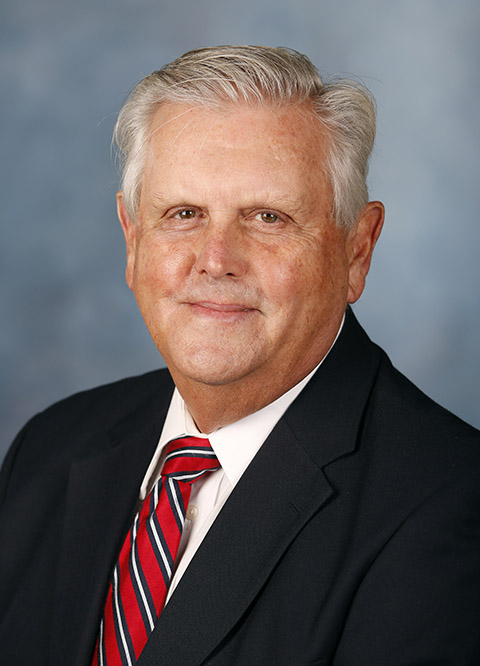

As June comes to a close, the first school year on the job is also coming to a close. During May and June of 2009, I was engaged in the interview process for the Commissioner of Education post. During the interview process, I talked to a number of superintendents and other stakeholders in Kentucky. I heard a lot of pride in the accomplishments of schools and school districts. I also heard about the exciting challenges ahead with the implementation of Senate Bill 1 (SB 1).
As I asked questions about priorities for the commissioner, there were two things that surfaced – improve communication and help build district capacity of school districts to implement SB 1 and improve student learning.
Early in my tenure, KDE worked to implement specific customer satisfaction requirements for communication. These requirements include a response time of 24 hours or less, an accurate response and a professional attitude. To monitor these requirements, we implemented an online survey and encouraged all who contacted KDE to complete the survey.
We reported the results of the survey every quarter to all major offices in KDE, and offices compared their results against other offices and addressed areas for improvement. At the end of the first year, we have now established our baseline for our customer requirement performance. The results are as follows:
X Timely response
Yes – 87% No – 10% NR (no response) – 3%
X Response addressed need
Yes – 90% No – 7% NR – 3%
X Any concerns about accuracy
Yes – 12% No – 84% NR – 4%
X Response handled professionally
Yes – 93% No – 4% NR – 3%
As commissioner, I want to recognize our KDE staff for excellent work; however, I do know we can continue to improve in certain areas. Moving forward, we will work to improve the accuracy area and seek to have all requirements exceed 90 percent. We also will benchmark our results against those of comparable organizations. We will provide training and support for each part of KDE on how to improve customer service.
As part of our communication plan, I also met with each regional education cooperative at least twice this year. (KDE liaisons attend every cooperative meeting.) I have visited more than 60 school districts and more than 90 schools to hear firsthand about the challenges facing educators. I average at least three speeches or meetings with stakeholder groups every week to focus on collaboration and improvement. Advisory councils for school boards, parents, superintendents, principals, teachers, closing achievement gaps, special education, gifted and talented, and accountability are meeting on a regular basis to communicate with and inform decisions of KDE and the Kentucky Board of Education. Of course, we have also implemented Monday and Friday consolidated e-mails, this weekly blog, Twitter blasts and Facebook accounts to help improve communication.
The other area for KDE was to implement policies and procedures to build district capacity. In our work with deployment of SB 1 around the Common Core Standards in language arts and mathematics, that is exactly the approach we are using. We are building capacity of higher education institutions, school board members, school superintendents, building administrators, central office instructional leaders and teacher leaders. We also are working closely with the Prichard Committee to create a comprehensive communication plan for parents and the business community. We have had a number of other states and national organizations looking at our deployment model for the Common Core Standards for possible replication. This speaks well to the great KDE team and education partners we have in Kentucky.
If readers have suggestions on how to continue to improve communication and build district capacity please let us know. While these are difficult economic times, we must continue to improve all levels of education through improved communication and collaboration. I am honored to be working with great people all across Kentucky who are focused on helping all children succeed.
Friday, June 25, 2010


Friday, June 18, 2010
Focus on Kids’ Futures, Not Adult Comfort
During my testimony to the Interim Joint Committee on Education (IJCE) this week, a recurring theme surfaced. In Kentucky and across this nation, we have been struggling with helping students from poverty and from diverse backgrounds reach success in school for many years. Now, we come with a new model called “District 180: Turnaround Schools” that is being funded through significant dollars from federal School Improvement Grants within Title I funding.
The question that continues to haunt me is this – “Nothing has worked before, so how can we ensure that this approach will work?” During the IJCE meeting, several legislators brought up some issues that have been around for 30 years. These issues included:
The question that continues to haunt me is this – “Nothing has worked before, so how can we ensure that this approach will work?” During the IJCE meeting, several legislators brought up some issues that have been around for 30 years. These issues included:
- You can’t teach kids if there is no discipline.
- Unless you change the demographics of the community, engage parents, find people jobs, provide health care, provide nutrition and other services, you cannot possibly expect to make a difference with these students.
- Teachers who are not successful in these schools could be moved to other schools with higher socio-economic conditions, and they would then be successful teachers.
- We should not blame teachers and principals for the lack of parenting and support of children in the community. Schools cannot do it alone.
For more than 38 years in education, I have heard these same concerns. However, my purpose in Kentucky is to overcome these barriers and meet the vision of EVERY child proficient and prepared for success. I was reminded of a great resource of Kati Haycock and the Ed Trust (www.edtrust.org). I was also reminded of the key question we need to ask all of our schools and the adults who either work in the schools, support the schools and/or lead the schools – “How many schools would I have to show you that have closed achievement gaps and proven that EVERY child can learn to high levels before you would believe and commit to the goal of EVERY child in YOUR school reaching success?”
If the answer is “more than one,” then we do not have a child problem, we have an adult problem.
For those of you interested in reading more, I have copied information about Ed Trust’s “Success Stories” below so that Kentucky leaders and adults who work with children can see places just like theirs that are being successful and overcoming the barriers. KDE and the Kentucky Board of Education are committed to the vision of EVERY child proficient and prepared for success. We do not accept that this cannot be done. In the next three to five years, we will have a laser focus on this work. We will certainly not make every adult happy; however, we have to believe that we will help more children learn.
Success Stories from Ed Trust
Some schools have beaten the odds. They’ve made significant strides in narrowing the achievement gaps, attained proficiency levels that significantly exceeded the averages in their states, or improved student performance at an especially rapid pace. Follow the links below to read about the teachers, principals, and others who have made this possible.
Some of these schools are truly exceptional. To inspire and encourage other educators in the gap-closing movement, The Education Trust each year at our national conference honors these high-performing schools with Dispelling the Myth Awards.
These schools don’t offer simple answers or easy solutions, but several common strategies emerge from their practices. They provide a rich curriculum coupled with strong, focused instruction. They have high expectations for all students. They use data to track student progress and individual student needs. And they employ purposeful professional development to improve teachers’ skills.
These stories and more have been collected in book form in It’s Being Done: Academic Success in Unexpected Schools (2007) and How It’s Being Done: Urgent Lessons from Unexpected Schools (2009). Contact rpitts@edtrust.org for prices for single books and bulk orders. You can read about Dispelling the Myth Award-winning schools and others by following the links contained in the web site at http://www.edtrust.org/dc/resources/success-stories.
Friday, June 11, 2010
Teacher Effectiveness
You can’t pick up an education publication these days without reading an article about teacher effectiveness. Teacher effectiveness is the new buzz word for this decade.
Since the No Child Left Behind (NCLB) authorization, the focus has been on highly qualified teachers. During the past eight years of NCLB, we have seen many states and districts achieve 99 percent highly qualified teachers. What also happens is that teacher evaluation systems report over 95 percent of teachers at or above standard.
However, graduation rates indicate that children are not successful in school. Apparently, the inconsistency is due to lack of focus on teacher effectiveness. So, we have lots of proponents of tying evaluation to test scores, merit pay, performance pay, value-added and the list goes on.
Many foundations are promoting the teacher effectiveness conversation, and the U.S. Department of Education is focusing Race to the Top and NCLB/ESEA reauthorization on teacher effectiveness. This focus is the right focus; however, I am not so certain that the details are on target.
I read a great article in Education Week recently. The article was by Dr. James Stigler, who is a senior fellow with the Carnegie Foundation for the Advancement of Teaching. He cautioned readers that we need to rethink teacher accountability before it is too late. The article resonated with me since it had close alignment with the philosophies of W. Edwards Deming. In the article, Dr. Stigler talks about the Japanese model of “lesson study.” This is a highly engaging model where teachers develop common assessments, teach common curriculum, teach on a common calendar and work together to monitor student achievement and study best practices for intervening when students are not successful. Japanese teachers are provided with the time and support to have these professional conversations. In the U.S., we are calling this approach the professional learning community.
The reason I liked this article so much was the relationship to the work I was part of in my former school system. The Iredell-Statesville system in North Carolina was recognized as the 2008 Malcolm Baldrige National Quality Award recipient in education. A key reason for the recognition was the level of deployment of professional learning communities and classroom Plan Do Study Act (PDSA) cycles, which are a key component of the Deming philosophy. These cycles very much mirror the Japanese lesson study model. Teachers of same subject met weekly to develop common curriculum, learning targets for students and common assessments and to share best instructional strategies. The student learning results over seven years in the school system documented that the PDSA method worked for all subjects, all grades and all types of students.
While discussions about teacher effectiveness are extremely important, I could never support a system that utilizes only standardized testing to evaluate the effectiveness of teachers. I will support working with teachers and other stakeholders to develop a growth model for teacher effectiveness that has multiple measures. I have appointed a teacher effectiveness steering committee to follow up from our Race to the Top application. This group is comprised of teachers, principals, superintendents and other key stakeholders. I am very excited about their work and look forward to the discussions we will have.
This work is not easy, and it will take several years to develop a valid, reliable and fair system for gauging teacher effectiveness. I also know that we must measure the working conditions within which teachers work. Another Deming philosophy I strongly adhere to is that, in most cases, non-performance and poor results are a direct result of the system and not the people in the system. By measuring working conditions, we can determine at the school, district and state levels what working conditions need to be in place for teachers and principals to be more effective in helping more students succeed. The bottom line for me is that we must DO this work WITH teachers and principals and not just do it TO them.
Since the No Child Left Behind (NCLB) authorization, the focus has been on highly qualified teachers. During the past eight years of NCLB, we have seen many states and districts achieve 99 percent highly qualified teachers. What also happens is that teacher evaluation systems report over 95 percent of teachers at or above standard.
However, graduation rates indicate that children are not successful in school. Apparently, the inconsistency is due to lack of focus on teacher effectiveness. So, we have lots of proponents of tying evaluation to test scores, merit pay, performance pay, value-added and the list goes on.
Many foundations are promoting the teacher effectiveness conversation, and the U.S. Department of Education is focusing Race to the Top and NCLB/ESEA reauthorization on teacher effectiveness. This focus is the right focus; however, I am not so certain that the details are on target.
I read a great article in Education Week recently. The article was by Dr. James Stigler, who is a senior fellow with the Carnegie Foundation for the Advancement of Teaching. He cautioned readers that we need to rethink teacher accountability before it is too late. The article resonated with me since it had close alignment with the philosophies of W. Edwards Deming. In the article, Dr. Stigler talks about the Japanese model of “lesson study.” This is a highly engaging model where teachers develop common assessments, teach common curriculum, teach on a common calendar and work together to monitor student achievement and study best practices for intervening when students are not successful. Japanese teachers are provided with the time and support to have these professional conversations. In the U.S., we are calling this approach the professional learning community.
The reason I liked this article so much was the relationship to the work I was part of in my former school system. The Iredell-Statesville system in North Carolina was recognized as the 2008 Malcolm Baldrige National Quality Award recipient in education. A key reason for the recognition was the level of deployment of professional learning communities and classroom Plan Do Study Act (PDSA) cycles, which are a key component of the Deming philosophy. These cycles very much mirror the Japanese lesson study model. Teachers of same subject met weekly to develop common curriculum, learning targets for students and common assessments and to share best instructional strategies. The student learning results over seven years in the school system documented that the PDSA method worked for all subjects, all grades and all types of students.
While discussions about teacher effectiveness are extremely important, I could never support a system that utilizes only standardized testing to evaluate the effectiveness of teachers. I will support working with teachers and other stakeholders to develop a growth model for teacher effectiveness that has multiple measures. I have appointed a teacher effectiveness steering committee to follow up from our Race to the Top application. This group is comprised of teachers, principals, superintendents and other key stakeholders. I am very excited about their work and look forward to the discussions we will have.
This work is not easy, and it will take several years to develop a valid, reliable and fair system for gauging teacher effectiveness. I also know that we must measure the working conditions within which teachers work. Another Deming philosophy I strongly adhere to is that, in most cases, non-performance and poor results are a direct result of the system and not the people in the system. By measuring working conditions, we can determine at the school, district and state levels what working conditions need to be in place for teachers and principals to be more effective in helping more students succeed. The bottom line for me is that we must DO this work WITH teachers and principals and not just do it TO them.
Friday, June 4, 2010
Build School Calendars Around Access to Instruction
During the regular session of the 2010 General Assembly, the school calendar issue was once again a major item for discussion. Due to the H1N1 virus, snow days, flood days and many other “disaster” impacts, superintendents were once again faced with difficult decisions about canceling school and scheduling makeup days.
As Commissioner of Education, my primary focus is making certain our students have access to instruction that will ensure their success and their future. For that reason, I was very opposed to waiving instructional days/hours. However, having served as a local superintendent, I also know how difficult the development of a school calendar can be and how difficult it is to schedule makeup days.
Through this blog, I am re-emphasizing the request to get suggestions and proposals from local school districts concerning makeup days and school calendars. I have announced in several venues that the Kentucky Department of Education (KDE) would promote possible pilots to provide virtual learning opportunities for makeup days. There are many problems to overcome with these pilots, and legislation possibly may be needed, so this will not be a “quick” process. The 2010 General Assembly also charged the Kentucky Board of Education (KBE) with developing regulatory language to guide innovative alternative school calendars. We will provide more information on this issue after the June KBE meeting.
The budget bill contains minimal requirements for school calendars. The bill’s language says that the school term shall include, at a minimum, the equivalent of 177 six-hour instructional days, which is 1,062 instructional hours. But, it is very clear that the intent of the legislature, supported by KDE, is that school districts should include 177 six-hour instructional days in their original 2010-11 calendars.
To further stress the emphasis on instructional days, the budget bill requires KDE to report to the Legislative Research Commission (LRC) the test scores for any district with less than 177 six-hour instructional days. Although there is great flexibility provided in the language, KRS 158.070 defines the minimum school term as 185 days, and that will easily accommodate 177 instructional days and the required minimum of four professional development days. Opening Day, Closing Day and holidays are discretionary, and the school term may be extended beyond 185 days if needed should a district choose to include them.
As commissioner, I believe the intent of the budget was clear. Districts should maintain 177 days of instruction and NOT reduce teacher pay. In the final budget, the SEEK amounts for FY11 ($3,868 per pupil) and FY12 ($3,903 per pupil) were actually increased from the FY10 amount of $3,866 per pupil.
We hope districts will be able to meet the intent of the budget; however, we do recognize that each district has unique circumstances, and KDE will approve school calendars that meet the requirements of statute and budget language (the equivalent of 177 days).
As Commissioner of Education, my primary focus is making certain our students have access to instruction that will ensure their success and their future. For that reason, I was very opposed to waiving instructional days/hours. However, having served as a local superintendent, I also know how difficult the development of a school calendar can be and how difficult it is to schedule makeup days.
Through this blog, I am re-emphasizing the request to get suggestions and proposals from local school districts concerning makeup days and school calendars. I have announced in several venues that the Kentucky Department of Education (KDE) would promote possible pilots to provide virtual learning opportunities for makeup days. There are many problems to overcome with these pilots, and legislation possibly may be needed, so this will not be a “quick” process. The 2010 General Assembly also charged the Kentucky Board of Education (KBE) with developing regulatory language to guide innovative alternative school calendars. We will provide more information on this issue after the June KBE meeting.
The budget bill contains minimal requirements for school calendars. The bill’s language says that the school term shall include, at a minimum, the equivalent of 177 six-hour instructional days, which is 1,062 instructional hours. But, it is very clear that the intent of the legislature, supported by KDE, is that school districts should include 177 six-hour instructional days in their original 2010-11 calendars.
To further stress the emphasis on instructional days, the budget bill requires KDE to report to the Legislative Research Commission (LRC) the test scores for any district with less than 177 six-hour instructional days. Although there is great flexibility provided in the language, KRS 158.070 defines the minimum school term as 185 days, and that will easily accommodate 177 instructional days and the required minimum of four professional development days. Opening Day, Closing Day and holidays are discretionary, and the school term may be extended beyond 185 days if needed should a district choose to include them.
As commissioner, I believe the intent of the budget was clear. Districts should maintain 177 days of instruction and NOT reduce teacher pay. In the final budget, the SEEK amounts for FY11 ($3,868 per pupil) and FY12 ($3,903 per pupil) were actually increased from the FY10 amount of $3,866 per pupil.
We hope districts will be able to meet the intent of the budget; however, we do recognize that each district has unique circumstances, and KDE will approve school calendars that meet the requirements of statute and budget language (the equivalent of 177 days).
Friday, May 28, 2010
Providing Opportunities for All Students
During the regular session of the 2010 General Assembly, House Bill 301 (HB 301) cleared the House but did not clear the Senate. This bill would have increased the dropout age from 16 to 18. Many states have already taken this initiative and have seen significant results in lowering dropout rates.
This legislation was supported by the Governor and First Lady. House Speaker Greg Stumbo joined Rep. Jeff Greer and several other legislative leaders in sponsoring the legislation. There are many excuses as to why we should not do this; however, there is one BIG reason why we should do this. We should not allow 16-year-olds to make decisions that will impact their lives both in the short term and long term.
Key concerns from teachers, principals and superintendents were very valid. These concerns focused on the need to provide support and programs for teens who were considering the dropout option. Recently, the Governor’s Transforming Education in Kentucky task force heard about dropout prevention programs being implemented in many states. One of the presentations came from the Gateway to College Network. This group has been working in several states to implement programs in collaboration with community colleges. In several states, these programs are called Early College or Middle College. For more information about the Gateway programs, please visit http://www.gatewaytocollege.org/.
As a local superintendent in North Carolina, I worked with the North Carolina New Schools Project to implement early colleges for leadership/technology and visual/performing arts. Both schools were extremely successful in helping students stay in school and not only graduate on time, but also earn college credit. It was amazing to watch these students enter a community college and take college courses. In most cases, these students had not been very successful in middle school. The school provided the appropriate relationships, rigor and relevance with support systems that expected student success. The early colleges had the highest attendance rates and no dropouts and provided students with the opportunity to graduate with a high school diploma and associate’s degree at NO COST to parents.
The language in the budget bill this week came from the original HB 301:
Notwithstanding any statute to the contrary, the Commissioner of Education may approve a plan that is established by a local school board and a postsecondary institution accredited by the Southern Association for Colleges and Schools for purposes of granting high school and college credit and which allows students to fulfill high school graduation requirements and compulsory school attendance; providing rigorous academic curriculum within a supportive and nurturing environment for underserved students; and encouraging academic success by linking students, teachers, and community partners in innovative ways.
This language provides the Kentucky Department of Education with the ability to work with several districts who are considering the Early College and Middle College innovation. This language also opens the opportunity for numerous foundation and federal grants that could provide funding for planning and implementation.
While we would have much preferred HB 301 to have become law, this provision allows us to develop models that will help provide the support that districts and schools need to convince adults that more students can be successful in Kentucky. More than 6,000 students drop out of schools every year in Kentucky. No one individual is to blame. The system is the problem, and we have to look for innovations to improve the system. Thanks to Rep. Harry Moberly for the language, and thanks to legislators for their support. Now, to work!
P.S. HB 301 had nothing to do with charters, and this language has nothing to do with charters. The only objective is to help districts and schools help more children. Sorry to disappoint all you conspiracy theorists!
This legislation was supported by the Governor and First Lady. House Speaker Greg Stumbo joined Rep. Jeff Greer and several other legislative leaders in sponsoring the legislation. There are many excuses as to why we should not do this; however, there is one BIG reason why we should do this. We should not allow 16-year-olds to make decisions that will impact their lives both in the short term and long term.
Key concerns from teachers, principals and superintendents were very valid. These concerns focused on the need to provide support and programs for teens who were considering the dropout option. Recently, the Governor’s Transforming Education in Kentucky task force heard about dropout prevention programs being implemented in many states. One of the presentations came from the Gateway to College Network. This group has been working in several states to implement programs in collaboration with community colleges. In several states, these programs are called Early College or Middle College. For more information about the Gateway programs, please visit http://www.gatewaytocollege.org/.
As a local superintendent in North Carolina, I worked with the North Carolina New Schools Project to implement early colleges for leadership/technology and visual/performing arts. Both schools were extremely successful in helping students stay in school and not only graduate on time, but also earn college credit. It was amazing to watch these students enter a community college and take college courses. In most cases, these students had not been very successful in middle school. The school provided the appropriate relationships, rigor and relevance with support systems that expected student success. The early colleges had the highest attendance rates and no dropouts and provided students with the opportunity to graduate with a high school diploma and associate’s degree at NO COST to parents.
The language in the budget bill this week came from the original HB 301:
Notwithstanding any statute to the contrary, the Commissioner of Education may approve a plan that is established by a local school board and a postsecondary institution accredited by the Southern Association for Colleges and Schools for purposes of granting high school and college credit and which allows students to fulfill high school graduation requirements and compulsory school attendance; providing rigorous academic curriculum within a supportive and nurturing environment for underserved students; and encouraging academic success by linking students, teachers, and community partners in innovative ways.
This language provides the Kentucky Department of Education with the ability to work with several districts who are considering the Early College and Middle College innovation. This language also opens the opportunity for numerous foundation and federal grants that could provide funding for planning and implementation.
While we would have much preferred HB 301 to have become law, this provision allows us to develop models that will help provide the support that districts and schools need to convince adults that more students can be successful in Kentucky. More than 6,000 students drop out of schools every year in Kentucky. No one individual is to blame. The system is the problem, and we have to look for innovations to improve the system. Thanks to Rep. Harry Moberly for the language, and thanks to legislators for their support. Now, to work!
P.S. HB 301 had nothing to do with charters, and this language has nothing to do with charters. The only objective is to help districts and schools help more children. Sorry to disappoint all you conspiracy theorists!
Friday, May 21, 2010
Finding ways to help more students succeed
Someone asked me this week if I ever get discouraged. The answer is, that after 38 years in the education profession, I often get discouraged. However, it never lasts more than a few seconds. I quickly come back to the mission and that is to help more children be successful.
I heard a speaker once ask the audience, “What is your purpose in life?” He then followed up with a method to determine your purpose in life. The speaker asked the audience to consider, “What keeps you awake at night and what wakes you up in the morning?” What keeps me up at night and wakes me in the morning is the desire to help more children reach success. Success in my book is defined as every child graduating from Kentucky schools ready for college and career.
This week, we are finishing up our second-round application for Race to the Top. Charter school legislation would certainly have helped us. However, that door has been closed, so it is time to move on to other doors. We are excited about numerous partnerships with national organizations that will help us move forward with innovations which will help more students be successful.
One exciting innovation is the P20 lab that the University of Kentucky has created. President Lee Todd and Dean Mary John O’Hair have invested significant resources to develop this lab. Also, Kentucky was selected as one of five states to partner with the Council of Chief State School Officers and the Stupski Foundation to create “Next Generation Schools.” We have a team of UK staff and KDE staff meeting this week to discuss the next steps in creating next generation schools.
Another exciting opportunity is the National Council on Education and the Economy. Kentucky is one of eight states collaborating to develop ways that students can “move on when ready” in high school. This partnership will create exciting opportunities to ensure all graduates from Kentucky schools are ready for college and career.
Finally, just when you seem most discouraged you get a call from a superintendent who has visited an early college. Early college blends high school and college in a rigorous yet supportive program, compressing the time it takes to complete a high school diploma and the first two years of college. The superintendent reports seeing students reach success in early college who normally would have not been successful. The excitement of the leaders in our school districts in Kentucky is tremendous.
While Race to the Top is a major funding source for the future of Kentucky school innovation, whether we receive the funding or not is not the most important agenda item. The most important agenda item is finding innovative ways to help more children succeed!
I heard a speaker once ask the audience, “What is your purpose in life?” He then followed up with a method to determine your purpose in life. The speaker asked the audience to consider, “What keeps you awake at night and what wakes you up in the morning?” What keeps me up at night and wakes me in the morning is the desire to help more children reach success. Success in my book is defined as every child graduating from Kentucky schools ready for college and career.
This week, we are finishing up our second-round application for Race to the Top. Charter school legislation would certainly have helped us. However, that door has been closed, so it is time to move on to other doors. We are excited about numerous partnerships with national organizations that will help us move forward with innovations which will help more students be successful.
One exciting innovation is the P20 lab that the University of Kentucky has created. President Lee Todd and Dean Mary John O’Hair have invested significant resources to develop this lab. Also, Kentucky was selected as one of five states to partner with the Council of Chief State School Officers and the Stupski Foundation to create “Next Generation Schools.” We have a team of UK staff and KDE staff meeting this week to discuss the next steps in creating next generation schools.
Another exciting opportunity is the National Council on Education and the Economy. Kentucky is one of eight states collaborating to develop ways that students can “move on when ready” in high school. This partnership will create exciting opportunities to ensure all graduates from Kentucky schools are ready for college and career.
Finally, just when you seem most discouraged you get a call from a superintendent who has visited an early college. Early college blends high school and college in a rigorous yet supportive program, compressing the time it takes to complete a high school diploma and the first two years of college. The superintendent reports seeing students reach success in early college who normally would have not been successful. The excitement of the leaders in our school districts in Kentucky is tremendous.
While Race to the Top is a major funding source for the future of Kentucky school innovation, whether we receive the funding or not is not the most important agenda item. The most important agenda item is finding innovative ways to help more children succeed!
Friday, May 14, 2010
Special Session to Focus on Budget Only
This week, Governor Steve Beshear called for a special session of the Kentucky General Assembly. At the time of this blog, the only agenda item is the budget. The special session was called for the week of May 24, and the Governor hopes for a five-day session, which is the minimum to pass legislation. You can see the Governor’s compromise budget and letter to the legislators here.
As commissioner, I am very proud of the Governor for maintaining a focus on education. The Governor is asking for no reduction in instruction for our children and no pay cuts for our teachers. Given the economic imperative that we improve our education outcomes in Kentucky, I am excited to see this focus on maintaining the critical elements of instruction and support for teachers.
While we had hoped to address charter schools in the special session, it does not appear that there is consensus on this issue at this time. While charter schools would have helped with our Race to the Top application for $175 million in federal funds, charter school legislation also would have opened up numerous windows of funding for innovation.
We have significant interest in Kentucky to implement early colleges and middle colleges. These programs have excellent track records across the country. They focus on helping more students graduate from high school with college- and career-readiness skills. Also, these programs help students graduate from high school with significant college credit hours (up to 60 or more). And, these programs are excellent interventions for students who may be considering dropping out of school at age 16.
During the regular legislative session, House Bill 301 focused on raising the dropout age. Early/middle colleges would have been great answers to how we provide programs to support the students who stayed in school because the age requirement would have been raised. Charter legislation would have provided an opportunity to access significant grant dollars from the federal charter school program. We had applied for up to $10 million to plan and implement 15 early/middle colleges. Without legislative support, we will not be eligible for these funds and many foundation funds that we were seeking.
What I have learned in many years of this work is that when one door closes, other doors open. We have one objective at the Kentucky Department of Education. We will work to help districts and schools meet the vision of every child graduating from high school “college- and career-ready.”
As commissioner, I am very proud of the Governor for maintaining a focus on education. The Governor is asking for no reduction in instruction for our children and no pay cuts for our teachers. Given the economic imperative that we improve our education outcomes in Kentucky, I am excited to see this focus on maintaining the critical elements of instruction and support for teachers.
While we had hoped to address charter schools in the special session, it does not appear that there is consensus on this issue at this time. While charter schools would have helped with our Race to the Top application for $175 million in federal funds, charter school legislation also would have opened up numerous windows of funding for innovation.
We have significant interest in Kentucky to implement early colleges and middle colleges. These programs have excellent track records across the country. They focus on helping more students graduate from high school with college- and career-readiness skills. Also, these programs help students graduate from high school with significant college credit hours (up to 60 or more). And, these programs are excellent interventions for students who may be considering dropping out of school at age 16.
During the regular legislative session, House Bill 301 focused on raising the dropout age. Early/middle colleges would have been great answers to how we provide programs to support the students who stayed in school because the age requirement would have been raised. Charter legislation would have provided an opportunity to access significant grant dollars from the federal charter school program. We had applied for up to $10 million to plan and implement 15 early/middle colleges. Without legislative support, we will not be eligible for these funds and many foundation funds that we were seeking.
What I have learned in many years of this work is that when one door closes, other doors open. We have one objective at the Kentucky Department of Education. We will work to help districts and schools meet the vision of every child graduating from high school “college- and career-ready.”
Subscribe to:
Posts (Atom)