

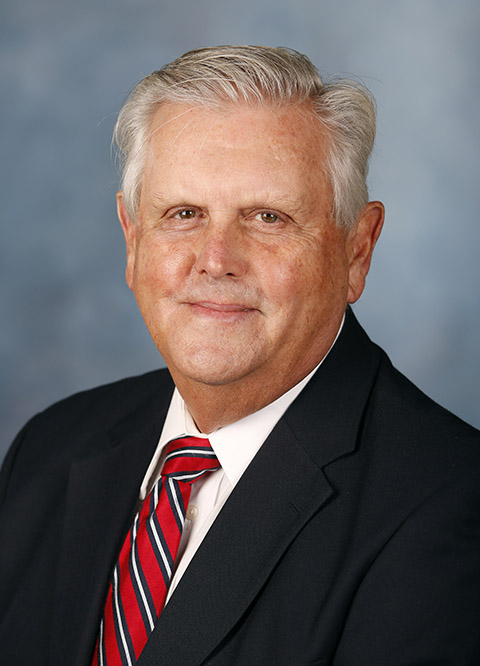

During these difficult budget times, it is apparent that we will not be able to continue doing everything we previously have done at the Kentucky Department of Education (KDE). As a result, I am asking staff to look closely at revising our mission statement and to review the work they are doing to ensure we are aligning the work and the budget to the key strategic goals of high student performance, high-quality teachers and administrators, supportive environments, and high-performing schools and districts.
As a result, we will be abandoning some work that we have done in the past due to budget constraints and decisions made based on priorities. The simple fact is that we have about 60 percent of staff we had in the ‘90s, and we have seen significant budget reductions in operations. As we make these decisions, we are working closely with key partners throughout the state to ensure we do not completely abandon important support for existing programs. That is the theme of this blog – COLLABORATION.
I have been amazed at the level of collaboration in Kentucky. When we have called for representatives on key committees such as those for Race to the Top and Senate Bill 1, our partners have responded to the call. As I present to key committees of the General Assembly, I have been impressed with the level of knowledge of our legislators with regard to education reform. We have many legislators who are former principals, teachers and superintendents. Several teachers who are currently in the profession also serve in the legislature.
One area of collaboration that I have been very surprised to find is that of postsecondary education. I can assure you that this collaboration does not happen in all states. From his position as president of the Council on Postsecondary Education, Robert King has established a clear vision of a pipeline for early childhood, P-12 and postsecondary education that will ensure Kentucky has a bright economic future.
It has been a pleasure to work with Dr. King and to visit college campuses. I have visited with teams of educators at UK, NKU, WKU, EKU and Pikeville. I met with most of the deans, provosts and chief academic officers to discuss our vision for professional development and support for teachers and principals. I have seen firsthand how the colleges, through their outreach programs, are currently supporting P-12 education in Kentucky.
I truly believe that this collaboration will position Kentucky in a strong role as a leader in national education reform. However, the most important impact will eventually be on our children. As we work hand-in-hand with our colleges, we will improve the levels of support for children, teachers, administrators and our communities. I am proud to be a part of this work!
Friday, October 30, 2009


Friday, October 23, 2009
Transforming Education in Kentucky
It was my honor to accompany Governor Steve Beshear and Secretary of the Education and Workforce Development Cabinet Helen Mountjoy on a ten-city tour across Kentucky this week. The governor utilized this time to conduct press conferences and town hall meetings. The content of the governor’s speech focused on several key areas:
· Kentucky is celebrating the 20th anniversary of the Rose case, where Kentucky said that failure of our education system was not an option.
· Kentucky has made progress during the last 20 years as measured by numerous academic measures.
· We have many excellent initiatives going on in education in Kentucky (Early Childhood Task Force, Graduate Kentucky, Senate Bill 1 and Race to the Top, to name but a few examples).
· It is time to refocus our energy and align our work around what the citizens of Kentucky expect from their education system.
Gov. Beshear has appointed a task force comprised of 30-plus individuals representing all areas of the state and various stakeholder groups. I am honored to serve with the governor as co-chair of the task force. We hope to begin meetings in November or early December. The first several months will be focused on fact-finding about all the excellent programs that already exist and challenges that we are facing.
The governor was very clear that we are in a difficult period of budget for the next two years, and we should not expect new dollars for new initiatives. However, we should not let funding be a stumbling block. Now is the time to prepare for the future and be poised, ready with recommendations by November 2010 in time for the 2011 legislative session.
Several key agenda items were mentioned by Gov. Beshear during his speeches. Increasing early childhood education opportunities, increasing opportunities for students to get college credit while in high school, increasing the rigor of our career and technical programs so they are seen as options of first choice, and decreasing dropouts and increasing graduation rates were among those specific items that the governor requested the task force to review.
Of utmost importance will be listening to parents, teachers, administrators, students and community members. The task force will schedule additional town hall meetings to hear from all of these groups on how best to transform public education so that all of the children in Kentucky graduate and are prepared for success in the 21st century.
· Kentucky is celebrating the 20th anniversary of the Rose case, where Kentucky said that failure of our education system was not an option.
· Kentucky has made progress during the last 20 years as measured by numerous academic measures.
· We have many excellent initiatives going on in education in Kentucky (Early Childhood Task Force, Graduate Kentucky, Senate Bill 1 and Race to the Top, to name but a few examples).
· It is time to refocus our energy and align our work around what the citizens of Kentucky expect from their education system.
Gov. Beshear has appointed a task force comprised of 30-plus individuals representing all areas of the state and various stakeholder groups. I am honored to serve with the governor as co-chair of the task force. We hope to begin meetings in November or early December. The first several months will be focused on fact-finding about all the excellent programs that already exist and challenges that we are facing.
The governor was very clear that we are in a difficult period of budget for the next two years, and we should not expect new dollars for new initiatives. However, we should not let funding be a stumbling block. Now is the time to prepare for the future and be poised, ready with recommendations by November 2010 in time for the 2011 legislative session.
Several key agenda items were mentioned by Gov. Beshear during his speeches. Increasing early childhood education opportunities, increasing opportunities for students to get college credit while in high school, increasing the rigor of our career and technical programs so they are seen as options of first choice, and decreasing dropouts and increasing graduation rates were among those specific items that the governor requested the task force to review.
Of utmost importance will be listening to parents, teachers, administrators, students and community members. The task force will schedule additional town hall meetings to hear from all of these groups on how best to transform public education so that all of the children in Kentucky graduate and are prepared for success in the 21st century.
Friday, October 16, 2009
Success in High School (and After) Starts in Preschool
It was my pleasure to attend the Interim Joint Committee on Education meeting this week. University of Maryland Chancellor William “Brit” Kirwan, Ph.D., presented excerpts from the Maryland report Access, Admissions and Success in Higher Education. Kirwan is a Kentucky native and son of A.D. Kirwan, former president of the University of Kentucky.
The presentation began with some startling facts. In the 1960s, the U.S. led the world in percentage of students who graduated from high school and in the percentage of 24- to 32-year-olds with postsecondary degrees (two-year and four-year). Today, we rank 28th among industrialized nations in high school graduation and 10th in postsecondary degrees.
President Barack Obama has set a goal that the U.S. should once again lead the world in postsecondary degrees by 2020. While the U.S. has slightly increased the percentages in both areas, the rest of the world has caught us and passed us. The presentation provided several recommendations that have implications for Kentucky, and I hope that readers will join me in working with our legislators to implement the recommendations.
The number one recommendation is to increase the percentage of children who receive preschool education. This is crucial for success. Children come to school with the achievement gap already existing due to vocabulary development. The Kentucky Board of Education and many other organizations are calling for preschool for children from families up to 200 percent of the poverty level.
Another recommendation deals with the increase in counseling services at the middle school level. Any analysis of learning results in Kentucky reveals that we are losing ground in late elementary and middle school. The result is high school dropouts and low test scores at the high school level. We must address literacy issues at the secondary level in Kentucky and raise expectations of students and parents so that all children will at least have the opportunity to meet college preparedness levels.
A number of the recommendations aligned very well with Senate Bill 1. Kentucky and Texas are leading the nation with legislation to ensure more children are prepared for college and career. Our legislation matches the recommendations of alignment of standards between P-12 and college and improving teacher effectiveness through professional development.
More and more, we are realizing the economic impact of preparing all children for postsecondary success. While economics certainly get our attention, we can never forget that education is a social, moral and civil rights issue. We owe our children the best efforts we can make to provide the opportunities for them to be successful.
I am excited about the work we have in front of us and know that Kentucky students, educators, parents, and citizens will rise to the challenge.
The presentation began with some startling facts. In the 1960s, the U.S. led the world in percentage of students who graduated from high school and in the percentage of 24- to 32-year-olds with postsecondary degrees (two-year and four-year). Today, we rank 28th among industrialized nations in high school graduation and 10th in postsecondary degrees.
President Barack Obama has set a goal that the U.S. should once again lead the world in postsecondary degrees by 2020. While the U.S. has slightly increased the percentages in both areas, the rest of the world has caught us and passed us. The presentation provided several recommendations that have implications for Kentucky, and I hope that readers will join me in working with our legislators to implement the recommendations.
The number one recommendation is to increase the percentage of children who receive preschool education. This is crucial for success. Children come to school with the achievement gap already existing due to vocabulary development. The Kentucky Board of Education and many other organizations are calling for preschool for children from families up to 200 percent of the poverty level.
Another recommendation deals with the increase in counseling services at the middle school level. Any analysis of learning results in Kentucky reveals that we are losing ground in late elementary and middle school. The result is high school dropouts and low test scores at the high school level. We must address literacy issues at the secondary level in Kentucky and raise expectations of students and parents so that all children will at least have the opportunity to meet college preparedness levels.
A number of the recommendations aligned very well with Senate Bill 1. Kentucky and Texas are leading the nation with legislation to ensure more children are prepared for college and career. Our legislation matches the recommendations of alignment of standards between P-12 and college and improving teacher effectiveness through professional development.
More and more, we are realizing the economic impact of preparing all children for postsecondary success. While economics certainly get our attention, we can never forget that education is a social, moral and civil rights issue. We owe our children the best efforts we can make to provide the opportunities for them to be successful.
I am excited about the work we have in front of us and know that Kentucky students, educators, parents, and citizens will rise to the challenge.
Friday, October 9, 2009
Black Males Working ... A Model Program
At the Kentucky Board of Education (KBE) meeting this week, there were several awards presented to groups and individuals.
I want to highlight one of the programs doing great work in raising achievement of students and in closing achievement gaps. Black Males Working, a collaborative program of First Bracktown Inc. and the Fayette County school district, received the Samuel Robinson award. This program is an outreach of First Baptist Bracktown and began in 2005 to address the needs of African-American males at Leestown Middle School. Since that time, the program has grown to serve more than 140 students from 11 middle schools and five high schools.
Students in the program must attend a Saturday Academy, maintain a 2.5 grade point average and show improvement in grades and behavior. Also, students must limit TV and video game usage to one hour per night and read 60 minutes per day. Students must turn in all homework and classroom assignments promptly, participate in community service and attend school regularly. They also must be well-groomed daily and maintain good conduct in home, school and community. Parent involvement also is a key component of the program. At the KBE meeting, I met four of the young men involved in this program. They all wore ties and were well groomed. The most impressive features of the young men were their handshakes and their ability to speak clearly and confidently to adults.
This program was developed by retired educator Roszalyn Akins and supported by Roger Cleveland, Ed.D., an assistant professor of educational leadership at Eastern Kentucky University. Rev. C.B. Akins and the members of First Baptist Bracktown play a critical role in supporting the program. Fayette County Superintendent Stu Silberman and the staff of the Fayette County school district have worked collaboratively with the program to provide support and encouragement.
The results of the program have been outstanding. Grades, behavior, test scores and college readiness statistics show the impact of the program. Students have received numerous college scholarship offers from Georgetown College, Morehead State University, Murray State University and Centre College. Recently, the University of Kentucky awarded 20 scholarships to the program.
Kentucky has made progress in improving graduation rates. However, we have much work to do. President Obama and Secretary Duncan have recently announced Innovation grant funds of $650 million available to school districts and non-profit organizations. I encourage local school systems to partner with non-profits similar to the partnership between Fayette County and First Bracktown Inc. and apply for these funds. When we have collaborative efforts such as these, not only do we improve the lives of students, but we also improve our community and state.
For more information on the Black Males Working Program, contact Roszalyn Akins at (859) 231-7042.
I want to highlight one of the programs doing great work in raising achievement of students and in closing achievement gaps. Black Males Working, a collaborative program of First Bracktown Inc. and the Fayette County school district, received the Samuel Robinson award. This program is an outreach of First Baptist Bracktown and began in 2005 to address the needs of African-American males at Leestown Middle School. Since that time, the program has grown to serve more than 140 students from 11 middle schools and five high schools.
Students in the program must attend a Saturday Academy, maintain a 2.5 grade point average and show improvement in grades and behavior. Also, students must limit TV and video game usage to one hour per night and read 60 minutes per day. Students must turn in all homework and classroom assignments promptly, participate in community service and attend school regularly. They also must be well-groomed daily and maintain good conduct in home, school and community. Parent involvement also is a key component of the program. At the KBE meeting, I met four of the young men involved in this program. They all wore ties and were well groomed. The most impressive features of the young men were their handshakes and their ability to speak clearly and confidently to adults.
This program was developed by retired educator Roszalyn Akins and supported by Roger Cleveland, Ed.D., an assistant professor of educational leadership at Eastern Kentucky University. Rev. C.B. Akins and the members of First Baptist Bracktown play a critical role in supporting the program. Fayette County Superintendent Stu Silberman and the staff of the Fayette County school district have worked collaboratively with the program to provide support and encouragement.
The results of the program have been outstanding. Grades, behavior, test scores and college readiness statistics show the impact of the program. Students have received numerous college scholarship offers from Georgetown College, Morehead State University, Murray State University and Centre College. Recently, the University of Kentucky awarded 20 scholarships to the program.
Kentucky has made progress in improving graduation rates. However, we have much work to do. President Obama and Secretary Duncan have recently announced Innovation grant funds of $650 million available to school districts and non-profit organizations. I encourage local school systems to partner with non-profits similar to the partnership between Fayette County and First Bracktown Inc. and apply for these funds. When we have collaborative efforts such as these, not only do we improve the lives of students, but we also improve our community and state.
For more information on the Black Males Working Program, contact Roszalyn Akins at (859) 231-7042.
Friday, October 2, 2009
H1N1 and the Effect on Our Communities
While there are many great things happening in education in Kentucky, we do need to pause this week and discuss the impact of the H1N1 virus on our children, parents and communities in the state. The following link provides an update of the level of outbreak across all the states: http://www.google.org/flutrends/intl/en_us/.
Over the past few days, I have spoken with several superintendents who are dealing with school and district closings. These are very difficult decisions and come during a period of time when we usually do not have to close schools. Superintendents are very concerned about the health and safety of children and staff, and we share their concerns. Our superintendents are doing a terrific job of coordinating efforts with local health departments. While speaking today with Superintendent Lonnie Anderson in Whitley County, I was able to hear the numerous efforts that he and other superintendents are making to ensure that they have the information they need to make decisions about school closings.
While health and safety are our top priority, local superintendents are rightfully concerned about the impact that missing school will eventually have on state funding and on student learning. The Kentucky Department for Public Health is currently gathering data on a daily basis concerning school closings. We also are planning on carefully reviewing the data by district and state with regard to month two average daily attendance (ADA). Our schedule is to have the data by November 1 and then allow districts to double-check the data. We plan on providing an update to the appropriate legislative committees in December so that they will be aware of the impact of H1N1 on schools and districts.
Several systems have fall break scheduled over the next week, and we hope that the flu vaccine will be delivered, so that upon return from fall break, student and staff vaccinations can be scheduled. We will continue to closely monitor the situation and provide information from superintendents who are dealing with district closings to all school leaders across the state. The KDE web site and flu.gov site have valuable information for parents and school staff.
Over the past few days, I have spoken with several superintendents who are dealing with school and district closings. These are very difficult decisions and come during a period of time when we usually do not have to close schools. Superintendents are very concerned about the health and safety of children and staff, and we share their concerns. Our superintendents are doing a terrific job of coordinating efforts with local health departments. While speaking today with Superintendent Lonnie Anderson in Whitley County, I was able to hear the numerous efforts that he and other superintendents are making to ensure that they have the information they need to make decisions about school closings.
While health and safety are our top priority, local superintendents are rightfully concerned about the impact that missing school will eventually have on state funding and on student learning. The Kentucky Department for Public Health is currently gathering data on a daily basis concerning school closings. We also are planning on carefully reviewing the data by district and state with regard to month two average daily attendance (ADA). Our schedule is to have the data by November 1 and then allow districts to double-check the data. We plan on providing an update to the appropriate legislative committees in December so that they will be aware of the impact of H1N1 on schools and districts.
Several systems have fall break scheduled over the next week, and we hope that the flu vaccine will be delivered, so that upon return from fall break, student and staff vaccinations can be scheduled. We will continue to closely monitor the situation and provide information from superintendents who are dealing with district closings to all school leaders across the state. The KDE web site and flu.gov site have valuable information for parents and school staff.
Friday, September 25, 2009
Education Finance
This week, I had the honor to meet with the Budget Review Subcommittee on Primary and Secondary Education, which is co-chaired by Sen. Vernie McGaha and Rep. Tommy Thompson. I was asked to present about three key issues, and this edition of my blog provides highlights of the meeting.
Issue 1 was impact of budget cuts on local school systems – For FY09, school districts saw significant reductions in Flexible Focus dollars. Flex Focus dollars provide monies for extended school services, preschool, professional development, textbooks and safe schools. In addition to budget cuts made through the enacted budget, there was a statewide 2 percent cut in late FY09 that impacted school districts. This budget cut amounted to about $6.1 million and was made to the textbook line item based on recommendations of superintendents. For FY10, the Flex Focus reductions and the textbook reduction were carried over, and, in July, we were asked to prepare an additional 4 percent budget reduction. This budget reduction also was made to the textbook line item, in the amount of $12.9 million. The bottom line to school districts is that Flex Focus dollars have been reduced by 36 percent, on average statewide. A document showing each district’s allocations for Flex Focus and other items is available here.
Issue 2 dealt with the funding streams from the American Recovery and Reinvestment Act (ARRA) – The information provided to the subcommittee can be accessed here. The key concern for everyone is that the State Fiscal Stabilization Funds that were used to maintain FY10 SEEK base of $3,866 per student and also will hopefully be used to maintain SEEK funding for FY11 will not be available in FY12. The General Assembly and Governor Beshear will be dealing directly with this issue as they develop the biennial budget for FY11 and FY12.
Issue 3 dealt with fiscal stability of school systems – The Kentucky Department of Education does monitor the fund balance statements of local school districts. The general fund balance and child nutrition fund balance are tracked separately. School systems are having to deal with state budget cuts and numerous obligations (sick leave pay outs, construction, unfunded mandates, school-based council carryover funds and more), and they are having to prepare for the future when federal dollars may not be as available as they are currently. I would encourage all local boards to take the advice of the Kentucky School Boards Association and hold at least one meeting per year where the local community is informed about the need for a fund balance and projected use of the funds. Also, local superintendents should keep their legislative delegations informed about the same.
We are working very hard at KDE to review all expenditures. KDE has seen an overall 28 percent reduction in funds since FY08. We are looking carefully at all programs to ensure they are effective and efficient. We also are looking at outside funding through competitive programs such as Race to the Top and monies from foundations. There are signals of economic recovery; however, prudent planners will continue to work to ensure expenditures are focused on the core mission of schools, which is learning.
Issue 1 was impact of budget cuts on local school systems – For FY09, school districts saw significant reductions in Flexible Focus dollars. Flex Focus dollars provide monies for extended school services, preschool, professional development, textbooks and safe schools. In addition to budget cuts made through the enacted budget, there was a statewide 2 percent cut in late FY09 that impacted school districts. This budget cut amounted to about $6.1 million and was made to the textbook line item based on recommendations of superintendents. For FY10, the Flex Focus reductions and the textbook reduction were carried over, and, in July, we were asked to prepare an additional 4 percent budget reduction. This budget reduction also was made to the textbook line item, in the amount of $12.9 million. The bottom line to school districts is that Flex Focus dollars have been reduced by 36 percent, on average statewide. A document showing each district’s allocations for Flex Focus and other items is available here.
Issue 2 dealt with the funding streams from the American Recovery and Reinvestment Act (ARRA) – The information provided to the subcommittee can be accessed here. The key concern for everyone is that the State Fiscal Stabilization Funds that were used to maintain FY10 SEEK base of $3,866 per student and also will hopefully be used to maintain SEEK funding for FY11 will not be available in FY12. The General Assembly and Governor Beshear will be dealing directly with this issue as they develop the biennial budget for FY11 and FY12.
Issue 3 dealt with fiscal stability of school systems – The Kentucky Department of Education does monitor the fund balance statements of local school districts. The general fund balance and child nutrition fund balance are tracked separately. School systems are having to deal with state budget cuts and numerous obligations (sick leave pay outs, construction, unfunded mandates, school-based council carryover funds and more), and they are having to prepare for the future when federal dollars may not be as available as they are currently. I would encourage all local boards to take the advice of the Kentucky School Boards Association and hold at least one meeting per year where the local community is informed about the need for a fund balance and projected use of the funds. Also, local superintendents should keep their legislative delegations informed about the same.
We are working very hard at KDE to review all expenditures. KDE has seen an overall 28 percent reduction in funds since FY08. We are looking carefully at all programs to ensure they are effective and efficient. We also are looking at outside funding through competitive programs such as Race to the Top and monies from foundations. There are signals of economic recovery; however, prudent planners will continue to work to ensure expenditures are focused on the core mission of schools, which is learning.
Friday, September 18, 2009
Communication and Customer Service
As I prepared for the transition to the Commissioner of Education position in Kentucky, I called numerous stakeholders in the state. I asked about the key issues around education in Kentucky, and I specifically asked about issues with the Kentucky Department of Education.
Over the course of a few weeks, I was able to talk with more than 30 superintendents and another 25 key leaders of organizations that interact with KDE. While there were many positive comments about education initiatives in Kentucky, there were many challenges listed. While there were many positive comments about staff at KDE, there were also some concerns about communication and customer service.
For the first few months on the job, I have attempted to get to many parts of the Commonwealth. I have enjoyed meeting with superintendents, principals, teachers, parents, business leaders, legislators and students. I have utilized technology through Twitter, Facebook and this blog to communicate with stakeholders. I will continue this approach of visibility, communication and listening. I also will begin to utilize other technology to communicate with key stakeholders.
Over the next few weeks KDE staff will assist me in developing webinars that will target superintendents, principals and teachers. These webinars will focus on key strategies that are a part of Senate Bill 1 and the numerous federal initiatives that are funding education reform. We will look for two-way communication. We will present some information; however, we are more interested in gathering feedback from these key stakeholder groups. Through surveys and open-ended response questions, we will gain feedback on reform strategies from these key stakeholders.
I recently learned that the Commissioner’s Teacher Advisory Council was no longer meeting. I asked KDE staff to revitalize this important group. I have Superintendent, Parent, and Principal Advisory Councils; however, I need to hear from one of the most important groups -- classroom teachers. Another important group that we will be listening to is the students. At the recent Graduate Kentucky Summit, First Lady Jane Beshear conducted a focus group with students. What our students said that they needed from adults to ensure success was very revealing. KDE will be working to develop channels for student communication that will include focus groups, surveys and technology methods.
Finally, we will be launching an initiative to document customer service standards at KDE. Our standards are similar to what many organizations have. Customers should expect a response, within 24 hours, that is accurate and delivered in a professional manner. We will be surveying those “customers” who call, e-mail or write the department. We will then analyze the data by office to determine how well we are meeting customer service requirements. While KDE will always have a regulatory nature, we also must have a service standard for citizens, parents and schools who contact the department.
Public education is everyone’s business. Communication and suggestions are always welcome. Thank you for reading this blog and caring about the children of Kentucky.
Over the course of a few weeks, I was able to talk with more than 30 superintendents and another 25 key leaders of organizations that interact with KDE. While there were many positive comments about education initiatives in Kentucky, there were many challenges listed. While there were many positive comments about staff at KDE, there were also some concerns about communication and customer service.
For the first few months on the job, I have attempted to get to many parts of the Commonwealth. I have enjoyed meeting with superintendents, principals, teachers, parents, business leaders, legislators and students. I have utilized technology through Twitter, Facebook and this blog to communicate with stakeholders. I will continue this approach of visibility, communication and listening. I also will begin to utilize other technology to communicate with key stakeholders.
Over the next few weeks KDE staff will assist me in developing webinars that will target superintendents, principals and teachers. These webinars will focus on key strategies that are a part of Senate Bill 1 and the numerous federal initiatives that are funding education reform. We will look for two-way communication. We will present some information; however, we are more interested in gathering feedback from these key stakeholder groups. Through surveys and open-ended response questions, we will gain feedback on reform strategies from these key stakeholders.
I recently learned that the Commissioner’s Teacher Advisory Council was no longer meeting. I asked KDE staff to revitalize this important group. I have Superintendent, Parent, and Principal Advisory Councils; however, I need to hear from one of the most important groups -- classroom teachers. Another important group that we will be listening to is the students. At the recent Graduate Kentucky Summit, First Lady Jane Beshear conducted a focus group with students. What our students said that they needed from adults to ensure success was very revealing. KDE will be working to develop channels for student communication that will include focus groups, surveys and technology methods.
Finally, we will be launching an initiative to document customer service standards at KDE. Our standards are similar to what many organizations have. Customers should expect a response, within 24 hours, that is accurate and delivered in a professional manner. We will be surveying those “customers” who call, e-mail or write the department. We will then analyze the data by office to determine how well we are meeting customer service requirements. While KDE will always have a regulatory nature, we also must have a service standard for citizens, parents and schools who contact the department.
Public education is everyone’s business. Communication and suggestions are always welcome. Thank you for reading this blog and caring about the children of Kentucky.
Subscribe to:
Posts (Atom)