

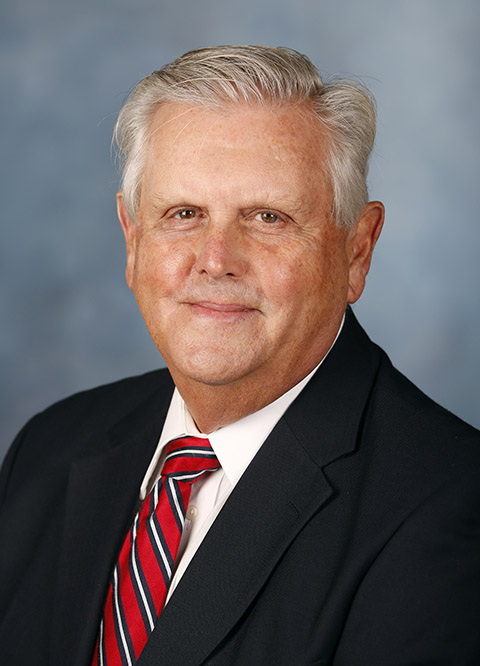

The hot days of July and August have always been a period of excitement for me. As a former high school band director, this was time for band camp and preparation for the upcoming football and marching band season. As a principal, it was time for finalizing schedules and completing the hiring of teachers. As a superintendent, it was time to make certain that school facilities and grounds were ready and that budgets were ready to meet the needs of our students and teachers.
This July and August I am experiencing excitement about the implementation of the Kentucky Unbridled Learning – College/Career Readiness for ALL plan. This plan is an outgrowth of 2009’s Senate Bill 1 and the Governor’s Transforming Education in Kentucky Task Force.
The Unbridled Learning – College/Career Readiness for ALL has a metric of increasing the percentage of college/career-ready graduates of Kentucky high schools from the current 34 percent to 67 percent by 2015. We have been communicating this goal and strategies to reach this goal for months. During the 2011-12 school year, we will begin to see the strategies implemented and begin to see if our strategies yield the results for our students.
As I speak to educators, parents and community members across the Commonwealth, I focus on the three key strategies for Unbridled Learning. During the 2011-12 school year, we are implementing the Kentucky Common Core Standards in English/language arts and mathematics. On August 1, we are launching a software program – the Continuous Instructional Improvement Technology System (CIITS) -- that will provide educators with full access to the standards and resources to support the standards. This software and the resources were developed and aligned based on the work of more than 1,500 educators from Kentucky schools.
Also, we are now providing training and resources for educators in Kentucky that support the new assessments, which are based on the new standards. Just this week, we had educators from across Kentucky working on understanding of the new end-of-course assessments in English II, Algebra II, U.S. History and Biology. Many teachers will receive training and support over the coming months to gain understanding of the new assessments in grades 3-8 and high school courses.
Finally, the excitement comes from a new accountability model that goes into place this school year. While we are hoping that Kentucky will be granted flexibility to replace federal No Child Left Behind (NCLB) accountability with the Kentucky accountability model, we will be implementing the Kentucky model either way.
My July/August excitement has not waned as I enter my 40th year of education. If anything, this year is even more exciting. Why? I work with great teachers and leaders across Kentucky who are excited about the future of our children. While the work ahead will be exhausting, and there are never enough resources to do the work, Kentucky educators are dedicated to a singular focus of success for ALL children. If you see an educator over the next few weeks, give him or her a pat on the back and share your wishes for much success in the year ahead.
Showing posts with label year. Show all posts
Showing posts with label year. Show all posts
Friday, July 29, 2011


Friday, June 25, 2010
Reflections on My First Year
As June comes to a close, the first school year on the job is also coming to a close. During May and June of 2009, I was engaged in the interview process for the Commissioner of Education post. During the interview process, I talked to a number of superintendents and other stakeholders in Kentucky. I heard a lot of pride in the accomplishments of schools and school districts. I also heard about the exciting challenges ahead with the implementation of Senate Bill 1 (SB 1).
As I asked questions about priorities for the commissioner, there were two things that surfaced – improve communication and help build district capacity of school districts to implement SB 1 and improve student learning.
Early in my tenure, KDE worked to implement specific customer satisfaction requirements for communication. These requirements include a response time of 24 hours or less, an accurate response and a professional attitude. To monitor these requirements, we implemented an online survey and encouraged all who contacted KDE to complete the survey.
We reported the results of the survey every quarter to all major offices in KDE, and offices compared their results against other offices and addressed areas for improvement. At the end of the first year, we have now established our baseline for our customer requirement performance. The results are as follows:
X Timely response
Yes – 87% No – 10% NR (no response) – 3%
X Response addressed need
Yes – 90% No – 7% NR – 3%
X Any concerns about accuracy
Yes – 12% No – 84% NR – 4%
X Response handled professionally
Yes – 93% No – 4% NR – 3%
As commissioner, I want to recognize our KDE staff for excellent work; however, I do know we can continue to improve in certain areas. Moving forward, we will work to improve the accuracy area and seek to have all requirements exceed 90 percent. We also will benchmark our results against those of comparable organizations. We will provide training and support for each part of KDE on how to improve customer service.
As part of our communication plan, I also met with each regional education cooperative at least twice this year. (KDE liaisons attend every cooperative meeting.) I have visited more than 60 school districts and more than 90 schools to hear firsthand about the challenges facing educators. I average at least three speeches or meetings with stakeholder groups every week to focus on collaboration and improvement. Advisory councils for school boards, parents, superintendents, principals, teachers, closing achievement gaps, special education, gifted and talented, and accountability are meeting on a regular basis to communicate with and inform decisions of KDE and the Kentucky Board of Education. Of course, we have also implemented Monday and Friday consolidated e-mails, this weekly blog, Twitter blasts and Facebook accounts to help improve communication.
The other area for KDE was to implement policies and procedures to build district capacity. In our work with deployment of SB 1 around the Common Core Standards in language arts and mathematics, that is exactly the approach we are using. We are building capacity of higher education institutions, school board members, school superintendents, building administrators, central office instructional leaders and teacher leaders. We also are working closely with the Prichard Committee to create a comprehensive communication plan for parents and the business community. We have had a number of other states and national organizations looking at our deployment model for the Common Core Standards for possible replication. This speaks well to the great KDE team and education partners we have in Kentucky.
If readers have suggestions on how to continue to improve communication and build district capacity please let us know. While these are difficult economic times, we must continue to improve all levels of education through improved communication and collaboration. I am honored to be working with great people all across Kentucky who are focused on helping all children succeed.
Subscribe to:
Posts (Atom)