
Showing posts with label equity. Show all posts

Friday, October 31, 2014

The nature of education

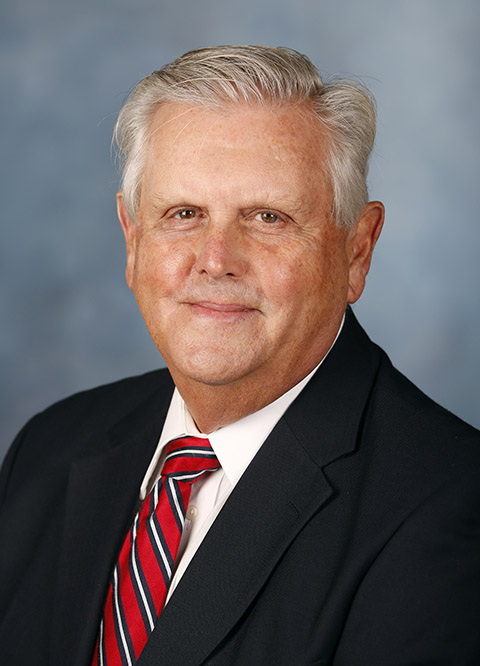
Kentucky has been featured in numerous state and national media sources recently for the improved performance in college- and career-readiness rates and graduation rates. As commissioner, I have been very proud of the efforts of teachers, administrators, students, and education partners in implementing Senate Bill 1 (2009) which required more rigorous standards, assessments, accountability model and professional development for teachers.

While there has been a lot of good news recently, as I look closely at the performance of our students and schools, there are areas that should be addressed. One of the major areas is the continued achievement gap between student groups. 

I have been very encouraged by recent developments in Fayette County. The local equity council has worked with the school administration and the school board to adopt and implement 10 major recommendations for closing achievement gaps. 

I have also been encouraged by the commitment in Jefferson County schools to address the hiring of minority teachers. I have made a commitment to the Kentucky Board of Education to redouble our state efforts on closing achievement gaps. 

At the December meeting of the Kentucky Board of Education, we have invited a national group, Education Trust, to present findings from their recent report that questions the ability of current state accountability models to address the achievement gap. Over the coming months, the state board will look at ways to improve the accountability model to address concerns about the achievement gap. Also, the department will be working closely with advisory groups to develop specific state strategies that could help schools and districts develop local plans to address achievement gaps.

The other concern I have is mathematics performance. Kentucky students are above national averages in reading and science as measured by the National Assessment of Education Progress; however, our mathematics performance is lagging the nation. In a recent report from the National Governor’s Association titled Unlocking Young Children’s Potential: Governors’ Role in Strengthening Early Mathematics Learning, I noted three recommendations that could address our mathematics performance.

1) There is a need for states to build support for early mathematics education within pre-kindergarten expansion, early literacy, STEM education and future workforce preparation.
2) States should align high-quality standards throughout the education pipeline and mathematics instruction should reflect current research. The report was clear that too often our early mathematics education provides less time and less rigor than needed to help build a mathematics literacy in children.
3) States need to look at changes to improve educator preparation and ways to support building early childhood and elementary teachers’ capacity in mathematics instruction.

Lots of great accomplishments and lots of work left to do. That is the nature of education!

Friday, October 21, 2011

Closing the Achievement Gap

Last Sunday as I was returning from the airport, I listened to the CNN coverage of the Martin Luther King, Jr. memorial dedication. I listened to President Barack Obama’s remarks as part of the dedication ceremony, and I listened to the entire “I Have a Dream” speech played as part of the dedication.

I could not help but reflect on the past 50 years. As a student in a segregated school until 10th grade, I can vividly remember the activities around integration in our local school system. Then as a college student, I recall traveling with the Furman University band in Washington, D.C. during the riots in the late 1960s. Then as a teacher, I recall the integration of the Gaffney, South Carolina schools and the student walkouts and near-riots related to forced integration.

Throughout my 40-year education career, I have watched our nation and our schools struggle with issues related to integration and helping all children succeed. Our nation began the path toward equity with the Brown v. Board of Education case. One of the cases that was combined into the Brown case came from a school district in South Carolina (Clarendon 3). I visited that school district as part of a team assigned to support the school district in the 1990s. I was saddened to see that not much had changed. The system was still segregated. The public schools were almost 100 percent minority, and white parents sent their students to private academies. The local board was still controlled by local land owners who would not support raising taxes to adequately fund the needs of students.

This system and others were highlighted in a documentary that aired a few years ago called Corridor of Shame. President Obama even highlighted a student who had written about the need for improved schools in this area, and if my memory is correct, there were substantial changes to the school where she attended in a Dillon, South Carolina district.

All of this reflection comes back to a couple of core questions – are we providing equity in access and outcomes for ALL children? Have we closed achievement gaps? These are questions that certainly have clear answers based on the data across the nation and across Kentucky. Look carefully at the achievement gap data in your school and school district. Look carefully at the suspension and discipline rates for minority students in your schools. Look carefully at the percentage of minority students that graduate from high school that are college/career ready, attend postsecondary and graduate from postsecondary. How many minority teachers, principals, superintendents and board members serve in our local school districts?

Almost two years ago, I revitalized the Commissioners Raising Achievement and Closing Gaps Council (CRACGC). This council recently published recommendations to ensure equity in access and outcomes. The recommendations from the council will become a required component for a new group of schools and districts that will be identified as part of our No Child Left Behind (NCLB) waiver request.

This new group of schools will be called “focus schools.” The Kentucky Department of Education will identify those schools that have the largest achievement gaps. These schools will be required to address achievement gap issues through school and district plans. Targeted interventions will increase with each year that the school or district does not meet targets to close achievement gaps.

My biggest fear is that, even with our best efforts through state accountability, a commissioner of education will be writing an article in another 40 years documenting that not much progress has been made ensuring equity of access and outcomes for ALL children.

What will the collective WE do differently over the next 5-10 years? The collective WE must involve communities in addressing poverty and access. The collective WE must address early childhood education, since that is where the gap can best be closed. The collective WE must address jobs and hope in our most challenged communities.

We cannot rely solely on teachers and schools to make a difference (we tried that with No Child Left Behind). We cannot mandate equity. Equity must be a belief that a community holds dear and then takes action to accomplish.

You are part of the collective WE. What will YOU do?